Fail Of The Week: GPS Module Design

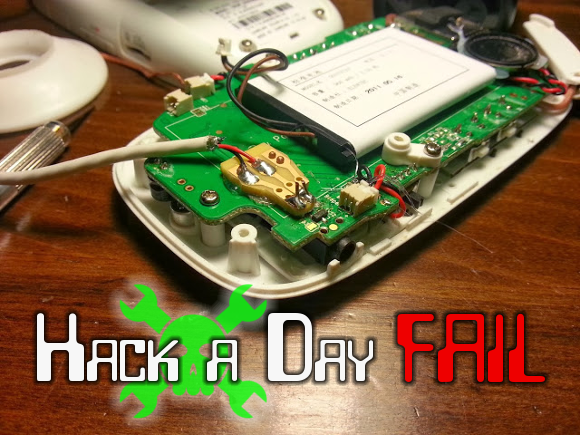
GPS is really fun to play with in your projects. But when [Trax] decided to build a GPS chip into his design the fun ended abruptly. Above you can see the section of the board devoted to the hardware. Unfortunately this PCB fails to provide any GPS location data whatsoever.

Continue reading “Fail Of The Week: GPS Module Design”

Retrotechtacular: 6CH Industrial Robot

retrotechtacular-6ch-robot-arm

With this robotic arm demo video from 1975 the future really is now. Think about it, there are entire factories full of the descendants of this technology where the human workers simply feed the beast and fix it when it breaks.

We’re pretty impressed by what’s shown off below. Not because we see something we didn’t know was possible, but because the technology was so advanced nearly forty years ago. Here the arm is laying out a wiring harness on a jig. We wonder if using a single color of wire is going to make it a major pain when they add the connectors?

Obviously the mechanics were solid. Time has brought further advances in precision, reduced costs that make robots available for even small factories (often palletizing products is done by a machine similar to this), and improvements in how tasks are programmed. After all, the ability to print a hard copy of the program as a punch tape isn’t quite cutting edge for this decade.

What does that mean for you? If you look hard enough you might be able to find an older generation robot arm to hack on.

Continue reading “Retrotechtacular: 6CH Industrial Robot”

Hackaday Links: September 1, 2013

hackaday-links-chain

[Anton] has been doing some Commodore 64 Datasette experiments. He managed to connect the C64 audio traces to his smartphone and use it for tape playback.

Not wanting to actually disassemble his Mendel 3D printer, [SteveDC] figured out how to make extenders that increase his build height by about 40%.

We have fond memories of owning an 8088 PC. We did a lot of experimental programming on it but never anything as impressive as getting the TCP/IP stack to run on it. Then again, we’re not sure there was such a thing back when we owned the 10 MHz hardware. That’s right, the microcontrollers we mess around with now days are much faster than that old beast was.

When he goes running at night [Tall-drinks] straps a pico projector to his chest. We guess you’d call the readout a heads-up display… but it’s really more heads-down since it’s projecting on the pavement.

See how things heat up as a Raspberry Pi boots. This video was made using a thermal imaging camera to help diagnose a misbehaving board.

We don’t have very many trinkets on our desk (that would steal space normally reserved for clutter). But be would happily make room for this motorcycle model made from VCR parts (translated).

Fail Of The Week: Motorizing A PCB Cutting Shear

This week’s fail is an attempt to retrofit a PCB cutting shear with a geared motor. The project was undertaken by [David Cook]. Incidentally he’s very near and dear to us as his book Robot Building for Beginners got us started with hacking in the first place.

This $200 shearing tool is hand-operated and can cut through boards up to 1/16″ thick. But [David] really had to crank on the thing to make a cut. This often resulted in crooked board edges. He decided to do the retrofit in order to achieve higher precision. He sourced a high-torque motor from eBay for around $50 delivered.

Continue reading “Fail Of The Week: Motorizing A PCB Cutting Shear”

3D Printering: The Combo Machines Cometh

There’s only so many ways to squeeze hot plastic out of a nozzle, and eventually witnessing the explosion of 3D printer designs over the past few years gets just a little repetitive. What then, is someone who dreams of a technological utopia, Star Trek replicators, and making a few bucks off a Kickstarter to do?

The answer, of course, is a combo machine. Where the Repraps, Makerbots, and the very high-end Stereolithography machines can only do additive manufacturing by laying down plastic or resin layer by layer, these combo machines can also remove material, be it plastic, wood, or metals such as brass or aluminum.

Continue reading “3D Printering: The Combo Machines Cometh”

Retrotechtacular: The 10-year Anniversary Of Plastic

retrotechtacular-plastic-ten-year-anniversary

This footage called Industry on Parade is a unique look back at the golden age of plastics. We also value the footage as a look at America’s manufacturing sector at its height.

We remember a middle-school teacher recalling his father — who was a research scientist working at Dow — bringing home a pair of discs for him to play with. His first ever encounter with plastic. Here we see a snapshot ten years after plastic manufacturing went mainstream. It starts off with a tour of an injection-molding factory. The screenshot seen above is from the second vignette which tours a production line for naval ship models which will be used to train Navy personnel and as props for strategic planning maps. The film wraps up with the production of plastic fabrics starting with raw materials and ending with synthetic bug screen.

Just to prove it’s an authentic blast from the past, hang in there for the last two minutes when you get an anti-communism PSA. Classic.

Continue reading “Retrotechtacular: The 10-year Anniversary Of Plastic”

Hackaday Links: August 25, 2013

hackaday-links-chain

[Adrian] came across a treasure trove of 507 mechanical device designs. It didn’t seem quite right for a Retrotechtacular post, but we wanted to share it as it’s a great place to come up with ideas for your next Rube Goldberg machine.

Biking with headphones is dangerous. That’s why [J.R.] built a handlebar enclosure for his Jambox Bluetooth speaker.

While dumpster diving [Mike] found a Macbook pro. It was missing a few things, like a keyboard, touchpad, battery, ram, and storage. He borrowed a power supply to test it out but without the keyboard there’s no power button. He figured out the traces on the motherboard which turn it on when shorted.

[Mateusz] want to let us know about the Hercules LaunchPad. Like the other TI Launchpad offerings it’s an all-in-one dev board. The Hercules line features a couple of flavors of dual-core ARM chips. Can you believe the dev boards you can get for under $20 these days?

After seeing the ammo can sound system about a month ago [Ilpo] was inspired to share his ammo can PC case with us.

And finally, here’s a way to display your Bitcoin mining rig for all to see. This system was laid out in an antique frame and hung on the wall.