Single Tube Nixie Clock

[youtube=http://www.youtube.com/watch?v=a-7QAWshEXo]

This single tube nixie clock cought our eye today. After receiving an IN-8 tube from a friend, [Trax] wanted to find some project to show it off.  He decided on an art piece that doubles as a clock. Tastefully mounted in a simple wooden box with a pretty inlay, the tube is lit from below with a green LED that pulses every second. A single button, located on the back, out of view is pressed to request the time. You can see the time being displayed on the video above. To see the guts and read about how he’s using the PIC16F84’s built in clock to keep track of time, check out his site. Even though this is a Nixie, it reminds us of the Decatron kitchen timer we saw recently.

[via Hacked Gadgets]

Simple Automatic LED Lamps

simple_led_lamps

[woody1189] put together some automatic lighting for his closet. Nine LEDs are grouped into three lamps and controlled by a hall effect sensor. He prototyped this on an Arduino and then migrated over to an ATtiny85. Although the current implementation could be accomplished without a microcontroller, we’d love to see some firmware improvements such as an auto shutoff for when you forget to close the closet door. The hall effect sensor seems to pop up in a lot of projects so make sure you get a few of them with your next parts order. Video of this in action after the break.

Continue reading “Simple Automatic LED Lamps”

Twitter Remote Control

twitter_remote

We’ve already brought you a homemade Twitter-enabled washing machine, and toilet, but now a new innovation is being brought to the table by a bigger player. IBM is working on a tweeting television remote, which would allow the user to inform the world what they are watching. Although unfiltered reporting could create awkward situations, the combination of America’s love for television and Twitter is sure to yield interesting results. They also mentioned that it could be configured to report to other sites, such as Facebook or joost. Any ideas why IBM would have in such a patent are welcome in the comments. More info can be found here and here.

BrewTroller Brewing Control System

BrewTroller_2.4__4a70af85574f3

BrewTroller is an open source brewing control system based on the Sanguino. Targeting home beer brewers, this project gathers some of the best features from other DIY brewing controllers and packages them into a hardware and software setup so it’s accessible to those without the skills to design their own. It can interface with 4 heat controllers, 32 pumps/valves, 6 temperature sensors, 3 volume sensors, and 1 steam pressure sensor. The system displays information through a 4 line LCD. It can be used to monitor and maintain temperature during mashing, boiling, and chilling. If you have a more advanced setup that involves automatic valves, it can control those for you with almost limitless reconfigurability through every step of the brewing process.

We thought it was pretty hard core that at least some of the kits shipped with hand made PCBs. At the very least, it shows that it is possible to make this board yourself with the provided PCB layout.

[Thanks Julius]

Update: Foundation PC Cooling

coolupdate

[gigs], whose foundation-based PC cooling project we covered earlier, has posted his initial test results. There was a large debate going back and forth in the comments as to whether or not this would work, and hopefully this should clear most of it up. He used a 150W fish tank heater to simulated his system’s heat output, and used a quiet fish tank pump to keep the water flowing. Over 8 hours, he was able to maintain a constant temperature 16° C (61° F). While not quite frigid, this would definitely provide ample cooling for normal operation with some headroom for overclocking.

Chart of results after the jump.

[thanks to gigs for getting back with real data so soon]

Continue reading “Update: Foundation PC Cooling”

Custom Cable Management

3386152715_53461c9c30

You would be hard pressed to find a hacker who doesn’t have in some form a rats nest of wires and cables behind their computer desk. [Antoine] decided to tackle the problem and came up with his custom built cable management system. There is little info, but he does say his setup uses Ikea Antonius coat hangers and some hollow tube. Its quick and wont leave a residue like some cable solutions, so long as you don’t mind a screw hole or two. We especially like how if you need to change your setup you wont have to re-zip tie everything.

Beef Up Your UPS

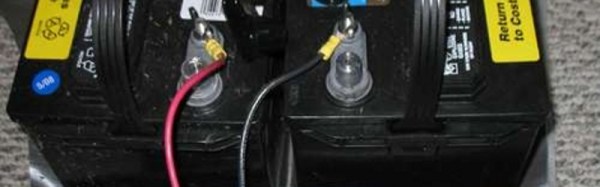
[Surferdude] was unhappy with the decreasing life of his aging uninterruptible power supply. He decided to beef it up using marine batteries. He extended the battery connections outside of the UPS case using #10 wire and swapped the two 12 volt gel cells with the heavy duty lead-acid batteries. Doing so upgraded the device from 20 amp-hours to 84 amp-hours at a cost of about $160. If you’re thinking about taking this on yourself, pay attention to the countinuous output rating of your UPS to prevent a fire risk.