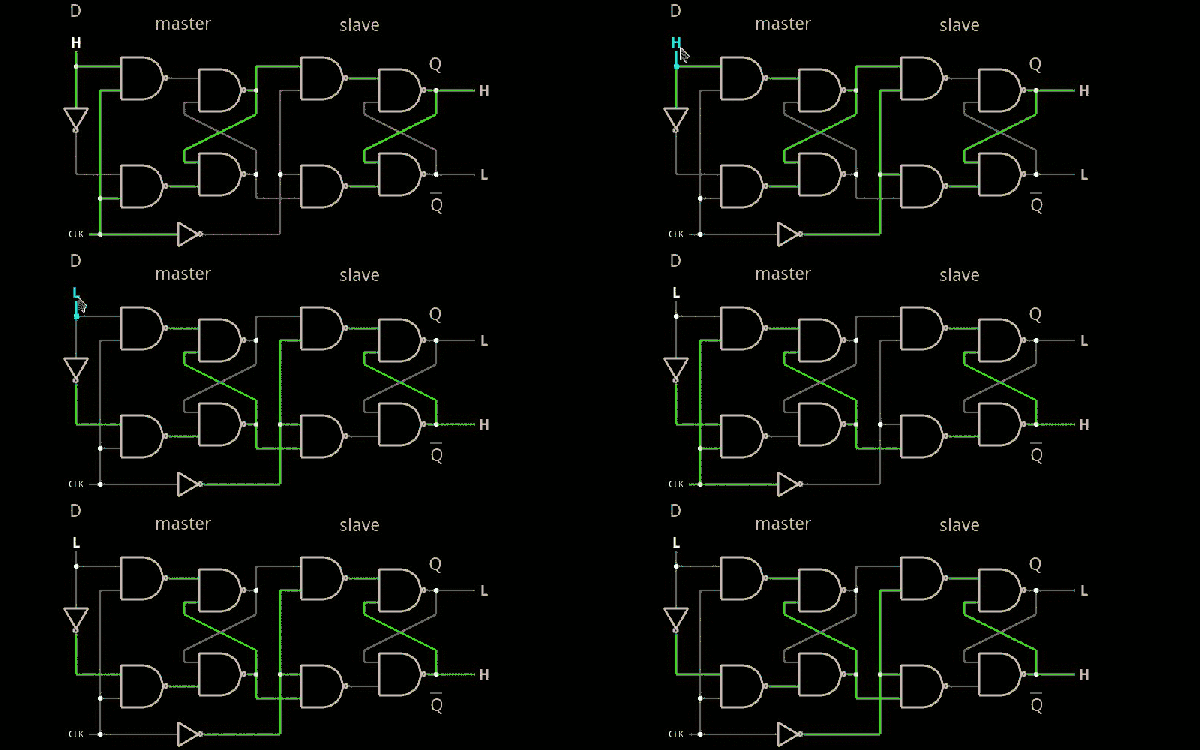
In the previous installment, we talked about why flip flops are such an important part of digital design. We also looked at some latch circuits. This time, I want to look at some actual flip flops–that is circuit elements that hold their state based on some clock signal.
Just like last time, I want to look at sequential building blocks in three different ways: at the abstraction level, at the gate level, and then using Verilog and two online tools that you can also use to simulate the circuits. Remember the SR latch? It takes two inputs, one to set the Q output and the other to reset it. This unassuming building block is at the heart of many other logic circuits.
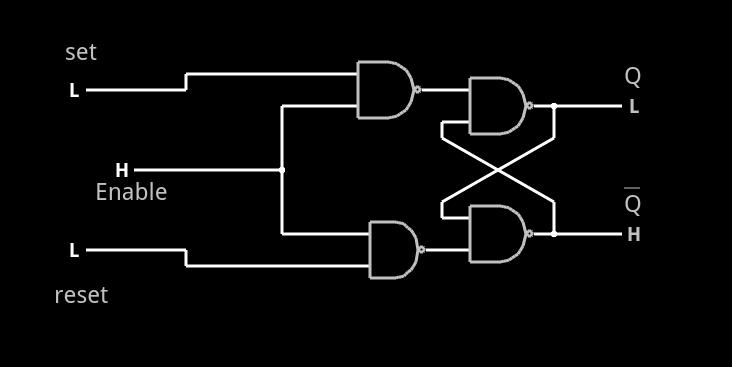 A common enhancement to the SR latch is to include an enable signal. This precludes the output from changing when the enable signal is not asserted. The implementation is simple. You only need to put an additional gate on each input so that the output of the gate can’t assert unless the other input (the enable) is asserted. The schematic appears on the right.
In the case of this simulation (or the Verilog equivalent), the SR inputs become active high because of the inversion in the input NAND gates. If the enable input is low, nothing will change. If it is high, then asserted inputs on the S or R inputs will cause the latch to set or reset. Don’t set both high at the same time when the enable is high (or, go ahead–it is a simulation, so you can’t burn anything up).(Note: If you can’t see the entire circuit or you see nothing in the circuit simulator, try selecting Edit | Centre Circuit from the main menu.)

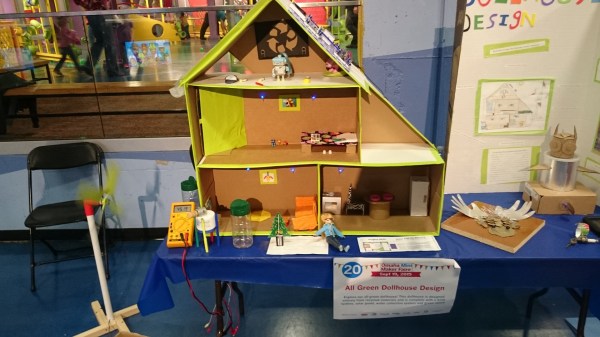
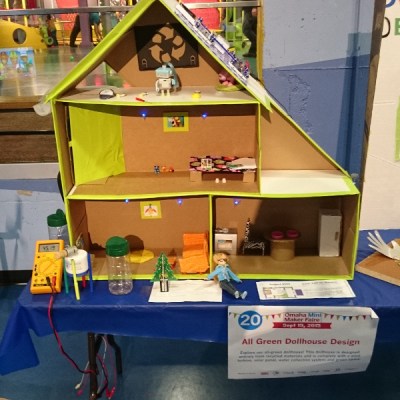 The cardboard structure features a kitchen, living room, bedroom, bathroom, and attic. Every piece of furniture and all the decorations are made from salvaged materials and packaging. One side of the roof holds a Snap Circuits board with a solar panel that powers some blue LEDs on the bedroom wall. [Allie] poured water down the other side of the roof to demonstrate the rain water collection system. The house’s rain barrel was made from a grated parmesan cheese container, which is perfectly designed for the airline tubing running into it from the recycled plastic guttering.
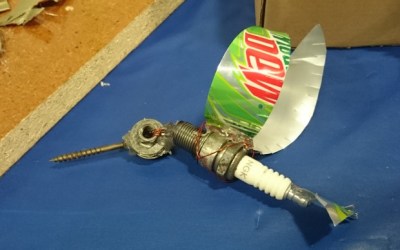
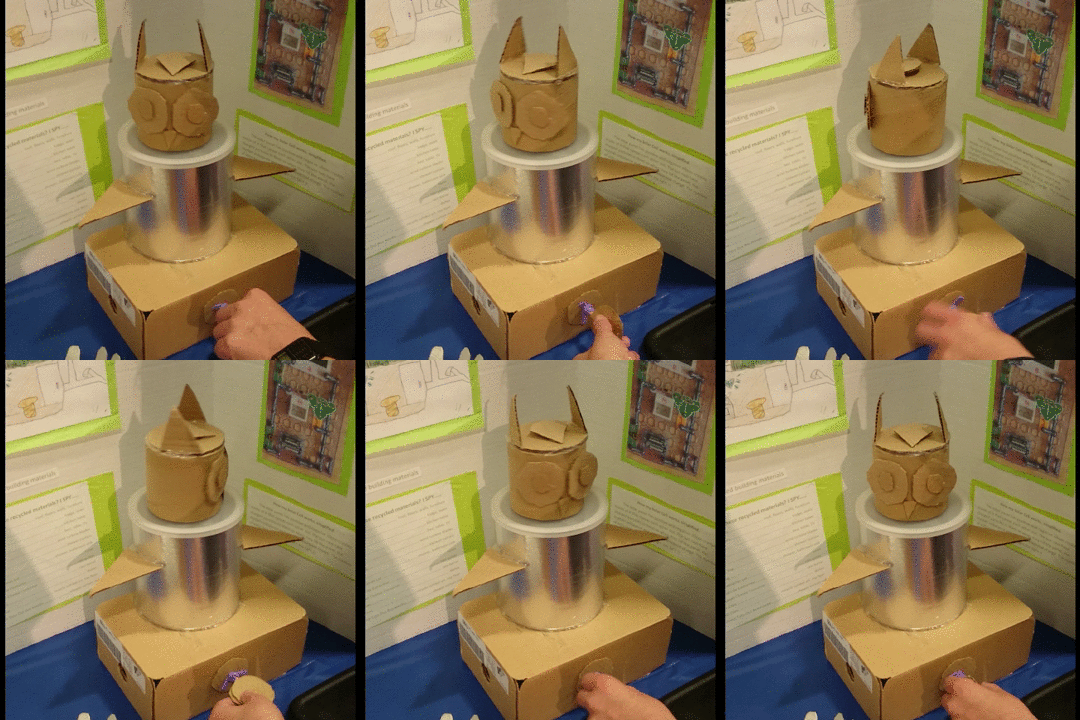 One of [Allie]’s other projects is a disagreeable owl fashioned from cardboard and a salvaged canister. Hidden away beneath the owl’s platform lies a simple gear system attached to a key on the front. Turning the key causes the owl’s head to swivel back and forth. We tried to make it spin all the way around, but the full range of motion is about 270 degrees. She also brought Mountain Dew, a hummingbird model made from a spark plug and other metal bits and bobs, including a pair of soda can wings.
 In addition to her crafty skills, [Allie] is one well-spoken tween. She was more than happy to discuss her creations in detail to anyone who would listen, which included at least two local journalists and this impressed reporter. We learned through a bit of light research that a robot [Allie] built a few years ago inspired a British toy company to produce a new doll, the