There Is A Cost To Extended Lifetime Products. It’s 7.5%.

Silicon and integrated circuits come and go, but when it comes to extended lifetime support from a company, it’s very, very hard to find fault with Microchip. They’re still selling the chip — new — that was the foundation of the Basic Stamp. That’s a part that’s being sold for twenty-five years. You can hardly find that sort of product support with a company that doesn’t deal in high-tech manufacturing.

While the good times of nearly unlimited support for products that are decades old isn’t coming to an end, it now has a cost. According to a press release from Microchip, the price of these old chips will increase. Design something with an old chip, and that part is suddenly going to cost you 7.5% more.

The complete announcement (3MB PDF), states, in part:

…in the case of extended lifecycle product offerings, manufacturing, assembly and carrying costs are increasing over time for
these mature technology products and packages. Rather than discontinue our mature product, Microchip will continue to support our
customer needs for product availability, albeit increasing the prices in line with increased cost associated with supporting mature
product lines….

For all orders received after 31 August, pricing for the products listed will be subject to an increase of 7.5%

The PDF comes with a list of all the products affected, and covers the low-end ATtinys, ATMegas, and PICs that are used in thousands of tutorials available online. The ATtiny85 is not affected, but the ATMega128 is. There are a number of PICs listed, but a short survey reveals these are low-memory parts, and you really shouldn’t be making new designs with these anyway.

The Largest Aircraft Ever Built Will Soon Launch Rockets To Space

Deep in the mojave, the largest aircraft ever made will soon be making test flights. This is the Stratolaunch, and it’s measured the largest to ever fly based on wingspan. The Stratolaunch was constructed out of two 747s, and is designed for a single purpose: as a mobile launch platform for orbital rockets.

There are a couple of ways to measure the size of an aircraft. The AN-225 Mriya has the highest payload capacity, but only one of those was ever built (though that might change soon). The Spruce Goose was formerly the largest aircraft by wingspan, but it only flew once, and only in ground effect. The Stratolaunch is in another category entirely. This is an aircraft that contains some of the largest composite structures on the planet. Not only can you park a school bus between the fuselages of the Stratolaunch, you can strap that school bus to the plane and carry it up to 30,000 feet.

But why build this astonishing aircraft? The reasons go back more than a decade, and the end result is a spaceplane.

Continue reading “The Largest Aircraft Ever Built Will Soon Launch Rockets To Space”

GPL Violations Cost Creality A US Distributor

One of the core tenets of free and open source software licenses is that you’re being provided source code for a project with the hope that you’ll “pay it forward” if and when you utilize that code. In fact some licenses, such as the GNU Public License (GPL), require that you keep the source code for subsequent spin-offs or forks open. These are known as viral licenses, and the hope is that they will help spread the use of open source as derivative works can’t turn around and refuse to release their source code.

Unfortunately, not everyone plays by the rules. In a recent post on their blog, Printed Solid has announced they are ending their relationship with Chinese manufacturer Creality, best known for their popular CR-10 printer. Creality produces a number of printers which make use of Marlin, a GPLv3 licensed firmware that runs (in some form or another) a large majority of desktop 3D printers. But as explained in the blog post, Printed Solid has grown tired with the manufacturer’s back and forth promises to comply with the viral aspects of the GPL license.

Rather than helping to support a company they believe is violating the trust of the open source community, they have decided to mark down their existing stock of Creality printers to the point they will be selling them at a loss until they run out. In addition, for each Creality printer that is sold Printed Solid has promised to make a $50 USD donation to the development of Marlin saying: “if Creality won’t support Marlin development then we will.”

As is often the case when tempers are high and agreements break down, Printed Solid has also pulled back the curtain a bit as to the relationship they have had thus far with the manufacturer. According to the blog post, Printed Solid claims that some models of Creality printers have had a 100% fault rate, and that the company needed to repair and tweak the machines before sending them out to customers. The not so subtle implication being that Creality printers have been benefiting from the work Printed Solid has been doing on their hardware, and that purchasing a unit direct from the manufacturer could be a dicey proposition.

We’ve previously covered an issue with Creality’s CR-10S printer that required the end-user to replace an SMD capacitor just to get reliable results out of the machine, and of course we’ve talked of the extra work that’s often required when wrangling a low-end Chinese printer. It’s even more disheartening when you realize cheap machines sold by shady manufacturers are pushing open source manufacturers out of business.

Rasberry Pi PoE Hat Released

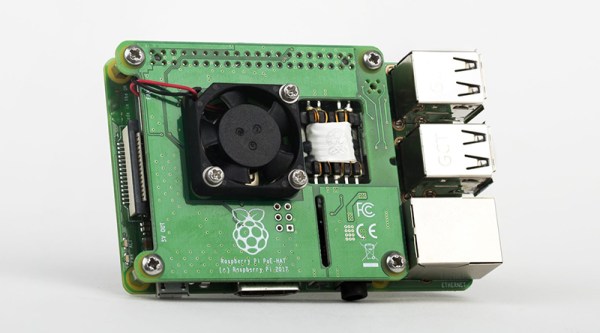
It was announced at the beginning of March, but now the Raspberry Pi Power over Ethernet (PoE) hat is out. Thanks to the addition of a new 4-pin header on the Raspberry Pi 3 Model B+, the Pis can get power from an Ethernet cable, provided you’ve got the setup to deliver PoE.

This is a remarkable bit of engineering, even though it’s just adding Power over Ethernet to a small single board computer. Mechanically, the PoE hat doesn’t increase the 3D bounding box volume of the Raspberry Pi at all. It adds cooling with a fan controlled over I2C. Even more bizarrely, the transformer is mounted in a PCB cutout, and we’re desperate to know how that was specced, designed, and assembled. Yeah, it might just be an add-on for the Raspberry Pi, but there’s some clever work that went into designing it.

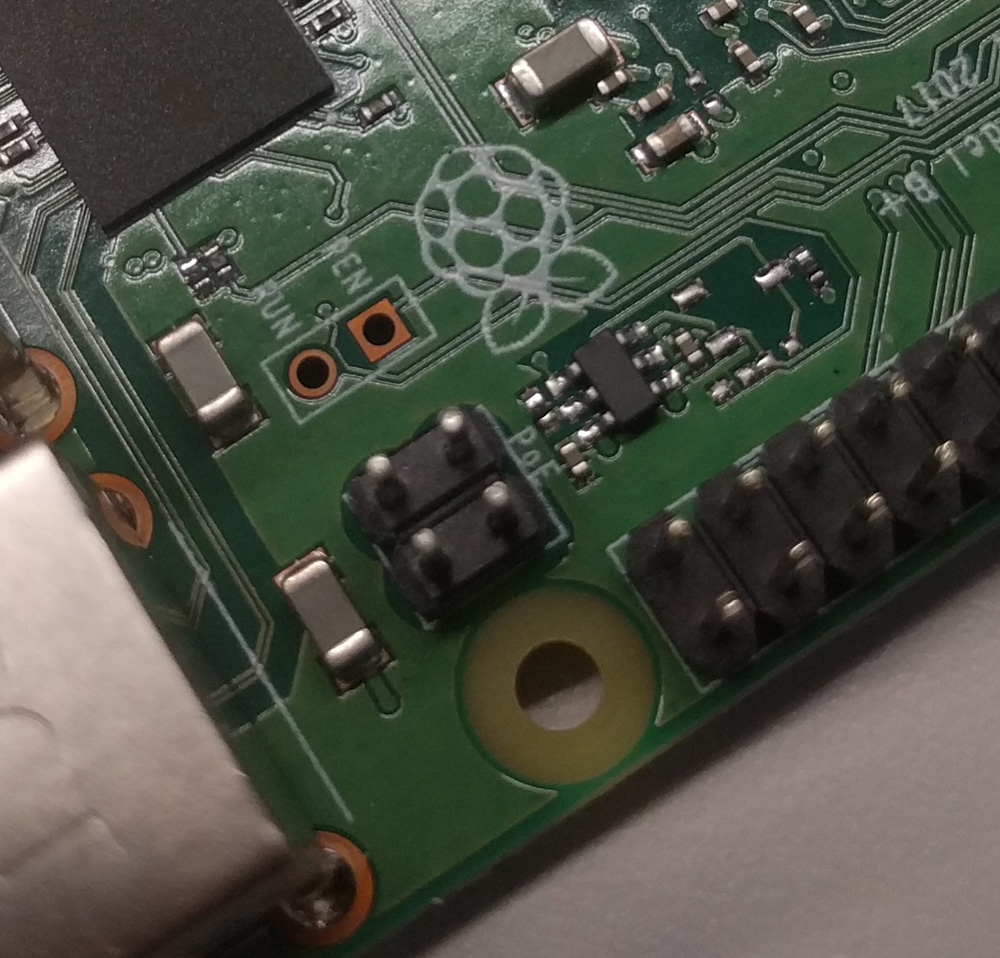
The Raspberry Pi gained PoE capability with the introduction of the Raspberry Pi 3 Model B+ last March, a release that did require a slight change to the hardware and pinout of the Raspberry Pi. Compared to the Pi 3 Model B, the Pi 3 Model B+ sports a four-pin header right next to the Ethernet jack and one of the mounting holes. This is the same location of the ‘Run’ header found in the Pi 3 Model B, and probably caused much consternation to anyone who built a hat to take advantage of having a real power button on their Pi.

Nevertheless, what’s done is done, and now we have a real PoE solution for the Raspberry Pi. This is bound to be a boon for anyone who wants to build a Raspberry Pi cluster computer, or anyone who is dropping a few Pis into a server rack that already has PoE hardware.

You can pick up a PoE Pi hat through the usual suspects (Farnell, RS, and other resellers) for $20.

Arduino Gets Command Line Interface Tools That Let You Skip The IDE

Arduino now has an officially supported command-line interface. The project, called arduino-cli, is the first time that the official toolchain has departed from the Java-based editor known as the Arduino IDE. You can see the official announcement video below.

Obviously this isn’t a new idea. Platform IO and other command-line driven tools exist. But official support means even if you don’t want to use the command line yourself, this should open up a path to integrate the Arduino build process to other IDEs more easily.

The code is open source, but they do mention in their official announcement that you can license it for commercial use. We assume that would mean if you wanted to build it into a product, not just provide an interface to it. This seems like something Arduino expects, because a lot of the command line tools can produce json which is a fair way to send information to another application for parsing.

The command line interface doesn’t just build a sketch. You can do things like install and manage libraries. For example, to create a new sketch:

Continue reading “Arduino Gets Command Line Interface Tools That Let You Skip The IDE”

Memristor May Be Fake News

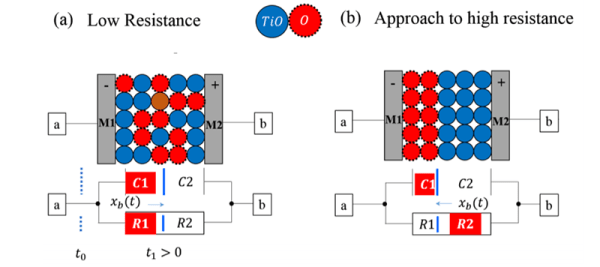
The fundamental passive components of electronics are the resistor, the capacitor, the inductor, and the oscillator, right? Actually, no, oscillators aren’t considered fundamental components because they aren’t linear. Resistors, capacitors, and inductors are also irreducible. That is, you can’t combine other passive components to model them unlike, say, a potentiometer. In the last few decades, though, we’ve heard of another fundamental component — the memristor. [Isaac Abraham] asserts, though, that the memristor isn’t a new fundamental component, but just an active device.

To support that premise [Isaac] builds a periodic table of devices showing how components map to changing voltages based on the time-varying property of charge. This shows that all the basic relationships are filled and that memristor actually covers a composition of passive components. This is similar in concept to [Strukov’s] diagram implying that a memristor is the fourth quadrant of a space defined by charge vs flux. However, using the properties of this periodic table [Isaac] argues against the fundamental nature of the memristor.

Continue reading “Memristor May Be Fake News”

NASA Wants You… To Design Their Robot

No one loves a good competition more than Hackaday. We run enough to keep anyone busy. But if you have a little spare time after designing your one inch PCB, you might check out the competition to develop a robotic arm for NASA’s Astrobee robot.

Some of the challenges are already closed, but there are quite a few still open for a few more months (despite the published closing date of and these look like great projects for a hacker. In particular, the software architecture and command, data, and power system are yet to start.

But don’t let the $25,000 fool you. That’s spread out over a number of awards for the entire series. Each task has an award that ranges from $250 to $5,000. However, you also have to win that award, of course. If you register, however, you do get a sticker that has flown on the space station.

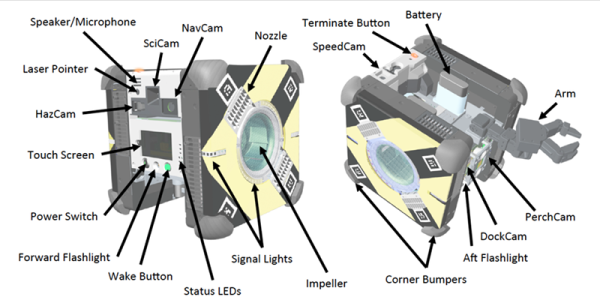
If you haven’t seen Astrobee, it is a flying robot made to assist astronauts and cosmonauts on the International Space Station. The robot is really a floating sensor platform that can do some autonomous tasks but can also act as a telepresence robot for flight controllers. You might enjoy the second video below if you haven’t seen Astrobee, before.

We covered the Astrobee before. If you’d like to visit the space station yourself, it isn’t quite telepresence, but Google can help you out.

Continue reading “NASA Wants You… To Design Their Robot”