Hackaday Europe Tickets On Sale Now, CFP Extended

Hackaday Europe is approaching, and we’re putting tickets on sale now. “But wait, you haven’t selected the talks yet!” we hear you saying. Indeed! And that’s why we discount the first round of entries for our True Believers™ – the hard core who know that it’s going to be a fantastic event and turn up regardless. So if you want to come to Hackaday Europe on the cheap, go snap up your ticket before they’re gone.

Call for Participation Extended

Of course, giving a talk is always the best way to attend a hacker gathering like this. And we know that we said that today was the deadline for talk submissions. But we also know that many of you have advanced degrees in procrastineering, so we’re giving you a week’s extension.

Selected speakers get in free, and we’ll reserve you an early-bird ticket for putting together a legit talk proposal either way. So if you’re a first-time presenter or a wizened pro, and you have something that you’d like to say to an audience of like-minded hackers, we’d all like to hear from you. We won’t extend the deadline twice, though, so get your proposal in before March 25.

(A few people have reached out to us, wanting to avoid the Google login that the above form requires. If you’re in the same camp, write to us directly and let us know!)

Hackaday Europe

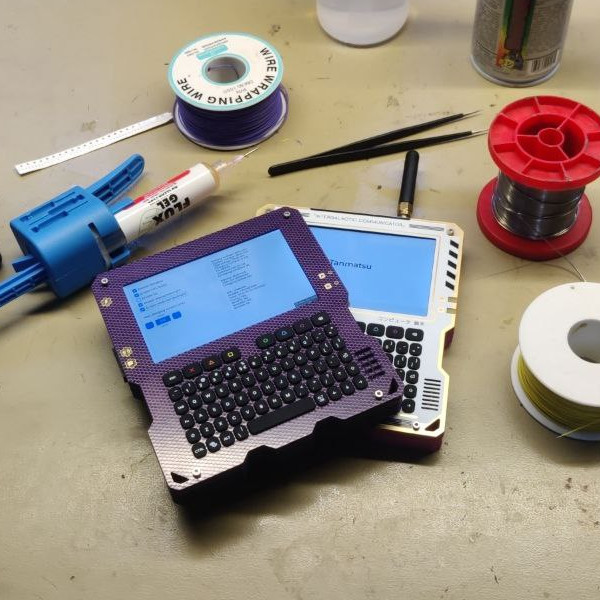
In case you don’t know, Hackaday Europe started out as a bi-annual event that we first held a decade ago in Belgrade. It has been such a success that we’re now doing it every year, and leap-frogging around Europe to spread the love. The last two three events have been in Berlin, and this is our first time in Lecco, Italy. This year, it runs the weekend of May 16th and 17th, with a pre-event on the evening of the 15th, to be announced.

What stays the same? We have a fantastic crowd who bring their passion projects with them, a fun badge to hack on, and of course food, drink, music, and merriment all along. Oh, and the talks. (You are submitting your talk, right?)

We’ll have more details coming your way in the next few weeks, so stay tuned. After March 25th, we’ll get to selecting talks, and let you all know. Get your tickets now – we can’t wait to see you all in eight-and-a-half weeks!


The Rise And Fall Of Free Dial Up Internet

In the early days of the Internet, having a high-speed IP connection in your home or even a small business was, if not impossible, certainly a rarity. Connecting to a computer in those days required you to use your phone. Early modems used acoustic couplers, but by the time most people started trying to connect, modems that plugged into your phone jack were the norm.

The problem was: whose computer did you call? There were commercial dial-up services like DIALOG that offered very expensive services, such as database searches via modem. That could be expensive. You had a fee for the phone. Then you might have a per-minute charge for the phone call, especially if the computer was in another city. Then you had to pay the service provider, which could be very expensive.

Even before the consumer Internet, this wasn’t workable. Tymnet and Telenet were two services that had the answer. They maintained banks of modems practically everywhere. You dialed a local number, which was probably a “free” call included in your monthly bill, and then used a simple command to connect to a remote computer of your choice. There were other competitors, including CompuServe, which would become a major force in the fledgling consumer market.

While some local internet service providers (ISPs) had their own modem banks, when you saw the rise of national ISPs, they were riding on one of several nationwide modem systems and paying by the minute for the privilege. Eventually, some ISPs reached the scale that made dedicated modem banks worthwhile. This made it easier to offer flat-rate pricing, and the presumed likelihood of everyone dialing in at once made it possible to oversubscribe any given number of modems.

The Cost

Once consumer services like CompuServe, The Source, and AOL started operations, the cost was less, but still not inexpensive. Some early services charged higher rates during business hours, for example. There was also the cost of a phone line, and if you didn’t want to tie up your home phone, you needed a second line dedicated to the modem. It all added up.

By the late 1990s, a dial-up provider might cost you $25 a month or less, not counting your phone line. That’s about $60 in today’s money, just for reference. But the Internet was also booming as a place to sell advertising.

Continue reading “The Rise And Fall Of Free Dial Up Internet”

Hacking The System In A Moral Panic: We Need To Talk

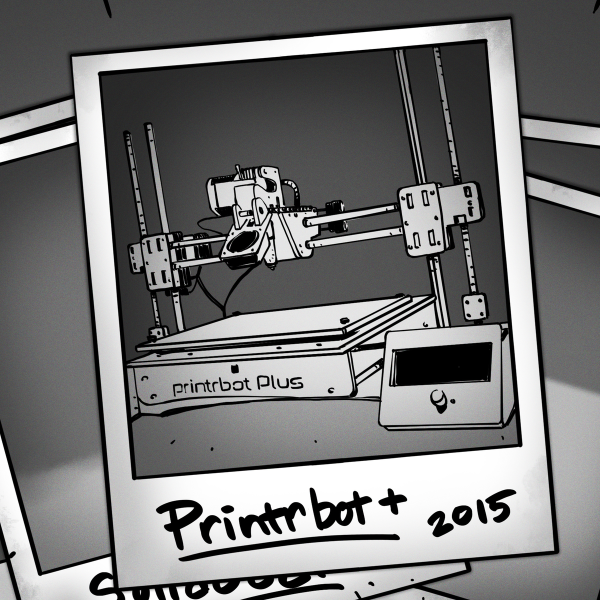
It seems that for as long as there have been readily available 3D printers, there have been moral panics about their being used to print firearms. The latest surrounds a Washington State Legislature bill, HB2320, which criminalises the printing of unregistered guns. Perhaps most controversially, it seeks so impose a requirement on printers sold in the state to phone home and check a database of known firearms and refuse to print them when asked.

This has drawn a wave of protest from the 3D printing community, and seems from where we are sitting to be a spectacularly ill-conceived piece of legislation. It’s simply not clear how it could be implemented, given the way 3D printers and slicing software actually work.

Oddly This Isn’t About Firearms

The root of the problem with this bill and others like it lies in ignorance, and a misplaced belief in the power of legislation. Firearms are just the example here, but we can think of others and we’re sure you can too. Legislators aren’t stupid, but by and large they don’t come from technology or engineering backgrounds.

Meanwhile they have voters to keep happy, and therefore when a moral panic like this one arises their priority is to be seen to be doing something about it. They dream up a technically infeasible solution, push to get it written into law, and their job is done. Let the engineers figure out how to make it work. Continue reading “Hacking The System In A Moral Panic: We Need To Talk”

Fictional Moon: Reality TV And SciFi Don’t Mix

It is a safe bet that nearly all Hackaday readers like to at least imagine what it would be like to build and live in an orbital station, on the moon, or on another planet. Moon bases and colonies show up all the time in fictional writing and movies, too. For the Hackaday crowd, some of these are plausible, and others are — well — a bit fanciful. However, there’s one fictional moonbase that we think might have been too realistic: Moonbase 3.

View of the base from above.

If that didn’t ring a bell, we aren’t surprised. The six-episode series was a co-production between Twentieth Century Fox and the BBC that aired in 1973. To make matters worse, after the initial airings in the UK, Australia, and New Zealand, the video master tapes were wiped out. Until 1993, there were no known copies of the show, but then one turned up in a US television station.

The show had many links to Dr. Who and, in fact, if you think the spacesuits look familiar, they made later appearances in two Dr. Who episodes.

Continue reading “Fictional Moon: Reality TV And SciFi Don’t Mix”

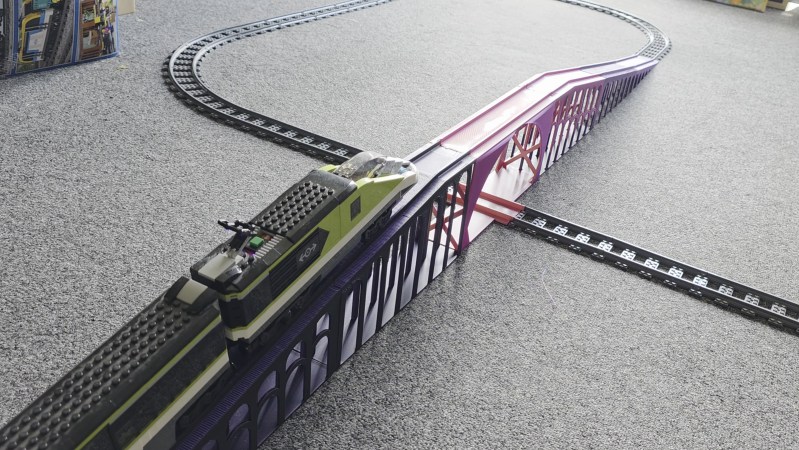
How I 3D Printed My Own Lego-Compatible Train Bridges

Lego train sets have been available for decades, now. The Danish manufacturer long ago realized the magic of combining its building block sets with motors and plastic rails to create real working railways for children and adults to enjoy. Over the years, Lego has innovated through several generations of trains, from classic metal-rail systems to the more modern IR and later Bluetooth-controlled versions. The only thing largely missing over all that time, though…? A bridge!

Yes, Lego has largely neglected to build any bridges for its mainstream train lineup. There are aftermarket solutions, and innovative hacks invented by the community, all with their own limitations and drawbacks. This glaring oversight, though, seemed like a perfect opportunity to me. It was time to fire up the 3D printer and churn out a fully-realized Lego rail bridge of my very own.

Bridges Are Hard

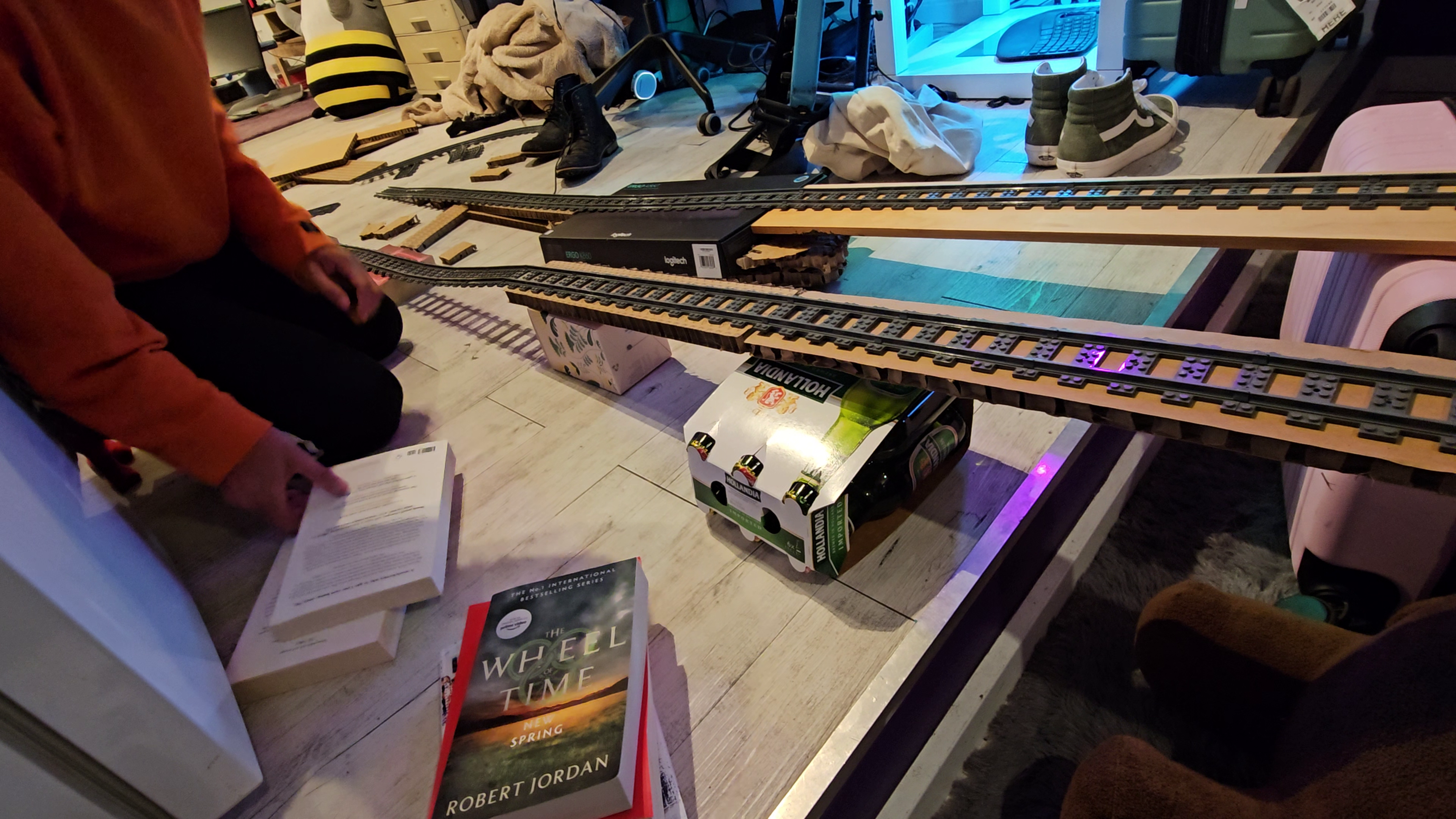
I’ve experimented with building Lego rail bridges before, using standard track and household objects like cardboard, books, and beer. Unfortunately, it can be very difficult to support the track evenly at the joints which occur every 150mm, and derailments are common. Credit: author

There’s actually a good reason Lego bridges aren’t a big thing in the company’s own product lineup, beyond a few obscure historical parts. This is probably because they aren’t very practical. Lego locomotives are not particularly strong haulers, nor do they have excellent grip on the rails, and this makes them very poor at climbing even mild grades. Any official Lego bridge would have to be very long with a shallow slope just to allow a train to climb high enough to clear a locomotive on a track below. This would end up being an expensive set that would probably prove unpopular with the casual Lego train builder, even if the diehard enthusiasts loved it. 

There are third-party options available out there. However, most rely on standard Lego track pieces and merely combine them with supports that hold them up at height. This can work in some cases, but it can be very difficult to do cool things like passing a Lego train under a bridge, for example. It can be hard to gain enough height, and the short length of Lego track pieces makes it hard to squeeze a locomotive between supports. Continue reading “How I 3D Printed My Own Lego-Compatible Train Bridges”

Ask Hackaday: Wired Or Wireless Headphones?

They say you should never throw out old clothes because they will come back in style one day. Maybe they are right. We noted in a recent BBC post that, apparently, wired headphones are making a comeback. Like many people, we were dismayed when Apple took the headphone jack out of the iPhone and, as [Thomas Germain] notes, even Google eventually ejected the normal headphone jack. (Although, in fairness, most of the Pixel phones we’ve seen come with a pair of USB-C earbuds.)

On the face of it, though, wireless seems to be a good idea. You can get cheap Bluetooth earbuds now, although maybe still not as cheap as wired buds. Sure, they sound terrible, but so do cheap buds. It is a pain to charge them, of course, but not having to untangle wires is a benefit. On the other hand, you never have to charge your wired headphones.

Continue reading “Ask Hackaday: Wired Or Wireless Headphones?”

Hackaday Links Column Banner

Hackaday Links: March 15, 2026

Some days, it feels like we’re getting all the bad parts of cyberpunk and none of the cool stuff. Megacorps and cyber warfare? Check. Flying cars and holograms? Not quite yet. This week, things took a further turn for the dystopian with the news that a woman was hospitalized after an altercation with a humanoid robot in Macau. Police arrived on scene, took the bot into custody, and later told the media they believed this was the first time Chinese authorities had been called to intervene between a robot and a human.

The woman, reportedly in her seventies, was apparently shocked when she realized the robot was standing behind her. After the dust settled, the police determined it was being operated remotely as part of a promotion for a local business. We’ve heard there’s no such thing as bad publicity, but we’re not sure the maxim holds true when you manage to put an old lady into the hospital with your ad campaign.

Continue reading “Hackaday Links: March 15, 2026”