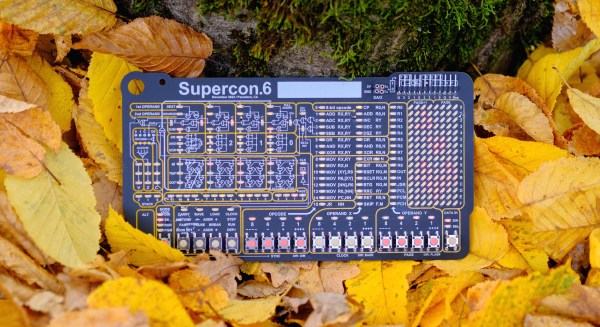
The 2022 Supercon Badge Is A Handheld Trip Through Computing History

Over the last several years, there’s been a trend towards designing ever more complex and powerful electronic event badges. Color displays, sensors, WiFi, USB, Bluetooth — you name it, and there’s probably a con badge out there that has packed it in. Even our own 2019 Supercon broke new ground with the inclusion of a Lattice LFE5U-45F FPGA running a RISC-V core. Admittedly, observing this unofficial arms race has been fascinating. But as we all know, a hacker isn’t defined by the tools at their disposal, but rather the skill and imagination with which they wield them.

So this year, we’ve taken a slightly different approach. Rather than try and cram the badge with even more state of the art hardware than we did in 2019, we’ve decided to go back to the well. The 2022 Supercon badge is a lesson in what it means to truly control a piece of hardware, to know what each bit of memory is doing, and why. Make no mistake, it’s going to be a challenge. In fact, we’d wager most of the people who get their hands on the badge come November 4th will have never worked on anything quite like it before. Folks are going to get pulled out of their comfort zones, but of course, that’s the whole idea.

Continue reading “The 2022 Supercon Badge Is A Handheld Trip Through Computing History”
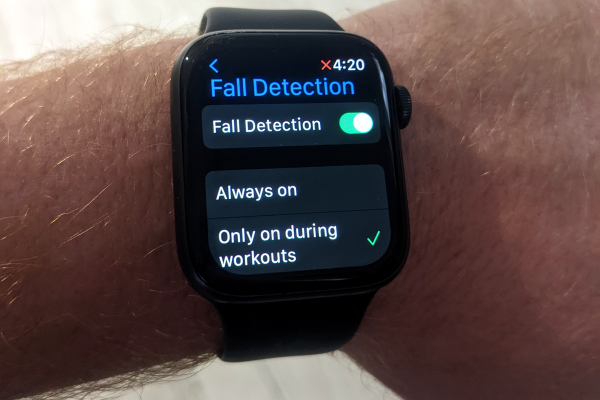
Rollercoasters Are Triggering The IPhone’s Crash Detection System

Apple has been busy adding new features to its smartphone and smartwatch offerings. Its new iPhone 14 and Apple Watch 8 now feature a safety system that contacts emergency services in the event the user is in a automobile accident.

As with so many new technologies though, the feature has fallen afoul of the law of unintended consequences. Reports are that the “crash detection system” is falsely triggering on rollercoasters and in other strange circumstances. Let’s take a look at how these systems work, and why this might be happening.

Continue reading “Rollercoasters Are Triggering The IPhone’s Crash Detection System”

2022 Supercon: More Talks, More Speakers!

Round two of the 2022 Supercon talks is out, and it’s another superb lineup. This round is full of high voltage, art, and science. If you’ve ever dreamed of starting up your own hacker company, making your own refrigerator, teaching your toaster to think, or just making your breath glow, then Supercon is where you want to be Nov. 4-6!

Supercon will sell out, so get your tickets now before it’s too late. And stay tuned for the next and final round of talk reveals next week! Plus the keynote speaker reveal. Plus workshops. Oh my. Continue reading “2022 Supercon: More Talks, More Speakers!”

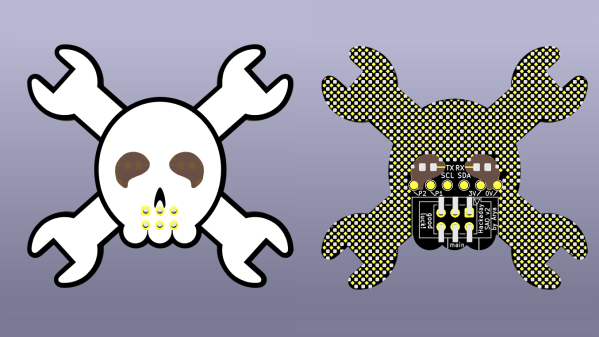
front and back of the Jolly Wrencher SAO

Jolly Wrencher SAO, And How KiCad 6 Made It Easy

If you plan to attend Supercon or some other hacker conference, know that you’re going to get a badge with a SAO (Simple Add-On) connector, a 4-pin or 6-pin connector that you can plug an addon board onto. There’s myriads of SAOs to choose from, and if you ever felt like your choice paralysis wasn’t intense enough, now you have the option of getting a Jolly Wrencher SAO board!

This board gives you an SMD prototyping space, with 1.27mm (0.05″ pitch) pads, suitable for many passive components, ICs and even modules like the ESP32 WROOM. Those pads are diagonally interspersed with ground-fill-connected pads – if you want to bodge something on the spot, you don’t need to pull separate GND wires. Given the Supercon badge specifics, the SAO-standard SDA and SCL pins have RX and TX labels as well. For bonus points, the eyes are transparent, with LED footprints behind them – it’s my first time designing a PCB where the LED shines through the FR4, and I hope that the aesthetics work out!

This design is open with gerber files available for download, so if you thought of making a quick PCB order, I’m giving you one more .zip file to add to it. Otherwise, it’s possible that you will find a Wrencher board lying around at Supercon! Now, I’d like to tell you how KiCad 6 made it super easy to design this PCB – after all, there’s never enough SAOs, and it’s quite likely you’ll want to design your own special SAO, too.

Continue reading “Jolly Wrencher SAO, And How KiCad 6 Made It Easy”

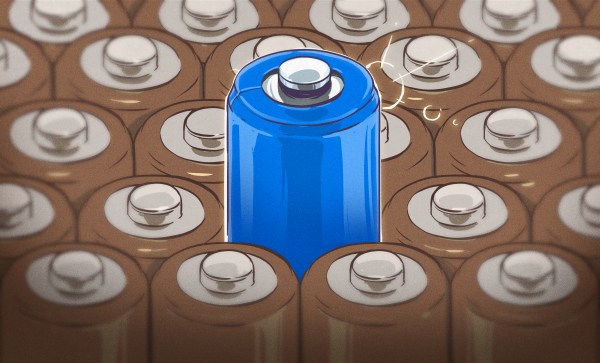
Lithium-Ion Battery Circuitry Is Simple

By now, we’ve gone through LiIon handling basics and mechanics. When it comes to designing your circuit around a LiIon battery, I believe you could benefit from a cookbook with direct suggestions, too. Here, I’d like to give you a collection of LiIon recipes that worked well for me over the years.

I will be talking about single-series (1sXp) cell configurations, for a simple reason – multiple-series configurations are not something I consider myself as having worked extensively with. The single-series configurations alone will result in a fairly extensive writeup, but for those savvy in LiIon handling, I invite you to share your tips, tricks and observations in the comment section – last time, we had a fair few interesting points brought up!

The Friendly Neighborhood Charger

There’s a whole bunch of ways to charge the cells you’ve just added to your device – a wide variety of charger ICs and other solutions are at your disposal. I’d like to focus on one specific module that I believe it’s important you know more about.

You likely have seen the blue TP4056 boards around – they’re cheap and you’re one Aliexpress order away from owning a bunch, with a dozen boards going for only a few bucks. The TP4056 is a LiIon charger IC able to top up your cells at rate of up to 1 A. Many TP4056 boards have a protection circuit built in, which means that such a board can protect your LiIon cell from the external world, too. This board itself can be treated as a module; for over half a decade now, the PCB footprint has stayed the same, to the point where you can add a TP4056 board footprint onto your own PCBs if you need LiIon charging and protection. I do that a lot – it’s way easier, and even cheaper, than soldering the TP4056 and all its support components. Here’s a KiCad footprint if you’d like to do that too.

Continue reading “Lithium-Ion Battery Circuitry Is Simple”

Hackaday Links Column Banner

Hackaday Links: October 9, 2022

Don’t you just hate it when you walk out of the bathroom with toilet paper stuck to your shoe? That’s a little bit like what happened when the Mars helicopter Ingenuity picked up a strange bit of debris on one of its landing pads. The foreign object was spotted on the helicopter’s down-pointing navigation camera, and looks for all the world like a streamer of toilet paper flopping around in the rotor wash. The copter eventually shed the debris, which wafted down to the Martian surface with no further incident, and without any apparent damage to the aircraft. NASA hasn’t said more about what the debris isn’t — aliens — than what it is, which of course is hard to say at this point. We’re going to go out on a limb and say it’s probably something we brought there, likely a scrap of plastic waste lost during the descent and landing phase of the mission. Or, you know, it’s getting to be close to Halloween, a time when the landscape gets magically festooned with toilet paper overnight. You never know.

Continue reading “Hackaday Links: October 9, 2022”

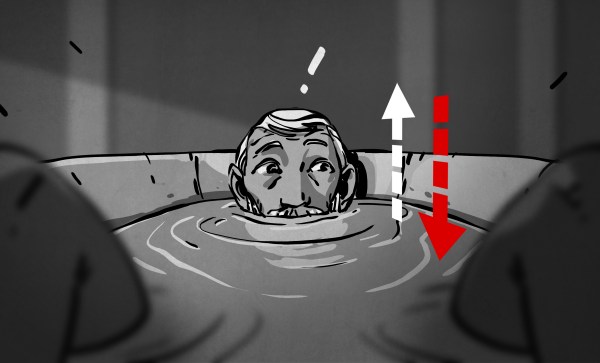
Mommy, Where Do Ideas Come From?

We wrote up an astounding old use of technology – François Willème’s 3D scanning and modeling apparatus from 1861, over 150 years ago. What’s amazing about this technique is that it used absolutely cutting-edge technology for the time, photography, and the essence of a technique still used today in laser-line 3D scanners, or maybe even more closely related to the “bullet time” effect.

This got me thinking of how Willème could have possibly come up with the idea of taking 24 simultaneous photographs, tracing the outline in wood, and then re-assembling them radially into a 3D model. And all of this in photography’s very infancy.

But Willème was already a sculptor, and had probably seen how he could use photos to replace still models in the studio, at least to solidify proportions. And he was probably also familiar with making cameos, where the profile was often illuminated from behind and carved, often by tracing shadows. From these two, you could certainly imagine his procedure, but there’s still an admirable spark of genius at work.

Could you have had that spark without the existence of photography? Not really. Tracing shadows in the round is impractical unless you can fix them. The existence of photography enabled this idea, and countless others, to come into existence.

That’s what I think is neat about technology, and the sharing of new technological ideas. Oftentimes they are fantastic in and of themselves, like photography indubitably was. But just as often, the new idea is a seed for more new ideas that radiate outward like ripples in a pond.