If you follow cybersecurity hacker methods — or just watch Mr. Robot — you probably know that the best way to get someone’s password is to ask for it. Sure, you probably can’t just say “Hi, I’m a bad guy. Can I have your password?” But there are all sorts of tricks you can use like pretending to be in the person’s IT department, someone in management, or by making up a crisis to overcome their better judgement with a sense. But of course, as wise computer people, we are immune to such things, right? We also don’t need those kinds of tricks in our arsenal.
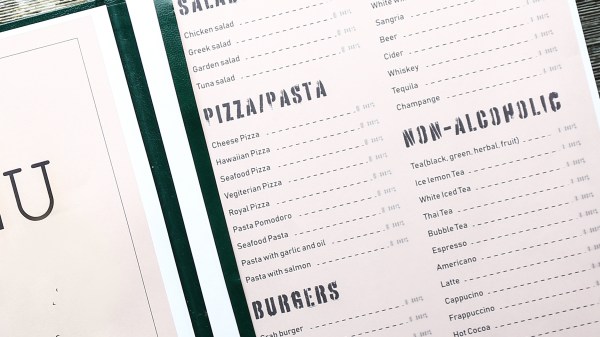
Is that true? It is amazing how many subtle things influence what we think are rational decisions, no matter who we are. Consider going to eat in a restaurant. Simple, right? You look at the menu, pick what you want, and order. No one is influencing you. But they are. According to a BBC article, there’s a whole industry of menu “engineering” that figures out how to get you to order pricey food.
You might not think social engineering for menus is a great skill for us. But maybe your new open source project needs collaborators. Maybe your startup company needs investors. Maybe you’d like someone to look at your resume. Maybe the same tricks that work with diners will work in those cases, too.
When Nathan Copeland suffered a car accident in 2004, damage to his spinal cord at the C5/C6 level resulted in tetraplegic paralysis. This left him initially at the age of 18 years old to consider a life without the use of his arms or legs, until he got selected in 2014 for a study at the University of Pittsburgh involving the controlling of a robotic limb using nothing but one’s mind and a BCI.
While this approach, as replicated in various other studies, works well enough for simple tasks, it comes with the major caveat that while it’s possible to control this robotic limb, there is no feedback from it. Normally when we try to for example grab an object with our hand, we are aware of the motion of our arm and hand, until the moment when our fingers touch the object which we’re reaching for.
In the case of these robotic limbs, the only form of feedback was of the visual type, where the user had to look at the arm and correct its action based on the observation of its position. Obviously this is far from ideal, which is why Nathan hadn’t just been implanted with Utah arrays that read out his motor cortex, but also arrays which connected to his somatosensory cortex.
The unspoken promise of new technologies is that they will advance and enhance our picture of the world — that goes double for the ones that are specifically designed to let us look closer at the physical world than we’ve ever been able to before. One such advancement was the invention of X-ray crystallography that let scientists peer into the spatial arrangements of atoms within a molecule. Kathleen Lonsdale got in on the ground floor of X-ray crystallography soon after its discovery in the early 20th century, and used it to prove conclusively that the benzene molecule is a flat hexagon of six carbon atoms, ending a decades-long scientific dispute once and for all.
Benzene is an organic chemical compound in the form of a colorless, flammable liquid. It has many uses as an additive in gasoline, and it is used to make plastics and synthetic rubber. It’s also a good solvent. Although the formula for benzene had been known for a long time, the dimensions and atomic structure remained a mystery for more than sixty years.
Kathleen Lonsdale was a crystallography pioneer and developed several techniques to study crystal structures using X-rays. She was brilliant, but she was also humble, hard-working, and adaptable, particularly as she managed three young children and a budding chemistry career. At the outbreak of World War II, she spent a month in jail for reasons related to her staunch pacifism, and later worked toward prison reform, visiting women’s prisons habitually.
After the war, Kathleen traveled the world to support movements that promote peace and was often asked to speak on science, religion, and the role of women in science. She received many honors in her lifetime, and became a Dame of the British Empire in 1956. Before all of that, she honored organic chemistry with her contributions.
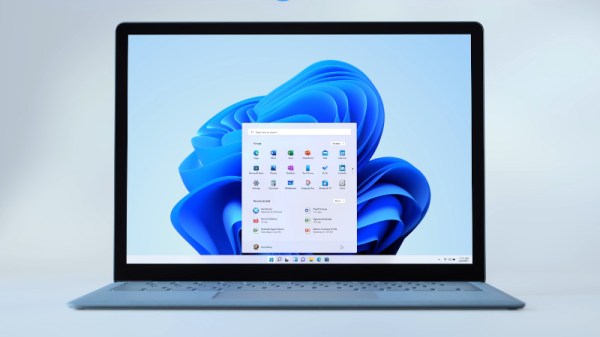
There was a time when a new version of Windows was a really big deal, such the launch of Windows 95 for which the tones of the Rolling Stones’ Start me up could be heard across all manner of media outlets. Gradually over years this excitement has petered out, finally leaving us with Windows 10 that would, we were told, be the last ever version of the popular operating system and thence only receive continuous updates
Back in September of 2019, I had the opportunity to climb aboard the restored B-17G bomber Nine-O-Nine as part of a national “Wings of Freedom” airport tour operated by the Collings Foundation. I was excited to get up close and personal with such an iconic aircraft, particularity since Hackaday gave me a platform to share the experience with a global audience. With fewer than 50 B-17s left in the world, and most of those in the United States, taking this sort of “virtual tour” was as close as most people would ever get to seeing what it was really like for the crews who operated these machines over the skies of Europe more than 75 years ago.
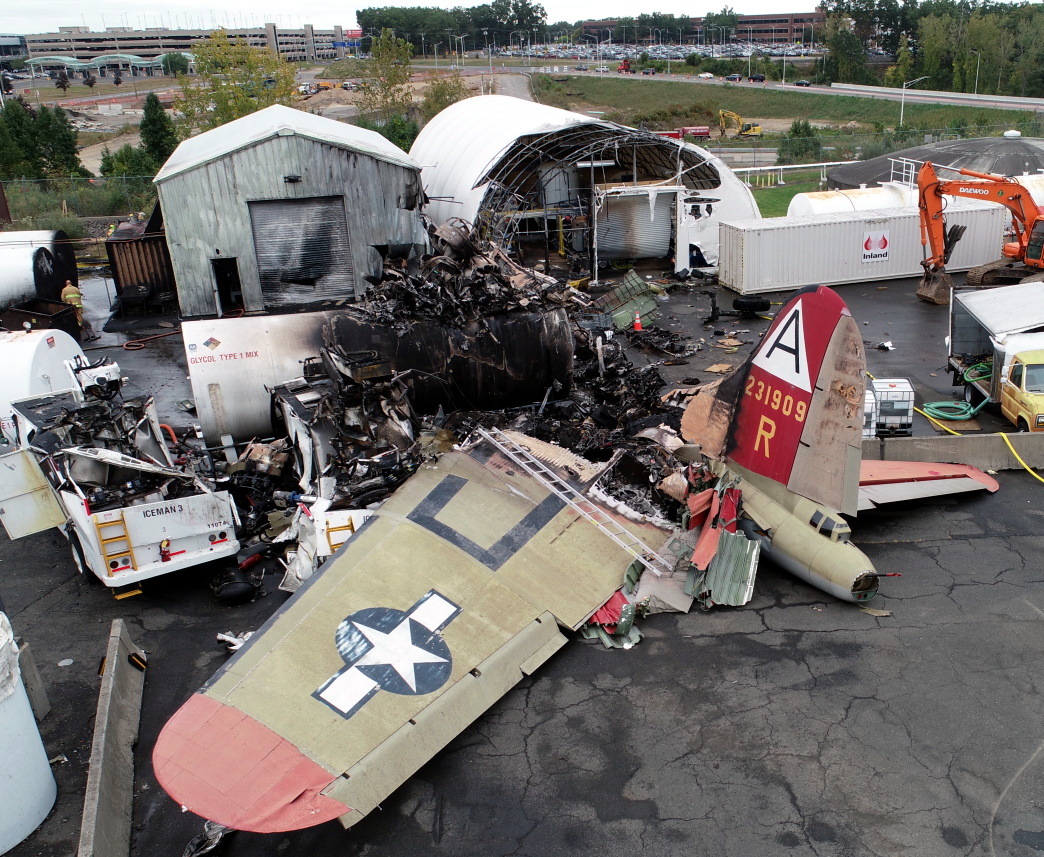
Tragically, just a week after the article was published, the Nine-O-Ninecrashed during a visit to Bradley International Airport in Connecticut. The pilot, co-pilot, and five paying passengers were all killed in either the initial impact or the subsequent fire. When crews were finally able to extinguish the flames, the left wing and tail were all that remained of the once mighty bomber. In a twist of fate, some of the images I took for the Hackaday article ended up being included in the National Transportation Safety Board (NTSB) accident report, as they represented perhaps the most detailed photographic record of the aircraft’s condition before the crash.
Wreckage of the Nine-O-Nine.
In the weeks and months that followed, many voiced their concerns over what the Federal Aviation Administration (FAA) calls “Living History Flight Experience” aircraft such as those operated by the Collings Foundation. The main point of contention was whether or not these planes were too old to safely carry passengers, and by extension, whether continuing to fly them around the country presented a menace to the national airspace. Critics argued that whatever cultural benefit offered by the chance for the public to tour or ride these antique aircraft was not worth anyone losing their lives over; a line of logic that’s difficult to find fault in.
Then came COVID-19. By March of 2020, individual states had already started going into lockdown, and suddenly there were far more pressing matters to address than the fate of a few dozen teetering WWII aircraft. It was around this time that the FAA pulled the Collings Foundation’s license to conduct any more paid flights, but since outdoor gatherings such as airshows were being put on hold for the foreseeable future, the measure had little immediate impact. It was clear these airborne museum pieces were going to spend most of 2020 in their hangers anyway.
Now, thankfully, the pall of COVID-19 is finally beginning to lift over the United States. In response to widespread vaccine availability, most states are ending or at least reducing their restrictions on outdoor events. With major airshows like the “World War II Weekend” in Reading, Pennsylvania given the green light to proceed, these legendary aircraft are being awakened from their long slumber and making their first tentative flights of the post-pandemic era.
We all need the occasional win when it comes to work or personal projects. Being able to feel that payoff of progress and satisfaction is deeply important, because if everything is always uphill, that’s a recipe for burnout. Avoiding that is important enough to explore how to set oneself up for a few easy wins.
Getting the occasional win helps us stay motivated, creative, and fulfilled. Meaningful work can deliver on this, but many of us rely on hobbies to make up any shortfall. Sometimes, that isn’t enough. Hobbies themselves can end up feeling like a chore, and when that happens, they cease to provide respite. The good news is that I believe it is possible to exploit the benefits of hobbies to deliver supplemental “wins” when they are needed most, and I’ll explain how.
I have found that successes do not have to be hard-won in order to be beneficial, but they do need to be relevant to one’s passions and interests. So, when naturally-occurring successes come too few and far between, and hobbies aren’t doing the trick, use knowledge of yourself to stack the deck for some easy wins. It can tip the scales towards feeling meaningful progress and fulfillment in the face of what could otherwise lead to burnout. Continue reading “We All Need A Win Sometimes, So Make Them Yourself”→
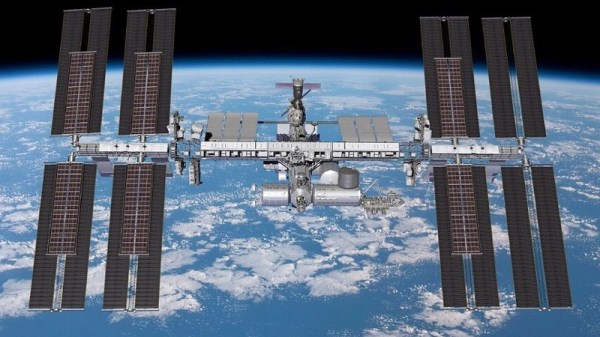
Astronauts are currently installing the first of six new solar arrays on the International Space Station (ISS), in a bid to bolster the reduced power generation capability of the original panels which have now been in space for over twenty years. But without the Space Shuttle to haul them into orbit, developing direct replacements for the Stations iconic 34 meter (112 foot) solar “wings” simply wasn’t an option. So NASA has turned to next-generation solar arrays that roll out like a tape measure and are light and compact enough for the SpaceX Dragon to carry them into orbit.
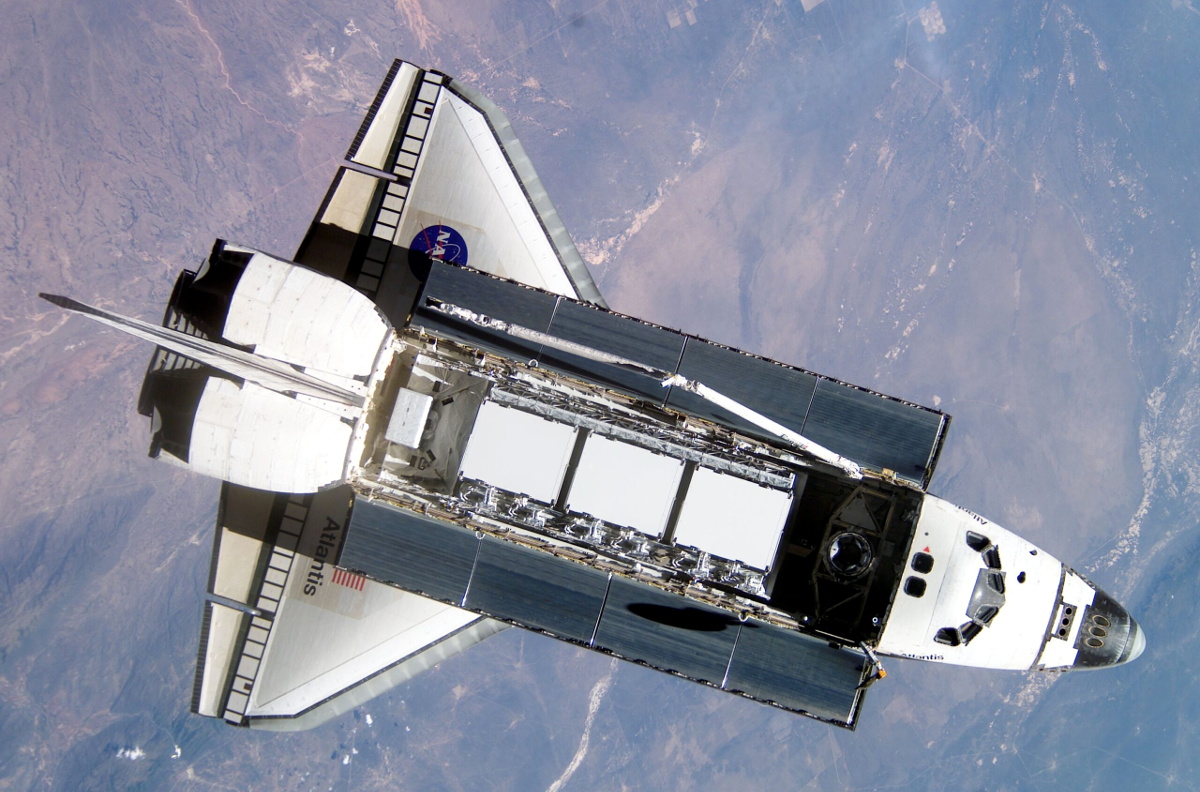
Space Shuttle Atlantis carrying part of the ISS truss.
Considering how integral the Space Shuttle was to its assembly, it’s hardly a surprise that no major modules have been added to the ISS since the fleet of winged spacecraft was retired in 2011. The few small elements that have been installed, such as the new International Docking Adapters and the Nanoracks “Bishop” airlock, have had to fit into the rear unpressurized compartment of the Dragon capsule. While a considerable limitation, NASA had planned for this eventuality, with principle construction of the ISS always intended to conclude upon the retirement of the Shuttle.
But the International Space Station was never supposed to last as long as it has, and some components are starting to show their age. The original solar panels are now more than five years beyond their fifteen year service life, and while they’re still producing sufficient power to keep the Station running in its current configuration, their operational efficiency has dropped considerably with age. So in January NASA announced an ambitious timeline for performing upgrades the space agency believes are necessary to keep up with the ever-increasing energy demands of the orbiting laboratory.