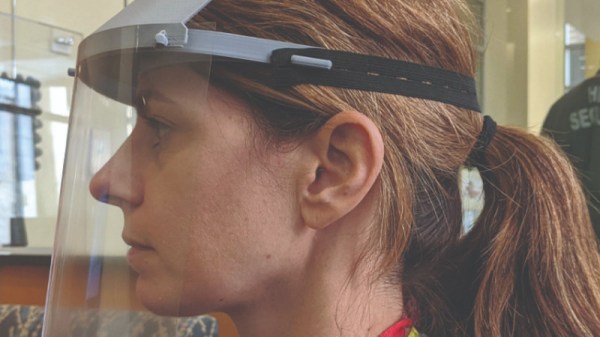
As the world faces a pandemic of monumental proportions, hospitals have been hit hard. The dual problems of disrupted manufacturing and supply chains and huge spikes in demand have led to many medical centres running out of protective gear. Makers have stepped up to help in many ways by producing equipment, with varying results. [Packy] has shared a link to a 3D-printable face shield that, unlike some designs floating around, is actually approved by the National Institute of Health in the USA.
The shield consists of a 3D printed headband, which is then coupled with a transparent piece of plastic for the face shield itself. This can be lasercut, or sourced from a document cover or transparency sheet. The design is printable in PLA or a variety of other common materials, and can be assembled easily with office supplies where necessary.
The design is available from the NIH here. (Update: 4/1/2020 here’s an alternate link as original link seems to be suffering from heavy server load) For those eager to help out, it’s important to do so in an organised fashion that doesn’t unduly take resources away from healthcare professionals trying to get an important job done. We’ve seen other hacks too, such as these 3D printed ventilator components being rushed into service in Italy.

 Alternately referred to as the “DARPA Experimental Spaceplane”, the vehicle was envisioned as being roughly the size of a business jet and capable of carrying a payload of up to 2,300 kilograms (5,000 pounds). It would take off vertically under rocket power and then glide back to Earth at the end of the mission to make a conventional runway landing. At $5 million per flight, its operating costs would be comparable with even the most aggressively priced commercial launch providers; but with the added bonus of not having to involve a third party in military and reconnaissance missions which would almost certainly be classified in nature.