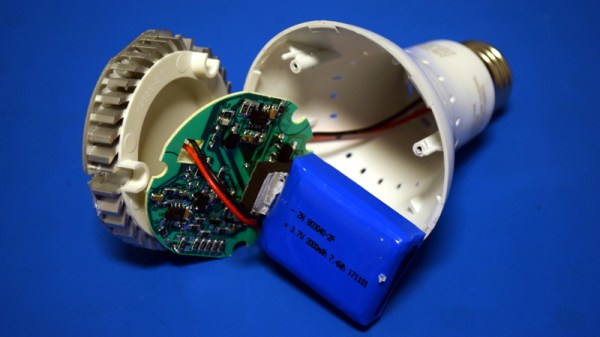
Teardown: LED Bulb Yields Tiny UPS

Occasionally you run across a product that you just know is simply too good to be true. You might not know why, but you’ve got a hunch that what the bombastic phrasing on the package is telling you just doesn’t quite align with reality. That’s the feeling I got recently when I spotted the “LED intellibulb Battery Backup” bulb by Feit Electric. For around $12 USD at Home Depot, the box promises the purchaser will “Never be in the dark again”, and that the bulb will continue to work normally for up to 3.5 hours when the power is out. If I could repurpose that to make a tiny UPS for a microcontroller project of my own, it could be even more useful.

Now an LED light bulb with a battery in the base isn’t exactly rocket science, we can understand the product conceptually at a glance. But as they say, the devil is in the details. The box claims the bulb consumes 8.5 watts, but a battery with enough capacity to run such a load for 3.5 hours would be far too large to fit inside of a light bulb. Obviously there’s more to the story.

On the side of the box, in the smallest font used on the whole package, we get our clue. The bulb drops down to 200 lumens when in battery backup mode, or roughly as bright as a cheap LED flashlight. Now things are starting to come together. Without even opening the device, we can be fairly sure it will contain two separate arrays of LEDs: one low set for battery, and a brighter set to run when the bulb has AC power.

Still, I tend to be of the opinion that anything less than $20 or so is worth cracking open to see what makes it tick. Even if the product itself is underwhelming, there’s a chance the internal components could be useful or interesting. With that in mind, let’s see what’s inside a battery backup light bulb, and what we might be able to do with it.


Continue reading “Teardown: LED Bulb Yields Tiny UPS” →

Robotics Module Challenge: Build Robot, Win Prizes

Brand new today, we’re going to go all in with the Robotics Module Challenge! This is the newest part of the 2018 Hackaday Prize which is only six weeks old, and already we’ve seen almost six hundred incredible entries. But a new challenge means a fresh start and a perfect time for you to begin your entry.

This is your call to build a module that can be used in robotics projects across the world. Twenty module designs will be awarded $1,000 and and chance at the five top prizes including the $50,000 grand prize!

Robotics is the kitchen sink of the world of electronics. You have to deal with motors, sensors, spinny lidar doohickies, computer vision, mechatronics, and unexpected prototyping issues accounting for the coefficient of friction of 3D printed parts. Robotics is where you show your skills, and this is your chance to show the world what you’ve got.

Wouldn’t it be great if there were some more ways to skip around the hard parts? That is the Robotics Module Challenge in a nutshell. We want to see great modular Open Hardware designs that can be used by roboticists all over the world. This might be a motor controller, a chassis or limb design system, a sensor network scheme, a communications system, data collection and delivery — basically anything related to robotics. Build a prototype that shows how your module is used and document all the info needed to incorporate and riff on your design in other robot builds.

Start your entry now and show us your take on a great bit of Open Hardware.

Continue reading “Robotics Module Challenge: Build Robot, Win Prizes” →

What Does ‘Crypto’ Actually Mean?

This article is about crypto. It’s in the title, and the first sentence, yet the topic still remains hidden.

At Hackaday, we are deeply concerned with language. Part of this is the fact that we are a purely text-based publication, yes, but a better reason is right there in the masthead. This is Hackaday, and for more than a decade, we have countered to the notion that ‘hackers’ are only bad actors. We have railed against co-opted language for our entire existence, and our more successful stories are entirely about the use and abuse of language.

Part of this is due to the nature of the Internet. Pedantry is an acceptable substitute for wisdom, it seems, and choosing the right word isn’t just a matter of semantics — it’s a compiler error. The wrong word shuts down all discussion. Use the phrase, ‘fused deposition modeling’ when describing a filament-based 3D printer, and some will inevitably reach for their pitchforks and torches; the correct phrase is, ‘fused filament fabrication’, the term preferred by the RepRap community because it is legally unencumbered by patents. That’s actually a neat tidbit, but the phrase describing a technology is covered by a trademark, and not by a patent.

The technical side of the Internet, or at least the subpopulation concerned about backdoors, 0-days, and commitments to hodl, is now at a semantic crossroads. ‘Crypto’ is starting to mean ‘cryptocurrency’. The netsec and technology-minded populations of the Internet are now deeply concerned over language. Cryptocurrency enthusiasts have usurped the word ‘crypto’, and the folks that were hacking around with DES thirty years ago aren’t happy. A DH key exchange has nothing to do with virtual cats bought with Etherium, and there’s no way anyone losing money to ICO scams could come up with an encryption protocol as elegant as ROT-13.

But language changes. Now, cryptographers are dealing with the same problem hackers had in the 90s, and this time there’s nothing as cool as rollerblading into the Gibson to fall back on. Does ‘crypto’ mean ‘cryptography’, or does ‘crypto’ mean cryptocurrency? If frequency of usage determines the correct definition, a quick perusal of the press releases in my email quickly reveals a winner. It’s cryptocurrency by a mile. However, cryptography has been around much, much longer than cryptocurrency. What’s the right definition of ‘crypto’? Does it mean cryptography, or does it mean cryptocurrency?

Continue reading “What Does ‘Crypto’ Actually Mean?” →

Spoofing Cell Networks With A USB To VGA Adapter

RTL-SDR brought cheap and ubiquitous Software Defined Radio (SDR) to the masses, opening up whole swaths of the RF spectrum which were simply unavailable to the average hacker previously. Because the RTL-SDR supported devices were designed as TV tuners, they had no capability to transmit. For the price they are still an absolutely fantastic deal, and deserve to be in any modern hacker’s toolkit, but sometimes you want to reach out and touch someone.

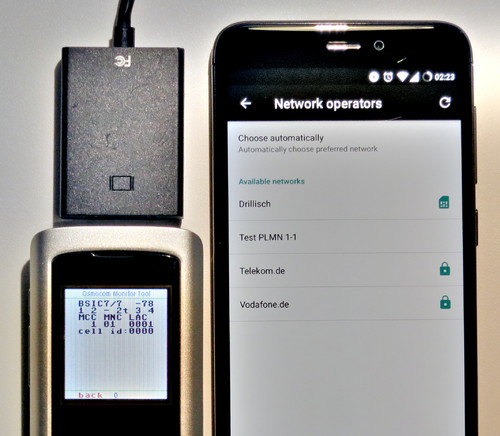
GSM network broadcast from a VGA adapter

Now you can. At OsmoDevCon [Steve Markgraf] released osmo-fl2k, a tool which allows transmit-only SDR through cheap USB 3.0 to VGA adapters based on the Fresco Logic FL2000 chip. Available through the usual overseas suppliers for as little has $5 USD, these devices can be used unmodified to transmit low-power FM, DAB, DVB-T, GSM, UMTS and GPS signals.

In a demonstration on the project page, one of these USB VGA adapters is used to broadcast a GSM cellular network which is picked up by the adjacent cell phones. Another example shows how it can be used to broadcast FM radio. A GitHub repository has been set up which includes more examples. The signals transmitted from the FL2000 chip are obviously quite weak, but the next step will logically be the hardware modifications necessary to boost transmission to more useful levels.

To say this is a big deal is something of an understatement. For a few bucks, you’ll be able to get a device to spoof cellular networks and GPS signals. This was possible before, of course, but took SDR hardware that was generally outside the budget of the casual experimenter. If you bought a HackRF or an Ettus Research rig, you were probably responsible enough not to get into trouble with it, but that’s not necessarily the case anymore. As exciting as this technology is, we would be wise to approach it with caution. In an increasingly automated world, GPS spoofing can have some pretty bad results.

Mechanisms: Hook And Loop Fasteners

As a species, we’ve done a pretty good job at inventing some useful devices. But as clever as we think we are, given sufficient time, natural selection will beat us at our game at almost every turn. So it makes sense that many of our best inventions are inspired by nature and the myriad ways life finds to get DNA from one generation to the next.

Hook and loop fasteners are one such design cribbed from nature, and the story behind this useful mechanism is a perfect example that a prepared mind, good observation skills, and a heck of a lot of perseverance are what it takes to bring one of Mother Nature’s designs to market.

Editor’s Note: As some predicted in the comments section, we were contacted by representatives of Velcro Companies and asked to change all mentions in this article to either VELCRO® Brand Fastener or to use the generic “Hook and Loop” term. If it seems weird that we’re calling this hook and loop, now you know why.

Continue reading “Mechanisms: Hook And Loop Fasteners” →

Unlock & Talk: Open Source Bootloader & Modem

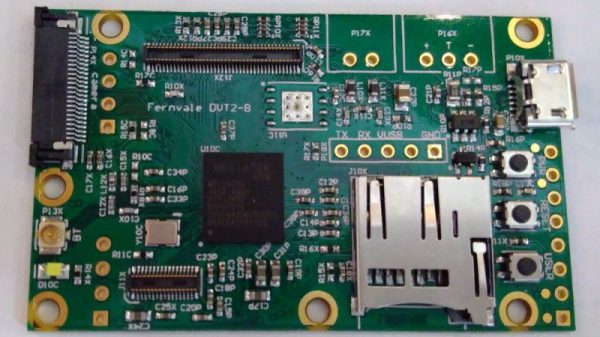
During the early years of cell phones, lifespan was mainly limited by hardware (buttons wearing out, dropping phones, or water damage), software is a primary reason that phones are replaced today. Upgrades are often prompted by dissatisfaction with a slow phone, or manufacturers simply stopping updates to phone software after a few years at best. [Oliver Smith] and the postmarketOS project are working to fix the update problem, and have begun making progress on loading custom software onto cellphone processors and controlling their cellular modems. Continue reading “Unlock & Talk: Open Source Bootloader & Modem” →

Raspberry Pi W Antenna Analysis Reveals Clever Design

The old maxim is that if you pay peanuts, you get a monkey. That’s no longer true, though: devices like the Raspberry Pi W have shown that a $10 device can be remarkably powerful if it is well designed. You might not appreciate how clever this design is sometimes, but this great analysis of the antenna of the Pi W by [Carl Turner, Senior RF Engineer at Laird Technology] might help remind you.

Continue reading “Raspberry Pi W Antenna Analysis Reveals Clever Design” →