Russian Decapping Madness

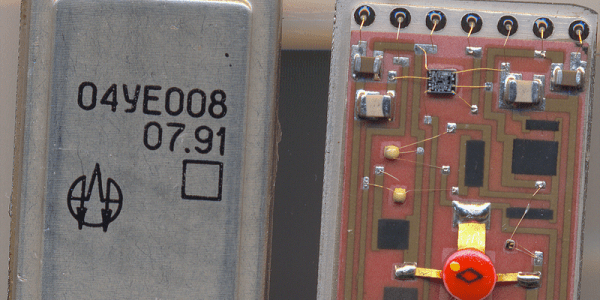
It all started off innocently enough. [mretro] was curious about what was inside a sealed metal box, took a hacksaw to it and posted photographs up on the Interwebs. Over one hundred forum pages and several years later, the thread called (at least in Google Translate) “dissecting room” continues to amaze.
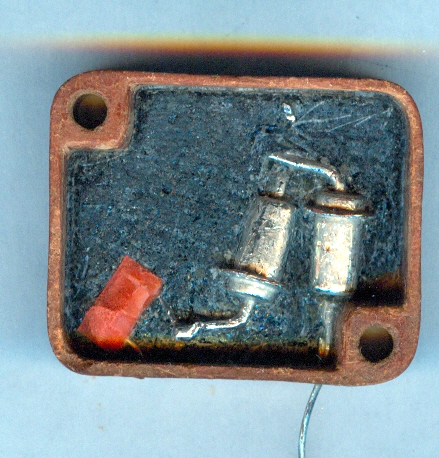
h_1466184174_4168461_2f4afb42b7If you like die shots, decaps, or teardowns of oddball Russian parts, this is like drinking from a firehose. You can of course translate the website, but it’s more fun to open it up in Russian and have a guess at what everything is before peeking. (Hint: don’t look at the part numbers. NE555 is apparently “NE555” in Russian.)

From a brief survey, a lot of these seem to be radio parts, and a lot of it is retro or obsolete. Forum user [lalka] seems to have opened up one of every possible Russian oscillator circuit. The website loads unfortunately slowly, at least where we are, but bear in mind that it’s got a lot of images. And if your fingers tire of clicking, note that the URL ends with the forum page number. It’d be a snap to web-scrape the whole darn thing overnight.

We love teardowns and chip shots, of old gear and of new. So when you think you’ve got a fake part, or if you need to gain access to stuff under that epoxy blob for whatever reason, no matter how embarrassing, bring along a camera and let us know!

Thanks [cfavreau] for the great tip!
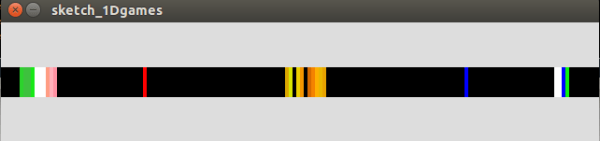
Video Games In As Few Dimensions As Possible

First there were text games, then came 2D dungeons. When Wolfenstein 3D broke out on the gaming scene, it created quite a fuss. But if all you’ve got is a strip of WS2812 LEDs, those are a few dimensions too many.

[treibair] has started up a project on Hackaday.io to develop 1D video games to be played on a single LED strip. While the end application is something with a cool physical interface, probably driven by a microcontroller, prototyping is a lot easier on the big computer. He’s writing it in Processing, though, so that the transition to the Arduino is easier in the end.

There are a couple of other games out there in 1D, including Line Wobbler (YouTube) and, naturally, Wolfenstein 1D. We even saw a one-dimensional “snake” clone at Make Munich a few months back. (Would the author please stand up?)

We think the idea is a good one, and lining up everyone’s 1D gaming experience in one place would be a great help. So link up code and reviews in the comments!

Continue reading “Video Games In As Few Dimensions As Possible”

Pokédex Case Keeps Your Phone Powered Up So You Can Catch ‘Em All

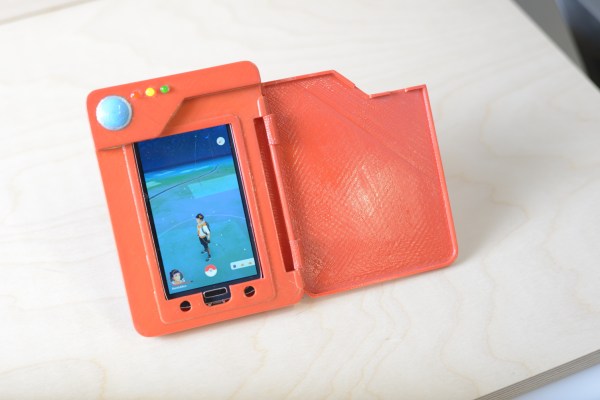
The launch of Pokemon Go has unleashed the franchise upon the world once again but this time it’s encouraging users to get active and socialize in the great outdoors. To show off their dedication to the cause, [Npoole] 3D printed a Pokédex external battery and case to combat the game’s already legendary drain on their Galaxy S4’s resources.

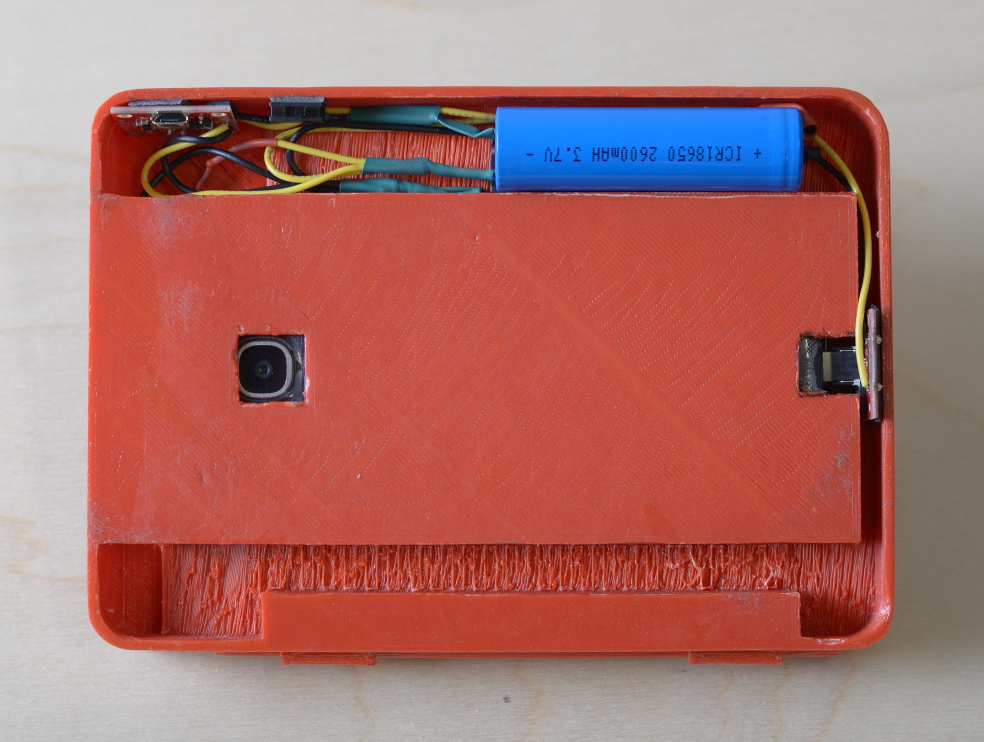
Pokedex Open BackMimicking the first-generation Kanto design, [Npoole] 3D printed it in red ABS and added a small circuit with a red, yellow and green LED to complete the effect. Inside, a 18650 lithium cell provides the much-needed backup power via a micro B plug and is boosted to 5V with a LiPo charger/booster board. Despite a switch on the circuit, the battery slowly drains so that’s something to be corrected in a future version.

As you can see, there is still some room left over in the external bat–I mean–Pokédex, and [Npoole]  intends to add another battery and a cooling fan to further improve the design. The result is a little bulky, but for new and diehard fans alike, a working Pokédex definitely worth it.

While that’s printing, if you’re looking to hack your way to the perfect Poké-ball throw, try out this lo-tech addition to your Pokémon trainer kit.

[via Sparkfun]

Tearing Apart The Nintendo PlayStation

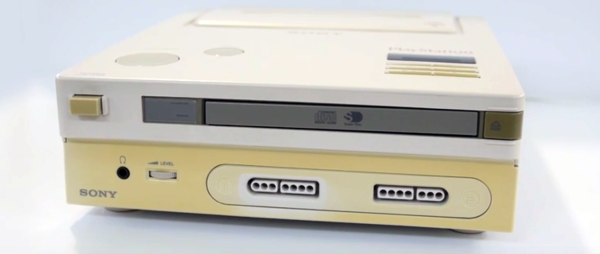
The mid 90s were a weird time for video game hardware. There were devices that could play videos from compact disks. Those never caught on. Virtual reality was the next big thing. That never caught on. The Sony PlayStation was originally an add-on for the Super Nintendo. That never caught on, but a few prototype units were produced. One of these prototype ‘Nintendo Playstations’ was shipped to a company that went into bankruptcy. Eventually, the assets of this company were put up for auction, and this unbelievably rare game console was bought by [Terry Diebold] for $75.

[Terry] allowed [Ben Heck] tear into this piece of videogame history, and he has the video proof that this was a collaboration between Sony and Nintendo.

Continue reading “Tearing Apart The Nintendo PlayStation”

Your ESP8266 Needs More Memory

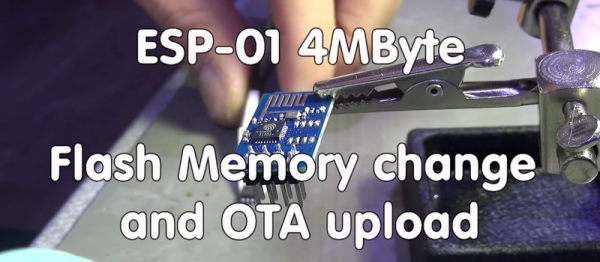
We just got through reviewing MicroPython on the ESP8266, and one of the main takehomes is that our ESP modules need more flash memory. You may be in the same boat — the earliest (and cheapest) modules on the market only had 512 kB of flash. For over-the-air programming, or to give you some more space for fancier programs, you’re going to want 1 MB or even 4 MB.

The solution? Just buy a new flash chip and solder it on. This is especially easy if you’ve got an ESP-01, ESP-03, or ESP-11 modules where the flash chip is exposed. Desolder, resolder, done. It can be a little trickier for those modules with a tin can around chips, but that’s nothing that a little hot air can’t fix. See the video embedded below for a good walk-through.

Continue reading “Your ESP8266 Needs More Memory”

Obsolescence As A Service

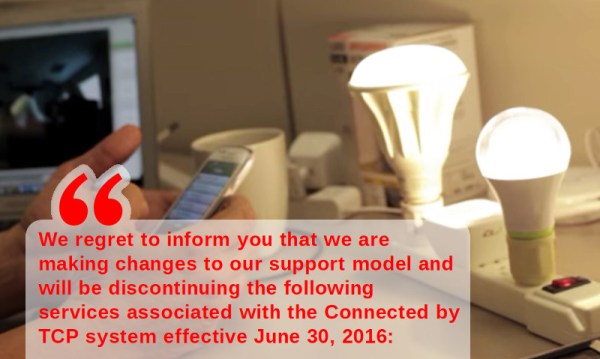
Yet another Internet of Things service has left its customers in the lurch. IoT devices (mostly lightbulbs) made sold by Greenwave Systems stopped talking to the outside world on July 1. More specifically, the server to which they all connected (ahem, “the cloud”) has been turned off, which rules out using the bulbs with Internet-based services like IFTTT, which was a major selling point of the Things in the first place.

[Edit: We were contacted by Greenwave, and they pointed out that they merely sold the IoT devices in question. They are made by TCP, which is also responsible for cancelling the service. And TCP has a history of doing this sort of thing before.]

It’s not the first time we’ve seen IoT companies renege on their promises to provide service, and it’s surely not going to be the last. We’re preaching to the choir here, but when even Google is willing to take the PR hit to effectively brick your devices, the only protection that you’ve got against obsolescence is an open protocol.

At least the users of Greenwave’s TCP’s devices will continue to be able to control them from within the home. That, plus some clever hacking, will make them workable into the future. But it’s not like the convenience that was sold with the devices.

Boo to shady IoT companies! But thanks to [Adrian] for the tip.

The Raspberry Pi 3 Compute Module Is On Its Way

The Raspberry Pi Foundation founder Eben Upton has revealed in an interview with PCWorld that there will be a new version of the organisation’s Compute Module featuring the faster processor from the latest Raspberry Pi 3 boards, and it will be available “In a few months”.

The Compute Module was always something of an odd one out among the Raspberry Pi range, being a stripped-out Raspberry Pi chipset on a SODIMM form factor card without peripherals for use as an embedded computer rather than the standalone card with all the interfaces we are used to in the other Pi boards. It has found a home as the unseen brains behind a selection of commercial products, and though there are a few interface boards for developers and experimenters available for it we haven’t seen a lot of it in the world of hackers and makers. Some have questioned its relevance when the outwardly similar Pi Zero can be had for a lower price, but this misses the point that the two boards have been created for completely different markets.

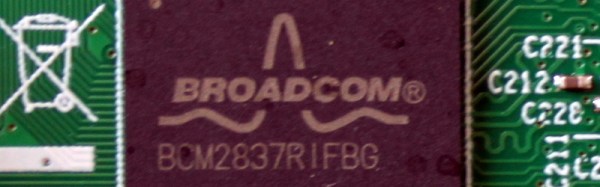
The Pi 3’s 1.2 GHz 64-bit quad-core ARM Cortex-A53 BCM2837 SoC will certainly up the ante in the Compute module’s market, but it will be interesting to see what changes if any they make to its form factor. The Foundation’s close ties with Broadcom mean that they have done an impressive job in maintaining backward compatibility at a hardware level between the different generations of their product, but it is unclear whether this extends to the possibility of the new module maintaining a pin-for-pin compatibility with the old. We’d expect this to be an unlikely prospect.

It is certain that we will see a new generation of exciting commercial products emerging based around the new module, but will we see it making waves within our domain? This will depend on its marketing, and in particular the price point and quantity purchase they set for it. The previous board when added to a Compute Module Development board was an expensive prospect compared to a Raspberry Pi Model B that became more unattractive still as newer Pi boards gained more capabilities. If they price this one competitively and perhaps if any cheaper open hardware breakout boards emerge for it, we could have a valuable new platform on our hands.

Here’s our coverage of the original Compute Module launch, back in 2014.

[via Liliputing and reddit].

BCM2837 image: By Jose.gil (Own work) [CC BY-SA 4.0], via Wikimedia Commons.