[menkveldj] built a service that encrypts files which self destruct in 24 hours. The download link can only be used once. If the wrong people were to get the link and download the file, they’d need many years on a pretty powerful computer to crack the 256AES encryption.
The sender shares a file that is encrypted client side using a password generated Pbkdf2 key to encrypt the data before uploading it to the s3 storage service. The sender is then provided the one-time-use link to share with the recipient. After the first download, or 24 hours, the link and the encrypted file are both deleted. The receiver must enter the same password to decrypt and recover the file. No one but the sharer and receiver know what the actual file is.
It’s still work in progress, so chime in with your comments and suggestions. To dig into the code, check out his repository on Github, which also has instructions to build and run it if you’d like to do your own version.
Oh, and you’ll like this. If want to thumb your nose at the powers that be, the site has a redirect for the whimsical domain: NSAfu.com.

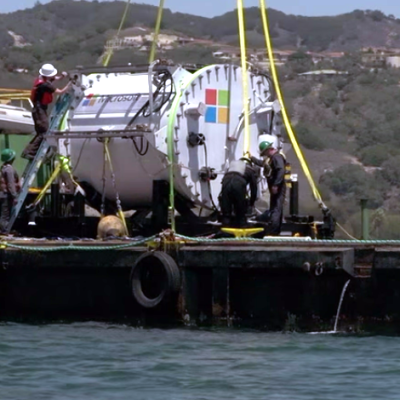 Passive cooling is wonderful, and really drops the energy footprint of a data center, albeit a very small one which is being tested. Scaled up, I can think of another big impact: property taxes. Does anyone know what the law says about dropping a pod in the ocean? As far as I can tell, laying undersea cabling is expensive, but once installed there are no landlords holding out their hands for a monthly extraction. Rent aside, taking up space with windowless buildings sucking huge amounts of electricity isn’t going to win hearts and minds of the neighborhood. Undersea real estate make sense there too.
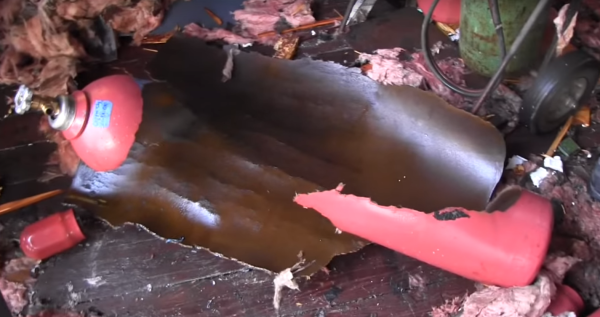
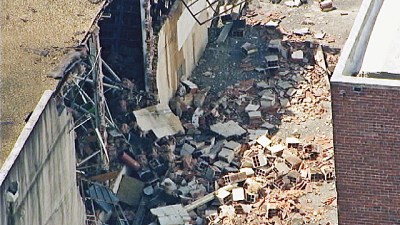 On the morning of September 26th, 2013 the city of Orlando was rocked by an explosion. Buildings shook, windows rattled, and Amtrak service on a nearby track was halted. TV stations broke in with special reports. The dispatched helicopters didn’t find fire and brimstone, but they did find a building with one wall blown out. The building was located at 47 West Jefferson Street. For most this was just another news day, but a few die-hard fans recognized the building as Creative Engineering, home to a different kind of explosion: The Rock-afire Explosion.
 Many of us have heard of the Rock-afire Explosion, the animatronic band which graced the stage of ShowBiz pizza from 1980 through 1990. For those not in the know, the band was created by the inventor of Whac-A-Mole, [Aaron Fechter], engineer, entrepreneur and owner of Creative Engineering. When ShowBiz pizza sold to Chuck E. Cheese, the Rock-afire Explosion characters were replaced with Chuck E. and friends. Creative Engineering lost its biggest customer. Once over 300 employees, the company was again reduced to just [Aaron]. He owned the building which housed the company, a 38,000 square foot shop and warehouse. Rather than sell the shop and remaining hardware, [Aaron] kept working there alone. Most of the building remained as it had in the 1980’s. Tools placed down by artisans on their last day of work remained, slowly gathering dust.