Decoding Data Hiding In Star Trek IV

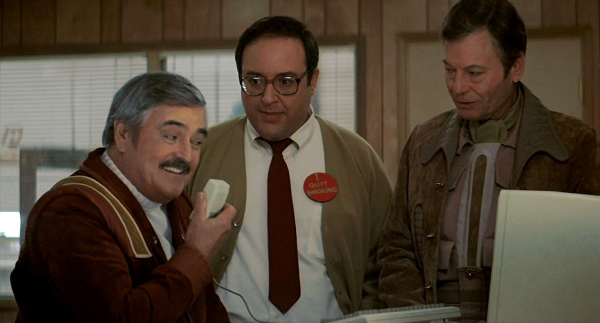
1986: The US and Russia signed arms agreements, Argentina won the world cup, and Star Trek IV: The Voyage Home hit the theaters. Trekkies and the general public alike enjoyed the film. Some astute hams though, noticed a strange phenomenon about halfway through the film. During a pivotal scene, Scotty attempts to beam Chekov and Uhura off the Enterprise, but has trouble with interference. The interference can be heard over the ubiquitous Star Trek comm link. To many it may sound like random radio noise. To the trained ear of a [Harold Price, NK6K] though, it sounded a heck of a lot like packet radio transmissions.
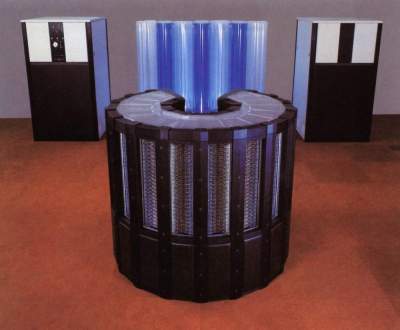
cray-2By 1989, the film was out on VHS and laser disc. With high quality audio available, [Harold] challenged his friend [Bob McGwier, N4HY] to decode the signal. [Bob] used the best computer he had available: His brain. He also had a bit of help from a Cray 2 supercomputer.

[Bob] didn’t own his own Cray 2 of course, this particular computer was property of the National Security Agency (NSA). He received permission to test Frequency Shift Keyed (FSK) decoder algorithms. Can you guess what his test dataset was?

The signal required a lot of cleanup: The original receiver was tuned 900 Hz below the transmission frequency. There also was a ton of noise. To make matters worse, Scotty kept speaking over the audio. Thankfully, AX.25 is a forgiving protocol. [Bob] persevered and was able to obtain some usable data. The signal turned out to be [Bill Harrigill, WA8ZCN] sending a Receive Ready (RR) packet to N6AEZ on 20 meters. An RR packet indicates that [Bill’s] station had received all previous packets and was ready for more.  [Bob] called to [Bill], who was able to verify that it was probably him transmitting in the 1985 or 1986, around the time the sound editors would have been looking for effects.

That’s a pretty amazing accomplishment, especially considering it was 1989. Today, we carry supercomputers around in our pockets. The Cray 2 is roughly equivalent to an iPhone 4 in processing power. Modern laptop and desktop machines easily out class Seymour Cray’s machine. We also have software like GNU Radio, which is designed to decode data. Our challenge to you, the best readers in the world, is to replicate [Bob McGwier’s] work, and share your results.

Stallman’s One Mistake

We all owe [Richard Stallman] a large debt for his contributions to computing. With a career that began in MIT’s AI lab, [Stallman] was there for the creation of some of the most cutting edge technology of the time. He was there for some of the earliest Lisp machines, the birth of the Internet, and was a necessary contributor for Emacs, GCC, and was foundational in the creation of GPL, the license that made a toy OS from a Finnish CS student the most popular operating system on the planet. It’s not an exaggeration to say that without [Stallman], open source software wouldn’t exist.

Linux, Apache, PHP, Blender, Wikipedia and MySQL simply wouldn’t exist without open and permissive licenses, and we are all richer for [Stallman]’s insight that software should be free. Hardware, on the other hand, isn’t. Perhaps it was just a function of the time [Stallman] fomented his views, but until very recently open hardware has been a kludge of different licenses for different aspects of the design. Even in the most open devices, firmware uses GPLv3, hardware documentation uses the CERN license, and Creative Commons is sprinkled about various assets.

If [Stallman] made one mistake, it was his inability to anticipate everything would happen in hardware eventually. The first battle on this front was the Tivoization of hardware a decade ago, leading to the creation of GPLv3. Still, this license does not cover hardware, leading to an interesting thought experiment: what would it take to build a completely open source computer? Is it even possible?

Continue reading “Stallman’s One Mistake”

Finally, An Upgrade For The TI-86

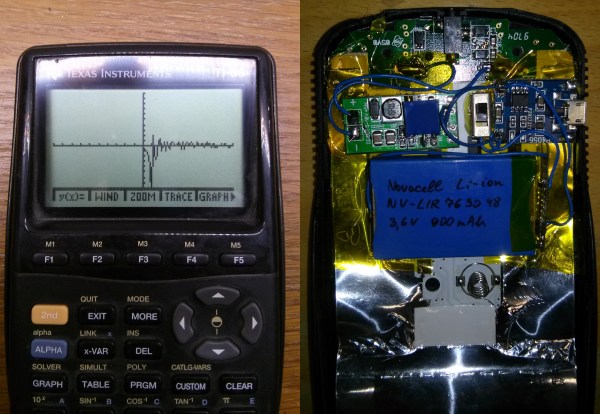
The eternal and everlasting TI-86 graphing calculator is a great calculator: first made back in 1997, and still used by students today. But its battery life kinda sucks. So [Dalius] decided to bring his TI-86 into the 21st century.

If you’re not familiar, the TI-86 runs off of 4 AAA batteries, preferably alkaline. If you use rechargeable NiMH they don’t last very long since they have a lower voltage per cell, which means it ends up draining even faster to a voltage level the TI-86 cannot operate at.

Continue reading “Finally, An Upgrade For The TI-86”

Hackers And Heroes: Rise Of The CCC And Hackerspaces

From its roots in phone phreaking to the crackdowns and legal precedents that drove hacking mostly underground (or into business), hacker culture in the United States has seen a lot over the last three decades. Perhaps the biggest standout is the L0pht, a visible 1990s US hackerspace that engaged in open disclosure and was, arguably, the last of the publicly influential US hacker groups.

The details of the American hacker scene were well covered in my article yesterday. It ended on a bit of a down note. The L0pht is long gone, and no other groups that I know of have matched their mix of social responsibility and public visibility. This is a shame because a lot of hacker-relevant issues are getting decided in the USA right now, and largely without our input.

Chaos Computer Club

But let’s turn away from the USA and catch up with Germany. In the early 1980s, in Germany as in America, there were many local computer clubs that were not much more than a monthly evening in a cafeteria or a science museum or (as was the case with the CCC) a newspaper office. Early computer enthusiasts traded know-how, and software, for free. At least in America, nothing was more formally arranged than was necessary to secure a meeting space: we all knew when to show up, so what more needed to be done?

Things are a little different in the German soul. Peer inside and you’ll find the “Vereinsmentalität” — a “club-mentality”. Most any hobby or sport that you can do in Germany has an associated club that you can join. Winter biathlon, bee-keeping, watercolor painting, or hacking: when Germans do fun stuff, they like to get organized and do fun stuff together.

Continue reading “Hackers And Heroes: Rise Of The CCC And Hackerspaces”

LUX Searches In The Deep For Dark Matter

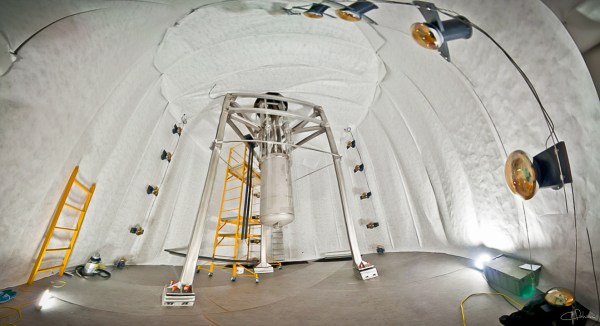
The Homestake Mine started yielding gold in 1876. If you had asked George Hearst, the operator at the time, if the mine would someday yield the secrets of the universe I bet he would have laughed you out of the room. But sure enough, by 1960 a laboratory deep in the mine started doing just that. Many experiments have been conducted there in the five and a half decades since. The Large Underground Xenon (LUX) experiment is one of them, and has been running is what is now called the Sanford Underground Research Facility (SURF) for about four years. LUX’s first round of data was collected in 2013, with the experiment and the rest of the data slated to conclude in 2016. The method, hardware, and results wrapped up in LUX are utterly fascinating.

Continue reading “LUX Searches In The Deep For Dark Matter”

String Racing Robots Are Here !

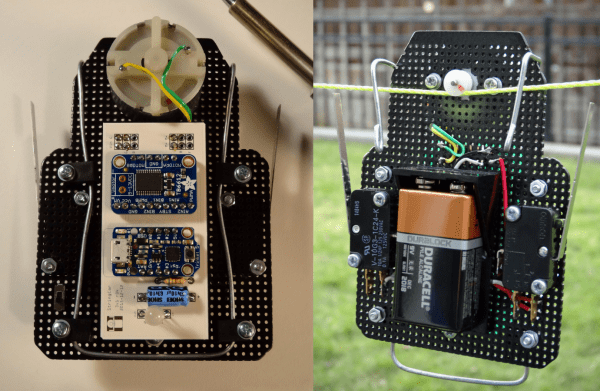
This could be the start of a new thing. [HarpDude] showed off his String Car Racers over on the Adafruit forum. It’s like a small model cable car on caffeine. String up enough of them and go head to head racing with others.

A motor with a small pulley runs over a length of string stretched between 2 posts. Below the pulley, acting as a counterweight balance, is the rest of the racer. A Trinket board, motor driver, 9V battery and a pair of long lever micro switches to detect end of travel. The switches also help reverse the motor. A piece of galvanized wire acts as a guide preventing the String Car from jumping off the string. And discovering the benefits of a micro-controller design, as against discrete TTL/CMOS, old timer [HarpDude] added two operational modes via software. “Pong”, where the String Car keeps going back and forth over the string until it stops of (battery) exhaustion. The other mode is “Boomerang” – a single return trip back and forth.

We are guessing the next upgrade would be to add some kind of radio on the car (ESP8266 perhaps) and build an app to control the String Car. That’s when gaming could become fun as it opens up possibilities. One way to improve performance would be to add two “idler” pulleys in line with the main drive pulley, and then snake the string through the three of them. Now you know what to do with all of those old motors you’ve scavenged from tape drives, CD drives and printers. Let the Games begin!

Thanks [Mike Stone] for tipping us off on this.

Learning And Failing At Digital Electronics

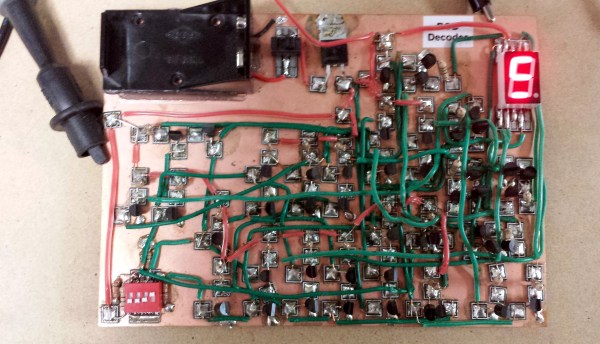
[spencerhamblin] is starting his explorations into digital electronics the hard way: reproducing a “simple” IC’s functionality by wiring up a board full of discrete transistors. In this case, the end product is a binary-to-seven-segment decoder built from scratch.

In engineering circles, this circuit is better known as a 7447 BCD to seven-segment decoder/driver, but just using a single chip has little pedagogical value. Building a simple circuit with 39 transistors, 31 resistors, and a handful of diodes is a good introduction to digital electronics, and after two attempts, [spencerhamblin] knocked it out of the park.

The build began with a piece of copper clad board, a bunch of cheap FETs from fleabay, and an incorrect schematic. While the first version of the project looked fantastic with Manhattan-style construction, and jumper wires everywhere, the schematic was fundamentally flawed and [spencer] got a little confused when converting the circuit to a common anode display.

Version two used a more standardized construction. This circuit was plotted in DipTrace, and the resulting PCB was sent off to OSHPark. The build was cleaner, but in capturing the schematic, [spencer] reversed the footprint of the seven segment display. That was easy enough to fix with a few short wires, and after a little bit of work [spencer] had a device that would convert binary to a seven segment display.