The Apollo Digital Ranging System: More Than Meets The Eye

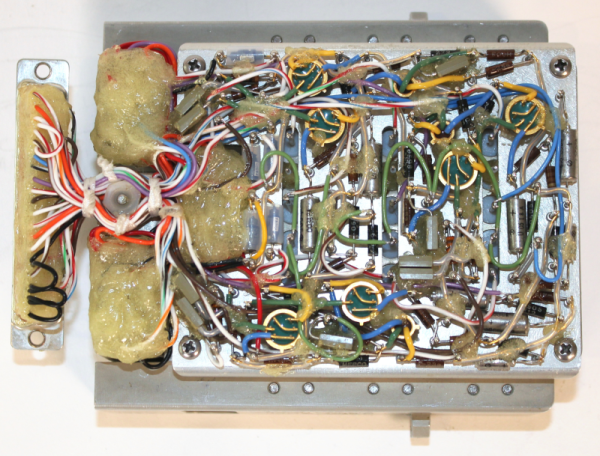
If you haven’t seen [Ken Shirriff]’s teardowns and reverse engineering expeditions, then you’re in for a treat. His explanation and demonstration of the Apollo digital ranging system is a fascinating read, even if vintage computing and engineering aren’t part of your normal fare.

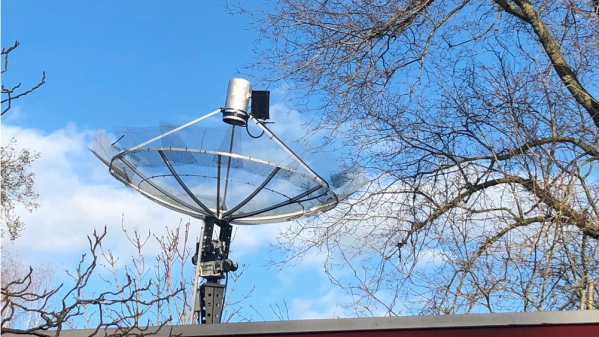
The average Hackaday reader should be familiar with the concept of determining the distance of a faraway object by measuring how long it takes a sound or radio wave to be reflected, such as in sonar and radar. Going another step and measuring Doppler Shift – the difference in the returned signal’s frequency – will tell us the velocity of the object relative to our position. It’s so simple that an Arduino can do it. But in the days of Apollo, there was no Arduino. In fact, there were no Integrated Circuits. And Apollo missions went all the way to the moon- far too distant for relatively simple Radar measurements. Continue reading “The Apollo Digital Ranging System: More Than Meets The Eye”

Axiom’s Private ISS Mission Was No Space Vacation

In an era where anyone with deep enough pockets can hitch a ride to the edge of space and back, you’d be forgiven for thinking that Axiom’s Ax-1 mission to the International Space Station was little more than a pleasure cruise for the four crew members. Granted it’s a higher and faster flight than the suborbital hops that the likes of William Shatner and Jeff Bezos have been embarking on, but surely it must still be little more than a publicity stunt organized by folks with more money than they know what to do with?

Thankfully, there’s a bit more to it than that. While the mission was privately funded, the Ax-1 crew weren’t just orbital sightseers. For one thing, there was plenty of real-world experience packed into the SpaceX Dragon: the mission was commanded by Michael López-Alegría, a veteran NASA astronaut, and crew members Larry Connor and Eytan Stibbe are both accomplished pilots, with the latter clocking in thousands of hours on various fighter jets during his time with the Israeli Air Force.

But more importantly, they had work to do. Each member of the crew was assigned a list of experiments they were to conduct, ranging from medical observations to the testing of new hardware. Of course there was some downtime — after all, if you spent $50 million on a ticket to space, you’d expect to have at least a little fun — but this wasn’t just a photo op: Axiom was looking for results. There was no hiding from the boss either, as López-Alegría is not just the Mission Commander, he’s also Axiom’s Vice President of Business Development.

Which makes sense when you consider the company’s ultimate goal is to use the ISS as a springboard to accelerate the development of their own commercial space station. The data collected during Ax-1 is going to be critical to Axiom’s path forward, and with their first module already under construction and expected to launch by 2025, there’s no time to waste.

So what did the crew members of the this privately funded mission to the International Space Station accomplish? Let’s take a look at a few of the more interesting entries from the docket.

Continue reading “Axiom’s Private ISS Mission Was No Space Vacation”

Mercury Thrusters: A Worldwide Disaster Averted Just In Time

The field of space vehicle design is obsessed with efficiency by necessity. The cost to do anything in space is astronomical, and also heavily tied to launch weight. Thus, any technology or technique that can bring those figures down is prime for exploitation.

In recent years, mercury thrusters promised to be one such technology. The only catch was the potentially-ruinous environmental cost. Today, we’ll look at the benefits of mercury thrusters, and how they came to be outlawed in short order.

Continue reading “Mercury Thrusters: A Worldwide Disaster Averted Just In Time”

Hacking An Experimental ESA Satellite

Hacking these days means everything from someone guessing your password and spamming your contacts with toxic links, to wide-scale offensive cyberattacks against infrastructure by sophisticated operators backed by nation states. When it comes to hacking satellites, though, [Didelot Maurice-Michel] found himself tangling with some hardware belonging to the European Space Agency. 

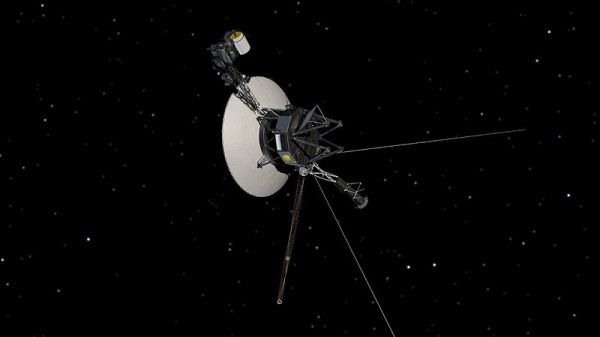
As part of an event called HackCYSAT, hackers were invited to attack the ESA’s OPS-SAT, a CubeSat intended to demonstrate improved techniques for mission control and more advanced satellite hardware. The computer hardware on board is ten times more powerful than other existing ESA satellites, and aims to take satellite technology on a new leap forward.

Continue reading “Hacking An Experimental ESA Satellite”

Mothballing Rosalind: How To Put A Space Mission In Storage

In planetary exploration circles, Mars has quite a bad reputation. The Red Planet has a habit of eating spacecraft sent there to explore it, to the degree that nearly half of the missions we’ve thrown at it have failed in one way or another. The “Mars Curse” manifests itself most spectacularly when landers fail to negotiate the terminal descent and new billion-dollar craters appear on the Martian regolith, while some missions meet their doom en route to the planet, and an unlucky few have even blown up on the launchpad.

But the latest example of the Mars Curse, the recent cancellation of the second half of the ExoMars mission, represents a new and depressing failure mode: war — specifically the Russian invasion of Ukraine. The international outrage over the aggression resulted in economic sanctions and diplomatic isolation of Russia, which retaliated by ending its partnership with the European Space Agency (ESA), depriving the mission of its launch vehicle and dooming the mission that would have landed the rover Rosalind Franklin on Oxia Planum near the Martian Equator in 2023.

While there’s still a chance that administrators and diplomats will work things out, chances are slim that it will be in time for the narrow launch window that the mission was shooting for in September of 2022. That means the Rosalind Franklin, along with all the other flight hardware that was nearly ready to launch, will have to be put in storage at least until the next launch window opens in 2024. That begs the question: how does one put a complex spacecraft into storage? And could such mothballing have unintended consequences for the mission when it eventually does fly?

Continue reading “Mothballing Rosalind: How To Put A Space Mission In Storage”

Watching A Spacewalk In Real Time

If you go to, say, a football game, you probably don’t get to see as much of the game as close as you do when you stay home and watch on TV. But there’s something about being there that counts. That’s probably how [Sebastian Voltmer] feels. While we’ve all seen video of astronauts and cosmonauts spacewalking, [Sebastian] managed to take a snapshot of a pair of spacewalkers from his telescope.

Of course, this wasn’t your ordinary department store Christmas gift telescope. The instrument was a Celestron 11 inch EdgeHD Schmidt-Cassegrain telescope on a very expensive GM2000 HPS mount. An ASI290 planetary camera took the shot. You can see the gear and more about the photos in the video below.

Continue reading “Watching A Spacewalk In Real Time”

NASA Continues Slow And Steady Pace Towards Moon

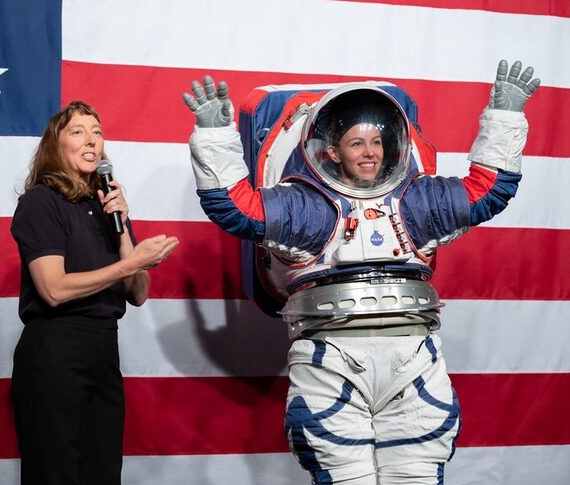
It’s often said that the wheels of government turn slowly, and perhaps nowhere is this on better display than at NASA. While it seems like every week we hear about another commercial space launch or venture, projects helmed by the national space agency are often mired by budget cuts and indecisiveness from above. It takes a lot of political will to earmark tens or even hundreds of billions of dollars on a project that could take decades to complete, and not every occupant of the White House has been willing to stake their reputation on such bold ambitions.

In 2019, when Vice President Mike Pence told a cheering crowd at the U.S. Space & Rocket Center that the White House was officially tasking NASA with returning American astronauts to the surface of the Moon by 2024, everyone knew it was an ambitious timeline. But not one without precedent. The speech was a not-so-subtle allusion to President Kennedy’s famous 1962 declaration at Rice University that America would safely land a man on the Moon before the end of the decade, a challenge NASA was able to meet with fewer than six months to spare.

Unfortunately, a rousing speech will only get you so far. Without a significant boost to the agency’s budget, progress on the new Artemis lunar program was limited. To further complicate matters, less than a year after Pence took the stage in Huntsville, there was a new President in the White House. While there was initially some concern that the Biden administration would axe the Artemis program as part of a general “house cleaning”, it was allowed to continue under newly installed NASA Administrator Bill Nelson. The original 2024 deadline, at this point all but unattainable due to delays stemming from the COVID-19 pandemic, has quietly been abandoned.

So where are we now? Is NASA in 2022 any closer to returning humanity to the Moon than they were in 2020 or even 2010? While it might not seem like it from an outsider’s perspective, a close look at some of the recent Artemis program milestones and developments show that the agency is at least moving in the right direction.

Continue reading “NASA Continues Slow And Steady Pace Towards Moon”