Reusable Booster Rockets, Asian Roundup

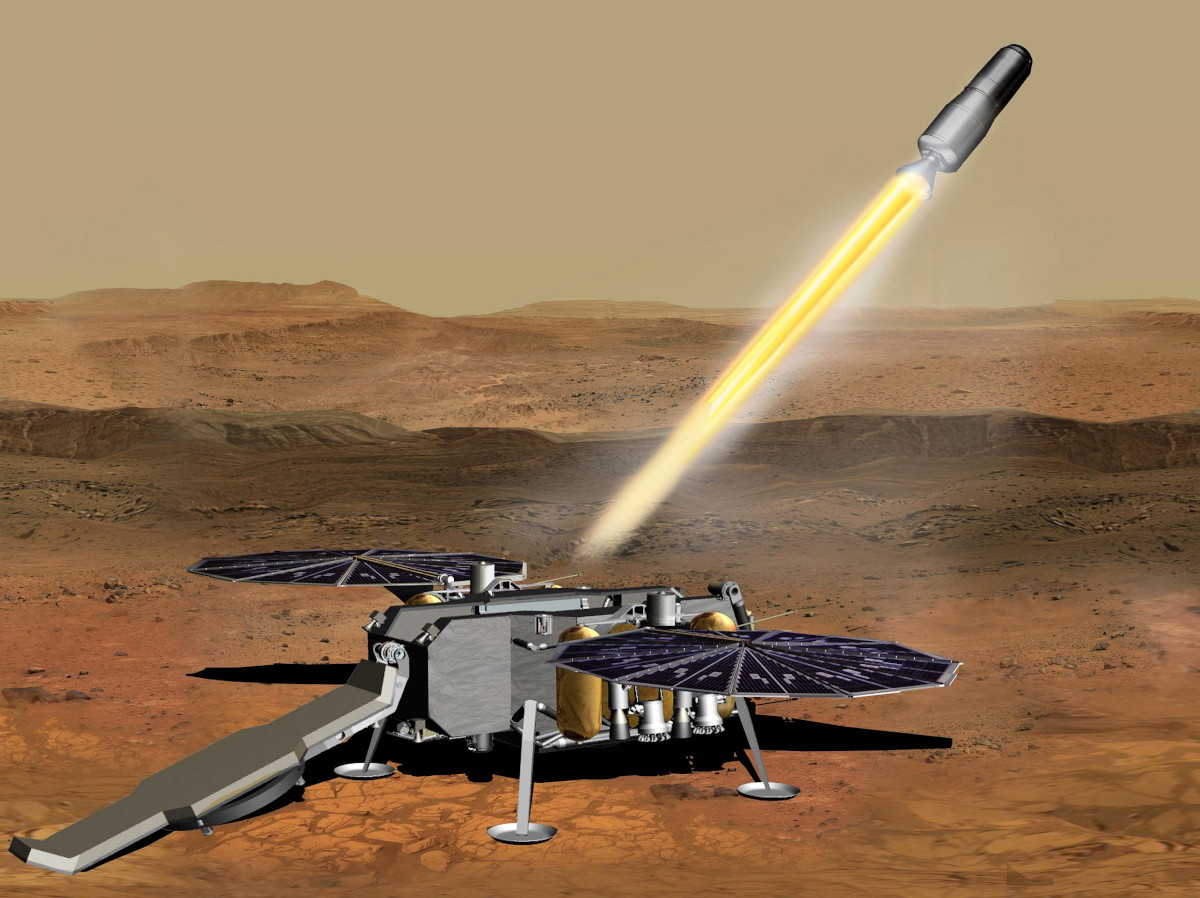
The Space Shuttle’s solid rocket boosters were reusable, although ultimately the overall system didn’t prove cheaper than expendable launches. But given the successes of the Falcon 9 program — booster B1051 completed its 11th mission last month — the idea of a rocket stage returning to the launch site and being reused isn’t such a crazy proposition anymore. It’s not surprising that other space agencies around the world are pursuing this technology.

Last year the India Space Research Organization (ISRO) announced plans for a reusable launcher program based on their GSLV Mark III rocket. The Japan Aerospace Exploratory Agency (JAXA) announced last Fall that it is beginning a reusable rocket project, in cooperation with various industries and universities in Japan. The South Korean space agency, Korea Aerospace Research Institute (KARI), was surprised in November when lawmakers announced a reusable rocket program that wasn’t requested in their 2022 budget. Not in Asia, but in December France’s ArianeGroup announced a reusable rocket program called Maïa.

Speaking of South Korea’s rocketry program, we wrote about the Nuri rocket in October which failed to reach orbit because of a problem in the third stage. Kari recently completed a review of all the data, and concluded the problem was with the anchors of the helium tanks which are located inside the oxidizer tank.

Apparently the changing buoyancy of the submerged tanks with altitude wasn’t completely accounted for in the design of the mounting brackets. When they ultimately failed, the resulting broken piping caused a LOX leak and the subsequent 46-second premature engine shutdown. The next scheduled launch in May 2022 will very likely be delayed.


Astronaut Food Is Light Years Beyond Tang And Freeze-Dried Ice Cream

When it comes down to it, we humans have two major concerns when venturing away from home for an extended period of time: what we’ll eat, and where we will sleep. Depending on the mode of travel, you might take some snacks along, or else rely on restaurants and/or the pantry of your possible hosts. Until the day we can reliably grow many types of food in space, or that Milliways, that five-star eatery at the end of the universe is operational, astronauts and other space-bound travelers will have to bring most of their food with them.

Cubes and Tubes

Space food has its roots in military rations, which in the United States were devised during the Revolutionary War. Both the variety and delivery methods of food have changed significantly since the beginning of the space program. While the menu may have at first been limited to tubes of nutrient-rich goo, bite-sized cubes and freeze-dried powdered beverages, the fare is more far-out these days. Astronauts on the ISS even enjoy tortillas, fresh fruits, and vegetables thanks to resupply missions, though they have to eat some of these types of foods quickly.

The average astronaut has also changed quite a bit, too. At first, they were all young and super-fit ex-military men, but nowadays they are more likely to be middle-aged science-y types and women. All three of these groups have different nutritional needs when faced with the rigors of living and working in space.

Continue reading “Astronaut Food Is Light Years Beyond Tang And Freeze-Dried Ice Cream”

Orbital Safety: The Challenges Of Surviving Space Junk

Hanging around in earth orbit is like walking into the middle of a Wild West gunfight — bullets are flying around everywhere, and even though none are purposefully aimed at you, one might have your name on it. Many of these bullets are artificial satellites that are actively controlled and monitored, but we also find dead satellites, remnants of satellites, discarded rocket stages, tools lost during spacewalks, and even flecks of paint and rust, much of it zipping around at multiple kilometers per second without any guidance.

While removing this space debris directly would be ideal, the reality is that any spacecraft and any spacesuit that has to spend time in orbit needs to be capable of sustaining at least some hits by space debris impacting it.

Orbital Mechanics

That it’s easy to create new debris should come as no surprise to anyone. What may take a bit more imagination is just how long it can take for this debris to make its way towards earth’s atmosphere, where it will uneventfully burn up. Everything in orbit is falling toward the earth, but its tangential velocity keeps it from hitting — like a marble spinning around the hole in a funnel. Drag from the planet’s atmosphere is the friction that eventually slows the object down, and where it orbits in the planet’s atmosphere determines how long this descent will take. Continue reading “Orbital Safety: The Challenges Of Surviving Space Junk”

3D printed moon lamp

3D Printed Lithographic Moon Lamp

After years of being a software developer, [Chris] was excited to get back into embedded development and we’re glad he did. His 3D printed lithographic moon lamp combines a number of hacker and maker skills, and is sure to impress.

3D-printed lithographic moons have gotten pretty popular these days, so he was able to find a suitable model on Thingiverse to start with. Gotta love open-source. Of course, he needed to make a few modifications to fit his end design. Namely, he put a hole at the bottom of the moon, so he could slide the LED and heatsink inside. The 3 watt LED is pretty beefy, so he definitely needed a heat sink to make sure everything stayed cool.

Otherwise, the circuit itself is pretty straightforward. He has an ESP32 to drive the RGB LED through a transistor, and fitted the components onto a custom-designed circuit board to ensure everything stayed neat and organized. You don’t want a ton of loose wires and breadboards cluttering this build. Since he used an ESP32, he was able to create a simple web interface to control the color of the LEDs. Gotta make it connected somehow, right?

What’s great is in addition to the project write-up, [Chris] includes video tutorials, walking the readers through each individual step of the build. By doing so he really makes it easy for readers to follow along and reuse his work. If you’re still looking for ideas, one of these could make a really good Christmas present.

Continue reading “3D Printed Lithographic Moon Lamp”

Spacing Out: Telescopes, Politics, And Spacecraft Design

Let’s launch into a round-up of stories that are out of this world, as we take a look at what’s happening in the realm of space exploration.

Ten Billion Dollars For A Telescope? Don’t Drop It!

Perhaps the most highly anticipated space mission of the moment is the James Webb Space Telescope, an infra-red telescope that will be placed in an orbit around the Earth-Sun L2 Lagrange point from which it will serve as the successor to the now long-in-the-tooth Hubble telescope. After many years of development the craft has been assembled and shipped to French Guiana for a scheduled Ariane 5 launch on the 22nd of December. We can only imagine what must have gone through the minds of the engineers and technicians working on the telescope when an unplanned release of a clamp band securing it to the launch vehicle adapter sent a vibration throughout the craft. Given the fragility of some of its components this could have jeopardised the mission, however after inspection it was found that no damage had occurred and that space-watchers and astronomers alike can breathe easy.

Continue reading “Spacing Out: Telescopes, Politics, And Spacecraft Design”

Two Mars Orbiters Chatted For Atmospheric Science

Mission extensions for interplanetary robot explorers are usually continuations of their primary mission. But sometimes the hardware already on board are put to novel uses. European Space Agency has started using radio equipment on board two Mars orbiters to probe the Martian atmosphere.

The scientific basis is straightforward: radio signals are affected by whatever they had traveled through. When transmitting data, such effects are noises to be minimized. But we can also leverage it for atmospheric science here on Earth. ESA applied the same concept at Mars: by transmitting a known signal from one Mars orbiter to another, changes in the received signal tells scientists something about the Martian atmosphere between them.

So the theory sounds good, but the engineering implementation took some work. Most radio equipment on board ESA’s orbiters were not designed to talk to each other. In fact they were deliberately different to minimize interference. However, both Mars Express and Trace Gas Orbiter were designed to act as data relays for surface probes, and not just the one they each carried to Mars. Thus their related radio gear were flexible enough to be adapted to this experiment.

These two machines launched over a decade apart. Yet they could now communicate with each other in Mars orbit using radios originally designed for talking to the surface. In the near future such chatter will probably be limited, as Trace Gas Orbiter is still in the middle of its primary mission. But this success lets ESA think about how much further to push the idea in the future. In the meantime Mars Express will continue its observation of Mars, doing things like giving us context on Perseverance rover landing.

Christian Hahn Starlink capture showing guard region.

Analyzing Starlink Satellite Downlink Communications With Software Defined Radio

Often, mere curiosity is sufficient to do something. This is also the case with people trying to analyze the communication setup and protocol which SpaceX is using with their Ku-band based Starlink satellites.  One of these fine folk is [Christian Hahn], who has recently posted some early findings to r/StarlinkEngineering over at Reddit. Some of the captured data seems to include the satellite ID system that ground-based user stations would presumably use to keep track of overhead Starlink satellites.

For the capturing itself, [Christian] is using a second-hand dish for capture and a DIY SDR using KC705 FPGA-based hardware – which may have begun its life as crypto mining hardware – along with the usual assortment of filters and other common components with this kind of capture. Even at this early time, some features of the Starlink protocol seem quite obvious, such as the division into channels and the use of guard periods. Nothing too earth-shattering, but as a fun SDR hobby it definitely checks all the boxes.

[Christian] has also announced that at some point he’ll set up a website and publish the findings and code that should make Starlink signal analysis easy for anyone with a readily available SDR receiver.