Review: New 3G And Cat-M1 Cellular Hardware From Hologram

In July we reported on the launch of the Hologram developer program that offered a free SIM card and a small amount of monthly cellular data for those who wanted to build connectivity into their prototypes. Today, Hologram has launched some new hardware to go along with that program.

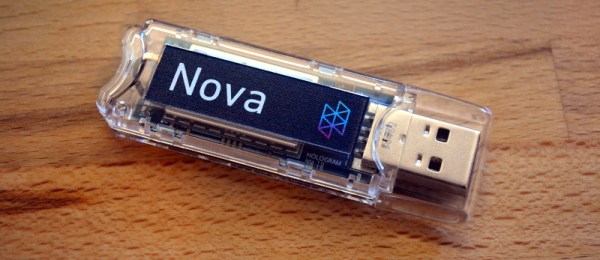
Nova is a cellular modem in a USB thumb drive form factor. It ships in a little box with a PCB that hosts the u-blox cellular module, two different antennas, a plastic enclosure, and a SIM card. The product is aimed at those building connected devices around single-board computers, making it easy to plug Nova in and get connected quickly.

This device that Hologram sent me is a 3G modem. They have something like 1,000 of them available to ship starting today, but what I find really exciting is that there is another flavor of Nova that looks the same but hosts a Cat-M1 version of the u-blox module. This is a Low Power Wide Area Network technology built on the LTE network. We’ve seen 2G and 3G modems available for some time now, but if go that route you’re building a product around a network which has an end-of-life concern.

Cat-M1 will be around for much longer and it is designed to be low power and utilizes a narrower bandwidth for less radio-on time. I asked Hologram for some power comparison estimates between the two technologies:

AVERAGE current consumption comparisons:

Cat-M1: as low as 100 mA while transmitting and never more than 190 mA
Equivalent 3G: as high as 680 mA while transmitting

PEAK current consumption comparisons (these are typically filtered through capacitors so the power supply doesn’t ever witness these values, and they are only momentary):

Cat-M1: Less than 490 mA
Equivalent 3G: As high as 1550 mA

This is an exciting development because we haven’t yet seen LTE radios available for devices — of course there are hotspots but those are certainly not optimized for low power or inclusion in a product. But if you know your ESP8266 WiFi specs you know that those figures above put Cat-M1 on a similar power budget and in the realm of battery-operated devices.

The Cat-M1 Nova can be ordered beginning today, should ship in limited quantities within weeks, with wider availability by the end of the year. If you can’t get one in the first wave, the 3G Nova is a direct stand-in from the software side of things.

I suspect we’ll see a lot of interest in Cat-M1 technology moving forward simply because of the the technology promises lower power and longer support. (I’m trying to avoid using the term IoT… oops, there it is.) For today, let’s take a look at the 3G version of the new hardware and the service that supports it.

Continue reading “Review: New 3G And Cat-M1 Cellular Hardware From Hologram”

Datalogger Uses ESP32 And ESP8266 Low Power Modes

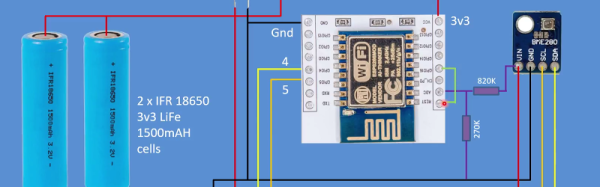
[G6EJD] wanted to design a low power datalogger and decided to look at the power consumption of an ESP32 versus an ESP8266. You can see the video results below.

Of course, anytime someone does a power test, you have to wonder if there were any tricks or changes that would have made a big difference. However, the relative data is interesting (even though you could posit situations where even those results would be misleading). You should watch the videos, but the bottom line was a 3000 mAh battery provided 315 days of run time for the ESP8266 and 213 days with the ESP32.

Continue reading “Datalogger Uses ESP32 And ESP8266 Low Power Modes”

Piezomagnetic Trick Shrinks 2.5 GHz Antennas

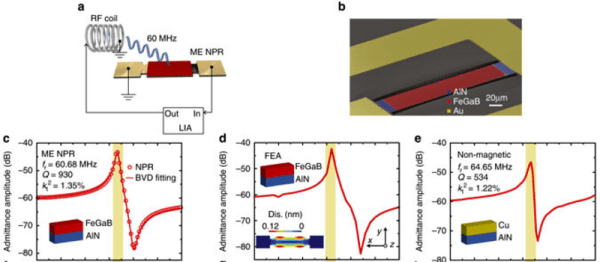
To a ham radio operator used to “short”-wave antennas with lengths listed in tens of meters, the tiny antennas used in the gigahertz bands barely even register. But if your goal is making radio electronics that’s small enough to swallow, an antenna of a few centimeters is too big. Physics determines plausible antenna sizes, and there’s no way around that, but a large group of researchers and engineers have found a way of side-stepping the problem: resonating a nano-antenna acoustically instead of electromagnetically.

Normal antennas are tuned to some extent to the frequency that you want to pick up. Since the wavelength of a 2.5 GHz electromagnetic wave in free space is 120 cm mm, most practical antennas need a wire in the 12-60 cm mm range to bounce signals back and forth. The trick in the paper is to use a special piezomagnetic material as the antenna. Incoming radio waves get quickly turned into acoustic waves — physical movement in the nano-crystals. Since these sound waves travel a lot slower than the speed of light, they resonate off the walls of the crystal over a much shorter distance. A piezoelectric film layer turns these vibrations back into electrical signals.

Ceramic chip antennas use a similar trick. There, electromagnetic waves are slowed down inside the high-permittivity ceramic. But chip antennas are just slowing down EM waves, whereas the research demonstrated here is converting the EM to sound waves, which travel many orders of magnitude slower. Nice trick.

Granted, significant material science derring-do makes this possible, and you’re not going to be fabricating your own nanoscale piezomagnetic antennas any time soon, but with everything but the antenna getting nano-ified, it’s exciting to think of a future where the antennas can be baked directly into the IC.

Thanks [Ostracus] for the tip in the comments of this post on antenna basics. Via [Science Magazine].

DIY Wireless Sprinkler System? Don’t Mind If I Do.

What to do once you have a sprinkler system installed on your property: buy a sprinkler control system or make your own? The latter, obviously.

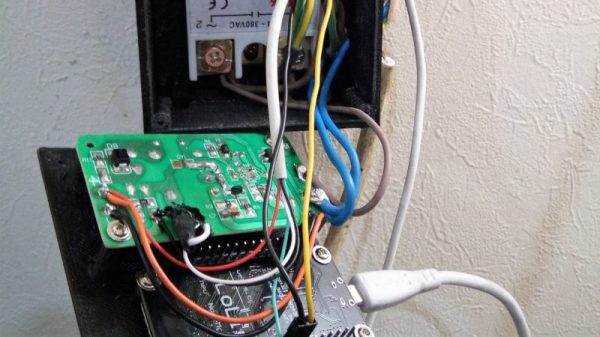
[danaman] was determined to hack together a cheap, IoT-enabled system but it wasn’t easy — taking the better part of a year to get working. Instead of starting right from scratch, he used the open-source Sustainable Irrigation Platform(SIP) control software — a Python sprinkler scheduler with some features [danman] was looking for(eg: it won’t activate if there’s rain in the forecast). Since he wasn’t running it with a Raspberry Pi as recommended, [danman] wrote a Python plugin that runs on his home server as a daemon which listens to TCP port 20000 for connections and then updates the relevant relays. Ok, software done; on to the relay controller box!

Continue reading “DIY Wireless Sprinkler System? Don’t Mind If I Do.”

WiFi Deauthentication VS WiFi Jamming: What Is The Difference?

Terminology is something that gets us all mixed up at some point. [Seytonic] does a great job of explaining the difference between WiFi jammers and deauthenticators in the video embedded below. A lot of you will already know the difference however it is useful to point out the difference since so many people call deauth devices “WiFi Jammers”.

In their YouTube video they go on to explain that jammers basically throw out a load of noise on all WiFi channels making the frequencies unusable in a given distance from the jammer. Jammers are also normally quite expensive, mostly illegal, and thus hard to find unless of course you build your own.

WiFi deauthentication on the other hand works in a very different way. WiFi sends unencrypted packets of data called management frames. Because these are unencrypted, even if the network is using WPA2, malicious parties can send deauthentication commands which boot users off of an access point. There is hope though with 802.11w which encrypts management frames. It’s been around for a while however manufacturers don’t seem bothered and don’t implement it, even though it would improve the security of a WiFi device from these types of attacks.

Continue reading “WiFi Deauthentication VS WiFi Jamming: What Is The Difference?”

FLEX Pager Protocol In Depth

We love pager hacks. One of our earliest head-slappers was completely reverse-engineering a restaurant pager’s protocol, only to find out that it was industry-standard POCSAG. Doh!

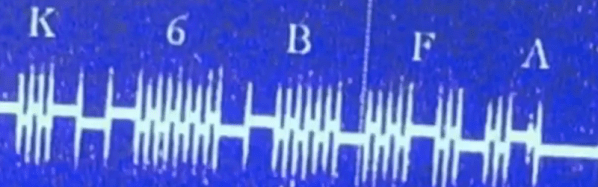
[Corn] apparently scratches the same itch, but in the Netherlands where the FLEX protocol is more common. In addition to walking us through all of the details of the FLEX system, he bought a FLEX pager, gutted it, and soldered on an ATMega328 board and an ESP8266. The former does the FLEX decoding, and the latter posts whatever it hears on his local network.

These days, we’re sure that you could do the same thing with a Raspberry Pi and SDR, but we love the old-school approach of buying a pager and tapping into its signals. And it makes a better stand-alone device with a lot lower power budget. If you find yourself in possession of some old POCSAG pagers, you should check out [Corn]’s previous work: an OpenWRT router that sends pages.

Making A Cheap Radar Unit Awesome

[JBeale] squeezed every last drop of performance from a $5 Doppler radar module, and the secrets of that success are half hardware, half firmware, and all hack.

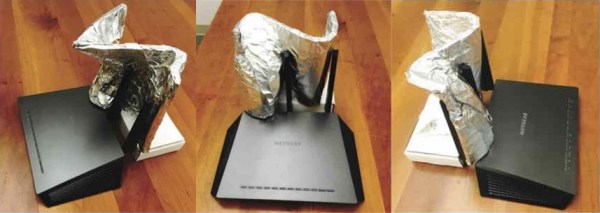
On the hardware side, the first prototype radar horn was made out of cardboard with aluminum foil taped around it. With the concept proven, [JBeale] made a second horn out of thin copper-clad sheets, but reports that the performance is just about the same. The other hardware hack was simply to tack a wire on the radar module’s analog output and add a simple op-amp gain stage, which extended the sensing range well beyond the ten feet or so that these things are usually used for.

With all that signal coming in, [JBeale] separates out the noise by taking an FFT of the Doppler frequency-shift signal. Figuring that people walk around 2.2 miles per hour, [JBeale] focuses on the corresponding 70 Hz frequency bin and finds that the radar will detect people out to 80 feet. Wow!

This trick of taking an el-cheapo radar unit and amplifying the signal to do something useful isn’t new to Hackaday. [Mathieu] did it with the very same HB-100 unit way back in 2013, and then again with a more modern CDM324 model. But [JBeale]’s hacked horn and clever backend processing push out the limits of what you can expect to do with these cheap units. Kudos.

[via PJRC]