Move over, BlockDude! There’s a new calculator game in town. [Hayleia] and a few other programmers have been hard at work on a clone of Super Smash Bros for graphing calculators that is sure to keep you busy in your next calculus class.
The game, called Smash Bros Open, is based on the Nintendo fighting game and is written specifically for monochrome z80 calculators (the TI-83 and TI-84 being the most ubiquitous of these). The game runs in 6 MHz mode with a simple background, or it can run in 15 MHz mode with a more complicated background. The programmers intend for the game to be open source, so that anyone can add anything to the games that they want, with the hopes of making the game true to its namesake.
Anyone who is looking to download a copy of this should know that Smash Bros Open is currently a work-in-progress. Right now both players need to play on the same calculator (with different keys), and Fox is the only playable character. The programmers hope to resolve the two player issue by using a second calculator as a game pad, or by linking the two calculators using Global CalcNet. As for the other characters, those can be added by others based on the existing code which is available on the project’s forum post!
Thanks to [Chris] for the tip.
 [Chris Mitchell], hackaday favorite from
  There were more Hackaday fans at the faire, but I’m not sure if anyone can beat the guys from
 The project featured in this post is an entry in
 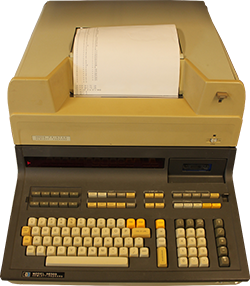 The early days of modern computing were downright weird, and the HP 9830B is a strange one indeed: it’s a gigantic calculator, running BASIC, on a CPU implemented over a dozen cards using discrete logic. In 2014 dollars, this calculator cost somewhere in the neighborhood of $50,000. [Mattis] runs a retrocomputer museum and recently acquired one of these ancient machines,