Automatic Transfer Switch Keeps Internet Online

Living in a place where the electric service isn’t particularly reliable can be frustrating, whether that’s because of a lack of infrastructure, frequent storms, or rolling blackouts. An option for those living in these situations is a backup generator, often turned on and connected by an automatic transfer switch. These are necessary safety devices too; they keep power lines from being back-fed by the generators. But there are other reasons to use transfer switches as well as [Maarten] shows us with this automatic transfer switch meant to keep his computers and Internet powered up.

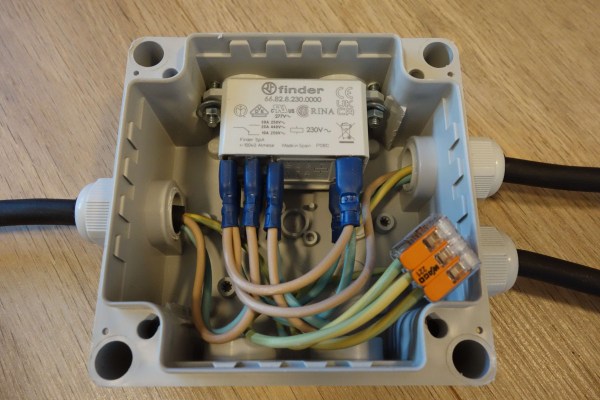
The device is fairly straightforward. A dual-pole, dual-throw relay is housed inside of an electrical junction box with two electrical plugs, each of which can be connected to a different circuit or power source in [Maarten]’s house. The relay coil is energized by the primary power supply, and when that power is lost the relay automatically changes over to the other power supply, which might be something like a battery backup system. [Maarten] was able to get a higher quality product by building it himself rather than spending a comparable amount of money on a cheap off-the-shelf product as well. Continue reading “Automatic Transfer Switch Keeps Internet Online”

Siphoning Energy From Power Lines

The discovery and implementation of alternating current revolutionized the entire world little more than a century ago. Without it, we’d all have inefficient, small neighborhood power plants sending direct current in short, local circuits. Alternating current switches the direction of current many times a second, causing all kinds of magnetic field interactions that result in being able to send electricity extremely long distances without the resistive losses of a DC circuit. The major downside, though, is that AC circuits tend to have charging losses due to this back-and-forth motion, but this lost energy can actually be harvested with something like this custom-built transformer.

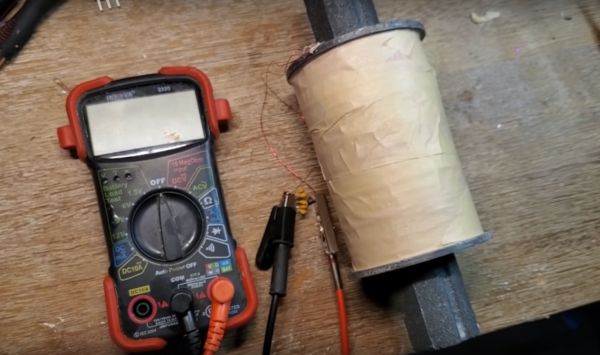
[Hyperspace Pilot] hand-wound this ferromagnetic-core transformer using almost two kilometers of 28-gauge magnet wire. The more loops of wire, the more the transformer will be able to couple with magnetic fields generated by the current flowing in other circuits. The other thing that it needs to do is resonate at a specific frequency, which is accomplished by using a small capacitor to tune the circuit to the mains frequency. With the tuning done, holding the circuit near his breaker panel with the dryer and air conditioning running generates around five volts. There’s not much that can be done with this other than hook up a small LED, since the current generated is also fairly low, but it’s an impressive proof of concept.

After some more testing, [Hyperspace Pilot] found that the total power draw of his transformer is only on the order of about 50 microwatts in an ideal setting where the neutral or ground wire wasn’t nearby, so it’s not the most economical way to steal electricity. On the other hand, it could still be useful for detecting current flow in a circuit without having to directly interact with it. And, it turns out that there are better ways of saving on your electricity bill provided you have a smart meter and the right kind of energy-saving appliances anyway.

Continue reading “Siphoning Energy From Power Lines”

Remoticon 2021 // Jay Bowles Dips Into The Plasmaverse

Every hacker out there is familiar with the zaps and sizzles of the Tesla coil, or the crash and thunder of lighting strikes on our hallowed Earth. These phenomena all involve the physics of plasma, a subject near and dear to Jay Bowles’s heart. Thus, he graced Remoticon 2021 with a enlightening talk taking us on a Dip Into the Plasmaverse.

Jay’s passion for the topic is obvious, having fallen in love with high voltage physics as a teenager. He appreciated how tangible the science was, whether it’s the glow of neon lighting or the heating magic of the common microwave. His talk covers the experiments and science that he’s studied over the past 17 years and in the course of running his Plasma Channel YouTube channel. Continue reading “Remoticon 2021 // Jay Bowles Dips Into The Plasmaverse”

Experiments With A Nernst Lamp

Every biography of Edison talks about how the secret to the incandescent lamp was to remove the air from the bulb. That’s true when you use conventional filaments, but a man named Nernst found that using a filament that was already oxidized would allow you to create a lamp that would operate fine in the normal atmosphere. [Jaynes Network] takes a look at these oddities which date back to the 1800s in a recent video that you can see below.

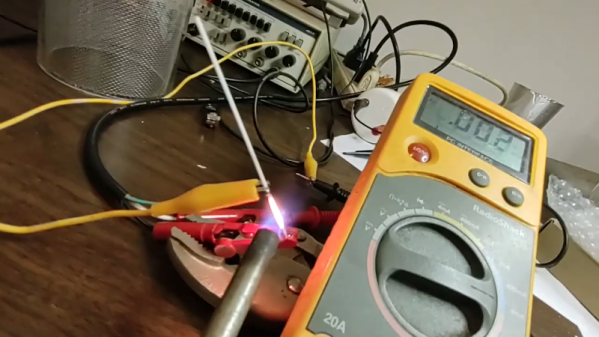
The lamps use a ceramic filament, but the downside is that the filament needs to be hot to allow the lamp to work. The experiment takes a zirconium oxide rod and attempts to light it up. The heat source is a propane torch.

Continue reading “Experiments With A Nernst Lamp”

Emulating A Power Grid

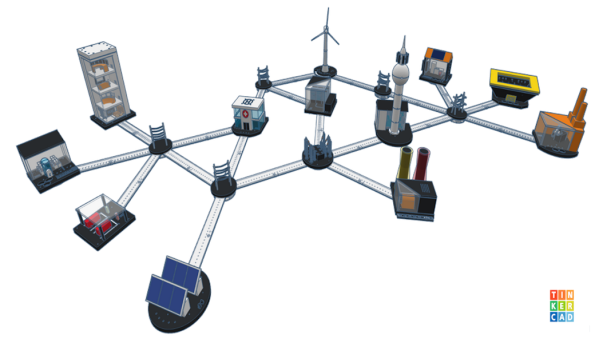
The electric power grid, as it exists today, was designed about a century ago to accommodate large, dispersed power plants owned and controlled by the utilities themselves. At the time this seemed like a great idea, but as technology and society have progressed the power grid remains stubbornly rooted in this past. Efforts to modify it to accommodate solar and wind farms, electric cars, and other modern technology need to take great effort to work with the ancient grid setup, often requiring intricate modeling like this visual power grid emulator.

The model is known as LEGOS, the Lite Emulator of Grid Operations, and comes from researchers at RWTH Aachen University. Its goal is to simulate a modern power grid with various generation sources and loads such as homes, offices, or hospitals. It uses a DC circuit to simulate power flow, which is visualized with LEDs. The entire model is modular, so components can be added or subtracted easily to quickly show how the power flow changes as a result of modifications to the grid. There is also a robust automation layer to the entire project, allowing real-time data acquisition of the model to be gathered and analyzed using an open source cloud service called FIWARE.

In order to modernize the grid, simulations like these are needed to make sure there are no knock-on effects of adding or changing such a complex system in ways it was never intended to be changed. Researchers in Europe like the ones developing LEGOS are ahead of the curve, as smart grid technology continues to filter in to all areas of the modern electrical infrastructure. It could also find uses for modeling power grids in areas where changes to the grid can happen rapidly as a result of natural disasters.

Ask Hackaday: How Do You Prepare?

Last month, large parts of the southern United States experienced their coldest temperatures since the 1899 Blizzard. Some of us set new all-time lows, and I was right in the middle of the middle of it here in Southwestern Oklahoma. Since many houses in Texas and Oklahoma are heated with electricity, the power grids struggled to keep up with the demand. Cities in Oklahoma experienced some short-term rolling blackouts and large patches of the Texas grid were without power for several days. No juice, no heat.

In places where the power was out for an extended period of time, the water supply was potentially contaminated, and a boil order was in effect. Of course, this only works when the gas and power are on. In some places, the store shelves were empty, a result of panic buying combined with perishables spoiling without the power to keep them cold. For some, food and drinkable water was temporarily hard to come by.

There have been other problems, too. Houses in the south aren’t built for the extreme cold, and many have experienced frozen pipes, temporarily shutting off their water supply. In some cases, those frozen pipes break open, flooding the house once the water starts flowing again. For instance, here’s an eye-witness account of the carnage from The 8-bit Guy, who lives at ground zero in the DFW area.
Continue reading “Ask Hackaday: How Do You Prepare?”

Machining Without Machines

It’s a luxury to be able to access a modern machine shop, complete with its array of lathes, mills, and presses. These tools are expensive though, and take up a lot of space, so if you want to be able to machine hard or thick metals without an incredible amount of overhead you’ll need a different solution. Luckily you can bypass the machines in some situations and use electricity to do the machining directly.

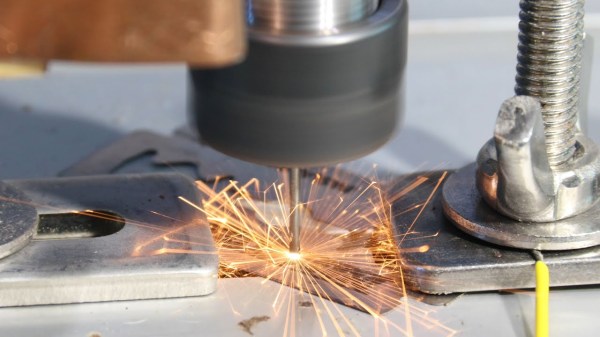
This project makes use of a process known as electrochemical machining and works on the principle that electricity passed through an electrolyte solution will erode the metal that it comes in contact with. With a well-designed setup, this can be used to precisely machine metal in various ways. For [bob]’s use this was pretty straightforward, since he needed to enlarge an existing hole in a piece of plate steel, so he forced electrolyte through this hole while applying around half an amp of current in order to make this precise “cut” in the metal, avoiding the use of an expensive drill press.

There are some downsides to the use of this process as [bob] notes in his build, namely that any piece of the working material that comes in contact with the electrolyte will be eroded to some extent. This can be mitigated with good design but can easily become impractical. It’s still a good way to avoid the expense of some expensive machining equipment, though, and similar processes can be used for other types of machine work as well.