PET-Gaming Computer Module

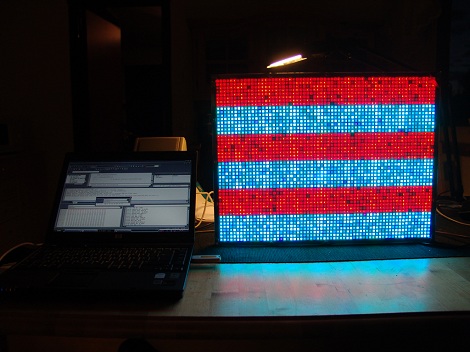
This 64×48 full color LED display goes much further than we expected at first glance. The display is actually a computer with a Zilog eZ80F91 core utilizing an FPGA for the hardware interface. Some nifty applications currently built include mostly games, but there is also visualizations, network file systems, video streaming, and even a MIDI synth.

It originally looked to be more of a console, with controllers, game pads, and cartridges, but the latter ended up not working out. What else would you do with a giant LED display?

ATtiny2313 Prime Number Generator

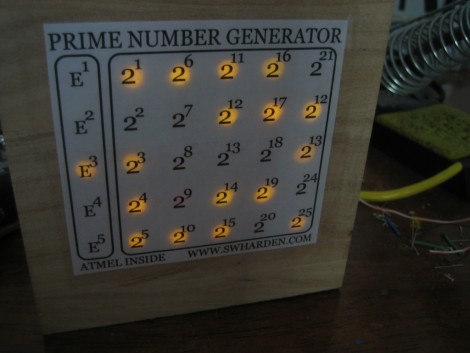
[Scott Harden’s] prime number generator exhibits a great way to use an LED matrix to present readable information. The project resides in a hinged wooden box with a grid of holes on the lid for the LEDs. [Scott] has overlaid the matrix with a printout showing powers of two that represent different prime numbers. Inside you’ll find an ATtiny2313 microcontroller that handles the column scanning and prime number testing. We’ve embedded a video the break where [Scott] explains the project in great detail, but you should also check out his prototyping and construction pages.

Continue reading “ATtiny2313 Prime Number Generator”

Surgical Microscope Gets LED Retrofit

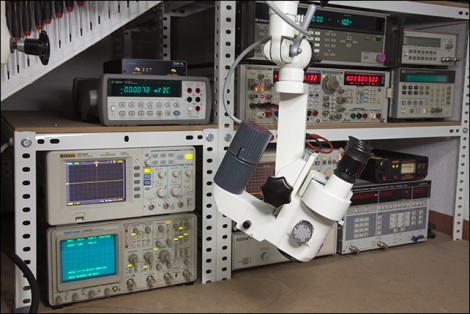
[Roberto Barrios] picked up a surgical microscope to add to those other fun lab toys you seen in the background. These work very well when soldering small components because they don’t have to be as close to the viewed objects as traditional microscopes. But [Robert] didn’t care for the heat generated by the incandescent bulb so he build his own LED replacement. If you recognize his name it’s because we saw a beautifully crafted in-visor GPS system that he built back in April. This project exhibits the same level of craftsmanship in which he utilized the base of a spare bulb to add an LED, heat sink, and driver board that is adjustable on all three axes.

He also mentioned that he overhauled his site design and it now plays nicely with all browsers.

Needs More LEDs, EMSL Biggified Conway’s Game Of Life

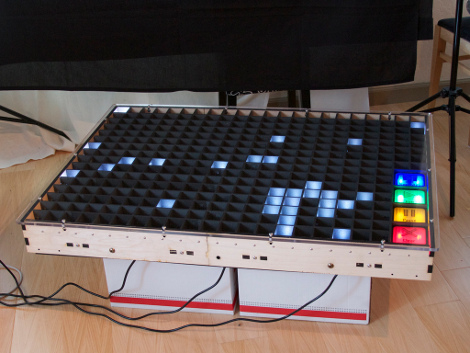
Evil Mad Scientist Laboratories has proven bigger is better with their colossal LED table running Conway’s Game of Life. At the heart of the system is 44 ATmega164Ps controlling 352 LEDs on a 32×44 inch table; and to make it interactive IR LEDs detect the presence of objects.

The display is set up as an exhibit at the San Jose Museum of Art in tribute to [Leo Villareal]. To see a demo, catch a video after the divide.

Related: Colossal LED tables, and Conway’s Game of Life. Why has it taken so long to combine them?

Continue reading “Needs More LEDs, EMSL Biggified Conway’s Game Of Life”

2 Foot Tall POV Globe

[Ytai] let us know about his POV globe, all four parts of its current progress. While he says he was inspired to write up the project from a YouTube clip, we know the real reason. Regardless, the plan is to have a 2 foot diameter globe with 256 LEDs spinning at 50 revolutions per second streaming images from an SD card using SPI. While the project isn’t completed yet, we know [Ytai] will pull through like he has in the past, and you can be sure we’ll keep you up to date on his progress.

MSP430 Based Single LED Clock

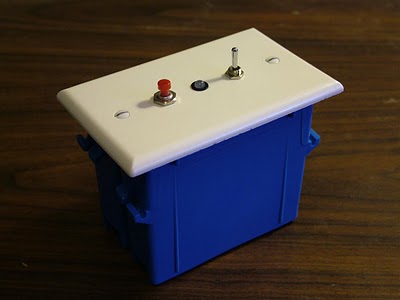
[Kenneth Finnegan’s] latest clock makes use of the TI Launchpad for programming and debugging MSP430 microprocessors. We took a look at the Launchpad when it was released and we’re glad to see some hacks resulting from availability of that tool. The clock reads out the time using a bi-color LED. Press the button and a series of flashes will tell you the time. A three-position toggle switch is used along with the push button for setting the time. The protocol he developed is outlined in his demo video after the break.

We like [Kenneth’s] use of a plastic electrical box as a project box. They’re cheap and you can find them everywhere in many different sizes. He mentions the difficulty in drilling through the faceplate. We’ve had our share of shattered plastic trying to drill holes in the darn things. If you’ve got some tips on faceplate-modification we’d love to hear them.

This clock is sure the polar opposite from the TTL clock that [Kenneth] showed us back in March, trading jumper wires for lines of code. We’re going to give this one a try, hopefully fixing the button debounce along the way.

Continue reading “MSP430 Based Single LED Clock”

RGB Lamp Bulb Replacement

[youtube=http://www.youtube.com/watch?v=TwZBMJS1teg]

Wanting to make some unique and interesting gifts for his nieces as well as improve his PCB skills and expand beyond Arduino, [Jay] has made these color changing Ikea lamps. He’s using an ATTiny2313 for the brains, a handful of RGB LEDs plus 3 warm white LEDs to keep the wife happy. you can download the schematic and PCB files if you want to reproduce this one yourself. You can see his PCB making skills have improved since the nursery room temperature monitor. We think his nieces will be pleased with their gifts.

[via HackedGadgets]