NASA’s upcoming Artemis I mission represents a critical milestone on the space agency’s path towards establishing a sustainable human presence on the Moon. It will mark not only the first flight of the massive Space Launch System (SLS) and its Interim Cryogenic Propulsion Stage (ICPS), but will also test the ability of the 25 ton Orion Multi-Purpose Crew Vehicle (MPCV) to operate in lunar orbit. While there won’t be any crew aboard this flight, it will serve as a dress rehearsal for the Artemis II mission — which will see humans travel beyond low Earth orbit for the first time since the Apollo program ended in 1972.
As the SLS was designed to lift a fully loaded and crewed Orion capsule, the towering rocket and the ISPS are being considerably underutilized for this test flight. With so much excess payload capacity available, Artemis I is in the unique position of being able to carry a number of secondary payloads into cislunar space without making any changes to the overall mission or flight trajectory.
NASA has selected ten CubeSats to hitch a ride into space aboard Artemis I, which will test out new technologies and conduct deep space research. These secondary payloads are officially deemed “High Risk, High Reward”, with their success far from guaranteed. But should they complete their individual missions, they may well help shape the future of lunar exploration.
With Artemis I potentially just days away from liftoff, let’s take a look at a few of these secondary payloads and how they’ll be deployed without endangering the primary mission of getting Orion to the Moon.
The gear that helped us walk on the Moon nearly 60 years ago is still giving up its mysteries today, with some equipment from the Apollo era taking a little bit more effort to reverse engineer than others. A case in point is this radiographic reverse engineering of some Apollo test gear, pulled off by [Ken Shirriff] with help from his usual merry band of Apollo aficionados.
The item in question is a test set used for ground testing of the Up-Data Link, which received digital commands from mission controllers. Contrary to the highly integrated construction used in Apollo flight hardware, the test set, which was saved from a scrapyard, used more ad hoc construction, including cards populated by mysterious modules. The pluggable modules bear Motorola branding, and while they bear some resemblance to ICs, they’re clearly not.
[Ken] was able to do some preliminary reverse-engineering using methods we’ve seen him employ before, but ran into a dead end with his scope and meter without documentation. So the modules went under [John McMaster]’s X-ray beam for a peek inside. They discovered that the 13-pin modules are miniature analog circuits using cordwood construction, with common discrete passives stacked vertically between parallel PCBs. The module they imaged showed clear shadows of carbon composition resistors, metal-film capacitors, and some glass-body diodes. Different angles let [Ken] figure out the circuit, which appears to be part of a square wave to sine wave converter.
The bigger mystery here is why the original designer chose this method of construction. There must still be engineers out there who worked on stuff like this, so here’s hoping they chime in on this innovative method.
Where today we talk broadly of climate change and it’s various effects, the conversation was once simpler. We called it “global warming” and fretted about cooking outside in the summer and the sea level rise that would claim so many of our favorite cities.
Scientists are now concerned that sea level rises could be locked in, as ice sheets and glaciers pass “tipping points” beyond which their loss cannot be stopped. Research is ongoing to determine how best we can avoid these points of no return.
When Astra’s diminutive Rocket 3.3 lifted off from its pad at the Cape Canaveral Space Force Station on June 12th, everything seemed to be going well. In fact, the mission was progressing exactly to plan right up until the end — the booster’s second stage Aether engine appeared to be operating normally until it abruptly shut down roughly a minute ahead of schedule. Unfortunately, orbital mechanics are nothing if not exacting, and an engine burn that ends a minute early might as well never have happened at all.
According to the telemetry values shown on-screen during the live coverage of the launch, the booster’s upper stage topped out at a velocity of 6.573 kilometers per second, well short of the 7.8 km/s required to attain a stable low Earth orbit. While the video feed was cut as soon as it was clear something had gone wrong, the rigid physics of spaceflight means there’s little question about the sequence of events that followed. Without the necessary energy to stay in orbit, the upper stage of the rocket would have been left in a sub-orbital trajectory, eventually reentering the atmosphere and burning up a few thousand kilometers downrange from where it started.
An unusual white plume is seen from the engine as it shuts down abruptly.
Of course, it’s no secret that spaceflight is difficult. Doubly so for startup that only has a few successful flights under their belt. There’s no doubt that Astra will determine why their engine shutdown early and make whatever changes are necessary to ensure it doesn’t happen again, and if their history is any indication, they’re likely to be flying again in short order. Designed for a Defense Advanced Research Projects Agency (DARPA) competition that sought to spur the development of cheap and small rockets capable of launching payloads on short notice, Astra’s family of rockets have already demonstrated unusually high operational agility.
Astra, and the Rocket 3.3 design, will live to fly again. But what of the payload the booster was due to put into orbit? That’s a bit more complicated. This was the first of three flights that were planned to assemble a constellation of small CubeSats as part of NASA’s TROPICS mission. The space agency has already released a statement saying the mission can still achieve its scientific goals, albeit with reduced coverage, assuming the remaining satellites safely reach orbit. But should one of the next launches fail, both of which are currently scheduled to fly on Astra’s rockets, it seems unlikely the TROPICS program will be able to achieve its primary goal.
So what exactly is TROPICS, and why has NASA pinned its success on the ability for a small and relatively immature launch vehicle to make multiple flights with their hardware onboard? Let’s take a look.
When NASA astronauts aboard the International Space Station have to clamber around on the outside of the orbiting facility for maintenance or repairs, they don a spacesuit known as the Extravehicular Mobility Unit (EMU). Essentially a small self-contained spacecraft in its own right, the bulky garment was introduced in 1981 to allow Space Shuttle crews to exit the Orbiter and work in the craft’s cavernous cargo bay. While the suits did get a minor upgrade in the late 90s, they remain largely the product of 1970s technology.
Not only are the existing EMUs outdated, but they were only designed to be use in space — not on the surface. With NASA’s eyes on the Moon, and eventually Mars, it was no secret that the agency would need to outfit their astronauts with upgraded and modernized suits before moving beyond the ISS. As such, development of what would eventually be the Exploration Extravehicular Mobility Unit (xEMU) dates back to at least 2005 when it was part of the ultimately canceled Constellation program.
NASA’s own xEMU suit won’t be ready by 2025.
Unfortunately, after more than a decade of development and reportedly $420 million in development costs, the xEMU still isn’t ready. With a crewed landing on the Moon still tentatively scheduled for 2025, NASA has decided to let their commercial partners take a swing at the problem, and has recently awarded contracts to two companies for a spacesuit that can both work on the Moon and replace the aging EMU for orbital use on the ISS.
As part of the Exploration Extravehicular Activity Services (xEVAS) contract, both companies will be given the data collected during the development of the xEMU, though they are expected to create new designs rather than a copy of what NASA’s already been working on. Inspired by the success of the Commercial Crew program that gave birth to SpaceX’s Crew Dragon, the contract also stipulates that the companies will retain complete ownership and control over the spacesuits developed during the program. In fact, NASA is even encouraging the companies to seek out additional commercial customers for the finished suits in hopes a competitive market will help drive down costs.
There’s no denying that NASA’s partnerships with commercial providers has paid off for cargo and crew, so it stands to reason that they’d go back to the well for their next-generation spacesuit needs. There’s also plenty of incentive for the companies to deliver a viable product, as the contact has a potential maximum value of $3.5 billion. But with 2025 quickly approaching, and the contact requiring a orbital shakedown test before the suits are sent to the Moon, the big question is whether or not there’s still enough time for either company to make it across the finish line.
No matter your project or field of endeavor, simulation is a useful tool for finding out what you don’t know. In many cases, problems or issues aren’t obvious until you try and do something. Where doing that thing is expensive or difficult, a simulation can be a low-stakes way to find out some problems without huge costs or undue risks.
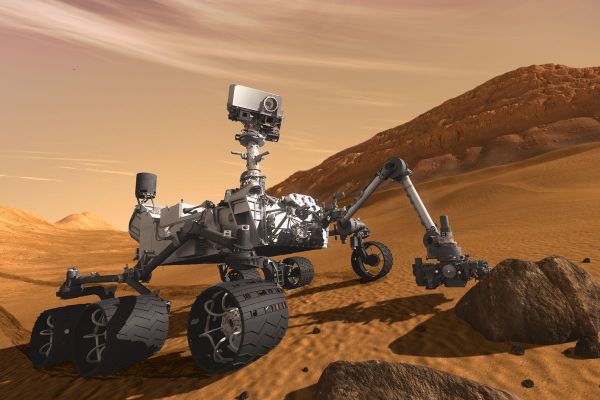
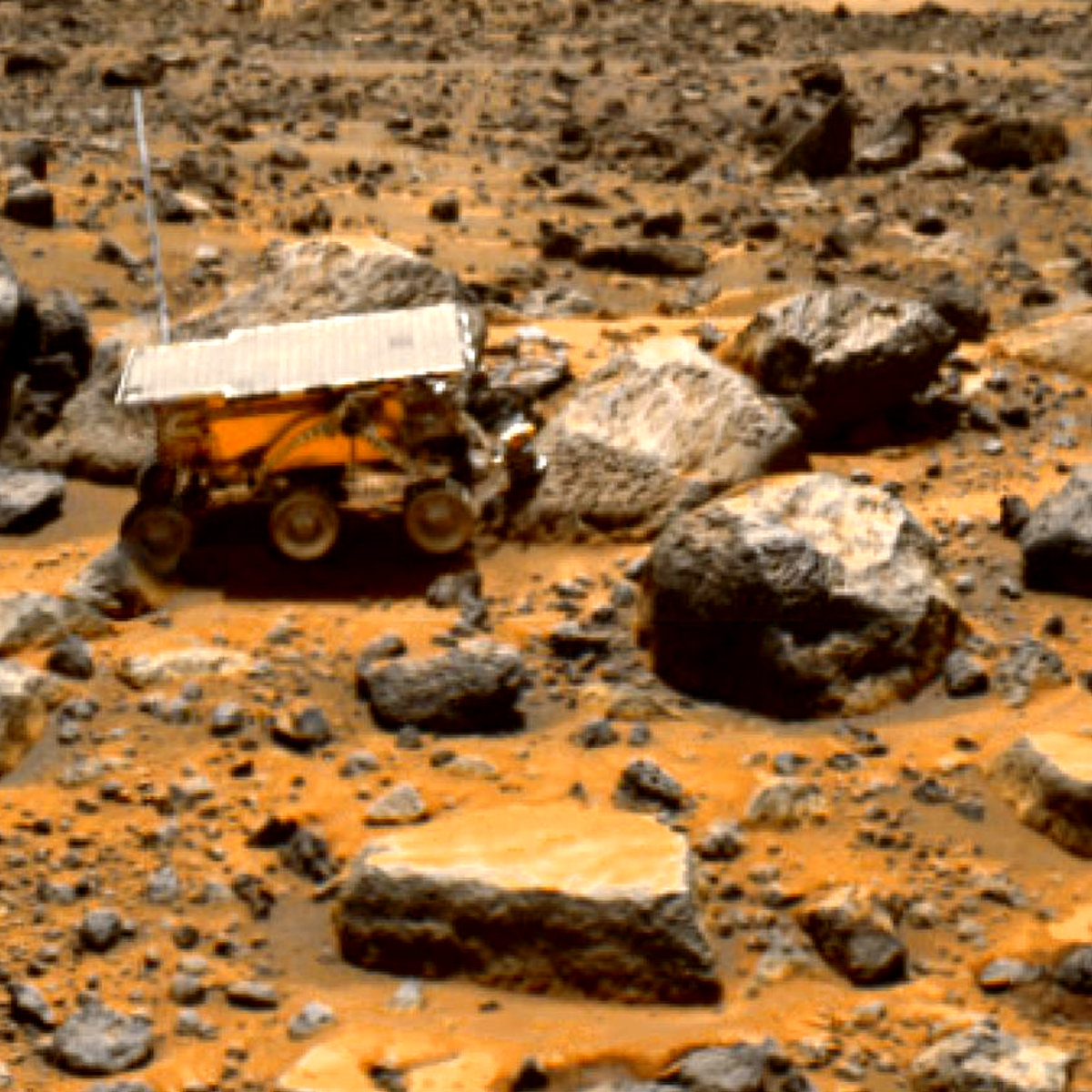
Going to Mars is about as difficult and expensive as it gets. Thus, it’s unsurprising that NASA relies on simulations in planning its missions to the Red Planet. Now, the space agency is working to create a Mars sim in VR for training and assessment purposes. The best part is that you can help!
Russia’s loose cannon of a space boss is sending mixed messages about the future of the International Space Station. Among the conflicting statements from Director-General Dmitry Rogozin, the Roscosmos version of Eric Cartman, is that “the decision has been made” to pull out of the ISS over international sanctions on Russia thanks to its war on Ukraine. But exactly when would this happen? Good question. Rogozin said the agency would honor its commitment to give a year’s notice before pulling out, which based on the current 2024 end-of-mission projections, means we might hear something definitive sometime next year. Then again, Rogozin also said last week that Roscosmos would be testing a one-orbit rendezvous technique with the ISS in 2023 or 2024; it currently takes a Soyuz about four orbits to catch up to the ISS. So which is it? Your guess is as good as anyones at this point.
At what point does falsifying test data on your products stop being a “pattern of malfeasance” and become just the company culture? Apparently, something other than the 40 years that Mitsubishi Electric has allegedly been doctoring test results on some of their transformers. The company has confessed to the testing issue, and also to “improper design” of the transformers, going back to the 1980s and covering about 40% of the roughly 8,400 transformers it made and shipped worldwide. The tests that were falsified were to see if the transformers could hold up thermally and withstand overvoltage conditions. The good news is, unless you’re a power systems engineer, these aren’t transformers you’d use in any of your designs — they’re multi-ton, multi-story beasts that run the grid. The bad news is, they’re the kind of transformers used to run the grid, so nobody’s stuff will work if one of these fails. There’s no indication whether any of the sketchy units have failed, but the company is “considering” contacting owners and making any repairs that are necessary.
For your viewing pleasure, you might want to catch the upcoming documentary series called “A League of Extraordinary Makers.” The five-part series seeks to explain the maker movement to the world, and features quite a few of the luminaries of our culture, including Anouk Wipprecht, Bunnie Huang, Jimmy DiResta, and the gang at Makers Asylum in Mumbai, which we assume would include Anool Mahidharia. It looks like the series will focus on the real-world impact of hacking, like the oxygen concentrators hacked up by Makers Asylum for COVID-19 response, and the influence the movement has had on the wider culture. Judging by the trailer below, it looks pretty interesting. Seems like it’ll be released on YouTube as well as other channels this weekend, so check it out.
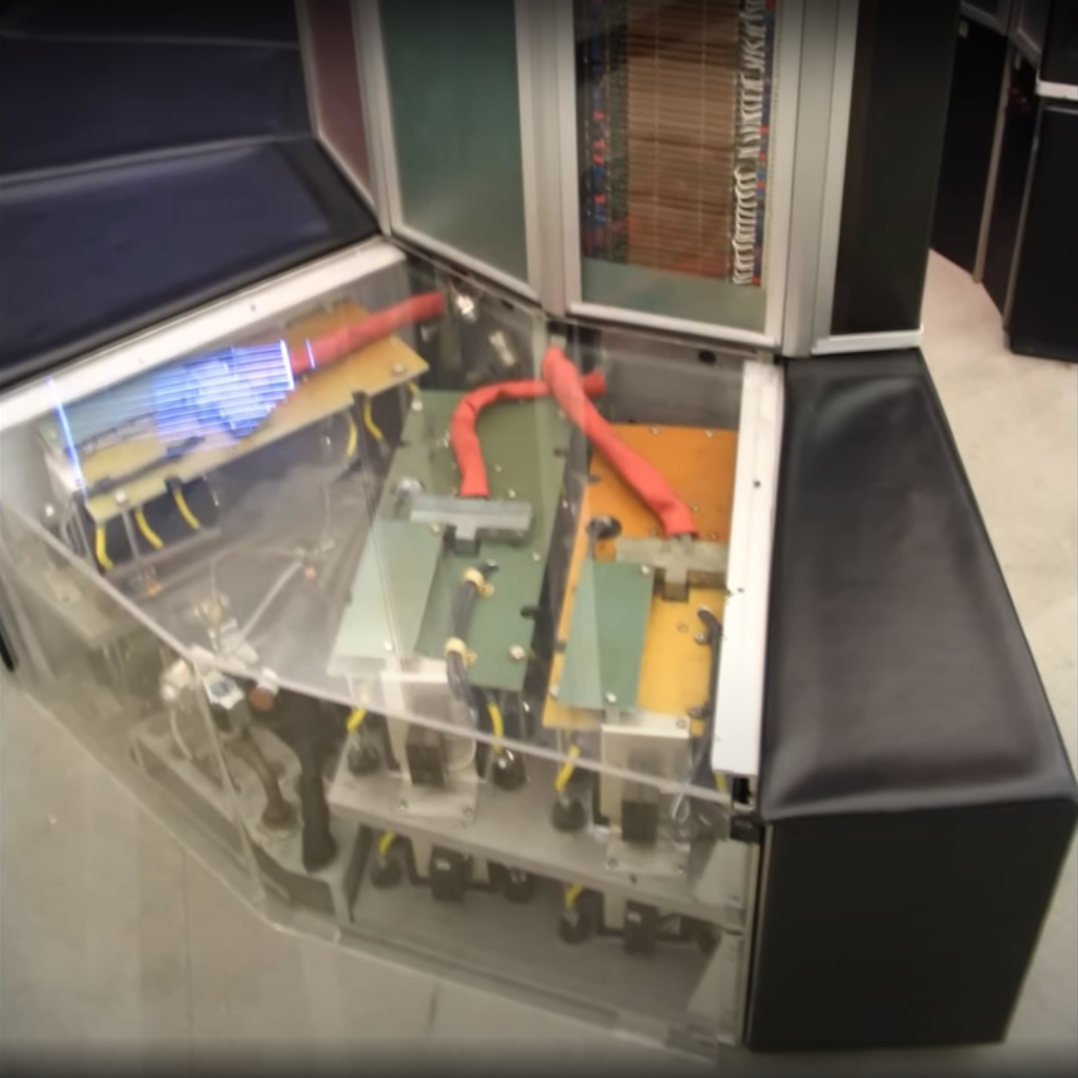
But, if you’re looking for something to watch that doesn’t require as much commitment, you might want to check out this look at the crawler-transporter that NASA uses to move rockets to the launch pad. We’ve all probably seen these massive beasts before, moving at a snail’s pace along a gravel path with a couple of billion dollars worth of rocket stacked up and teetering precariously on top. What’s really cool is that these things are about as old as the Space Race itself, and still going strong. We suppose it’s easier to make a vehicle last almost 60 years when you only ever drive it at half a normal walking speed.
And finally, if you’re wondering what your outdoor cat gets up to when you’re not around — actually, strike that; it’s usually pretty obvious what they’ve been up to by the “presents” they bring home to you. But if you’re curious about the impact your murder floof is having on the local ecosystem, this Norwegian study of the “catscape” should be right up your alley. They GPS-tagged 92 outdoor cats — which they dryly but hilariously describe as “non-feral and food-subsidized” — and created maps of both the ranges of individual animals, plus a “population-level utilization distribution,” which we think is a euphemism for “kill zone.” Surprisingly, the population studied spent almost 80% of their time within 50 meters of home, which makes sense — after all, they know where those food subsidies are coming from.