99% Inspiration, 99% Perspiration, And 99% Collaboration

I was watching an oldish TEDx talk with Rodney Mullen, probably the most innovative street skater ever, but that’s not the point, and it’s not his best talk either. Along the way, he makes a claim that ideas — in particular the idea that a particular skateboard trick is even possible — are the most important thing.

His experience, travelling around the world on skateboard tours, is that there are millions of kids who are talented enough that when they see a video demonstrating that a particular trick idea is possible, they can replicate it in short order. Not because the video showed them how, but because it expanded their mind’s-eye view of what is possible. They were primed, and so what pushed them over the edge was the inspiration.

On the other side of the street, we’ve got Thomas Edison and his “1% inspiration, 99% perspiration” routine. Edison famously tried a bazillion filament recipes before settling on tungsten, and attributes his success to “putting his time in” or “good old-fashioned hard work” or similar. So who’s right?

The inventor of Casper Slide and the phonograph are both right. Rodney is taking it for granted that these kids have put their time in; they are skaters after all, they skate. He doesn’t see the 99% perspiration because it is the natural background, while the inspiration flashes out in Eureka moments.

Similarly, Thomas E. way underestimates inspiration. He’s already fixated on this novel idea to take an arc lamp and contain it in a glass envelope — that’s what he’s spending all of his perspiration on, after all. But without that key inspiration, all he’d be is sweaty.

And they’re also both wrong! They’re both missing a third ingredient: collaboration. Certainly Mullen, who spent his life hanging out with other skaters, teaching them what he knows, and learning from them in turn, wouldn’t say the community of skaters didn’t shape him. Even in the loner’s sport of skating, nobody is alone. And Edison? His company profited greatly from broader advances in science, and the scientific literature. Menlo Park existed to take bright, well-trained minds and put them all in one place, sharing, teaching, and working together. It embodied the idea of collaborative innovation, and that’s where some of his best work was done.

So I’m with Isaac Newton, “standing on the shoulders of giants“. Success is 99% collaboration. This leaves us with one problem: the percentages don’t add up. But that’s alright by me.

Printing Yoda Heads: Re-Makers Riffing!

We had a comment recently from a nasty little troll (gasp! on the Internet!). The claim was that most makers are really just “copiers” because they’re not doing original work, whatever that would mean, but instead just re-making projects that other people have already done. People who print other peoples’ 3D models, or use other peoples’ hardware or software modules are necessarily not being creative. Debunking a cheap troll isn’t enough because, on deeper reflection, I’m guilty of the same generic sentiment; that feeling that copying other people’s work isn’t as worthy as making your own. And I think that’s wrong!

In the 3D printing world in particular, I’m guilty of dismissively classifying projects as “Yoda Heads”. About ten years ago, [chylld] uploaded a clean, high-res model of Yoda to Thingiverse, and everyone printed it out. Heck, my wife still has hers on her desk; and alone this is proof that straight-up copying has worth, because it made a sweet little gift. After a while, Yoda gave way to Baby Groots, and strangely enough we’re back to Yoda again, but it’s Baby Yoda now. Continue reading “Printing Yoda Heads: Re-Makers Riffing!”

It Ain’t Broke, But Should I Fix It?

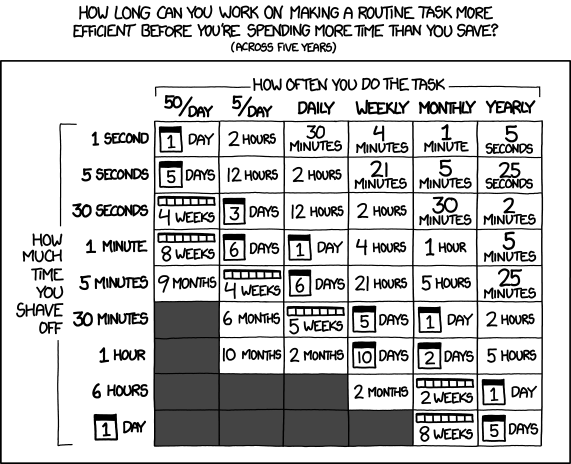
Five years ago, I wrote a series on getting started with your own MQTT-based home information/automation network. Five years is a long while in Hackaday time. Back then, the ESP8266 was a lot newer, and the 8266 Arduino port wasn’t fully in shape yet, and the easiest software framework to get MQTT up and running was NodeMCU; so that’s what I used for the article series, and as a consequence a handful of devices around my house run minor modifications of that basic “hello world”, but doing useful stuff.

Since then, NodeMCU has changed a bunch of its libraries and the ESP32 has replaced the ESP8266 in my parts drawer. If you tried to run my code, you’d find that it won’t run on an ESP8266 without porting or compiling an old version of NodeMCU for yourself anyway, and it won’t run on an ESP32 at all. When [Chris Lott] tried to follow my guide, he discovered that Micropython is probably a better language choice in 2021. To minimize lines of code, I’d agree, although the Arduino and Espressif’s own native IDF have grown into the job just about as well. In short, anything but NodeMCU.

Built in an hour, survived for five years.

But my home automation system doesn’t care. Those little guys are running 24/7, flipping bits like it was still 2016. Thermometers, light sensors, and power meters haven’t changed much in five years, and although I’ve revamped the databasing, display, and user control a number of times since then, using a fixed communication transport protocol means that they’re still talking the same language. Indeed, even if NodeMCU is dead to me, the MQTT content of my original series is all still valid, and installing a broker on a Raspberry Pi has only become easier in the intervening five years.

So I’ve got a bunch of legacy code running within the walls of my own home, and it makes me nervous. If the devices fail, or maybe when they eventually fail, it’s not going to be “just flash another ESP8266 and replace it”, because even though I have some ancient NodeMCU binaries sitting around, I know when to throw in the towel. But there’s no good reason to pull them down and start reflashing either. Except that it makes me a little bit itchy, just knowing that there’s orphaned, dead-end code running all around me. Surrounding me. Staring deep into my hacker’s heart.

I know better than to tear down a running system, even though I could do it one device at a time, and each module would surely be a simple, independent fix; even though I’d love the excuse to play around with Micropython and its MQTT implementation on the ESP8266, or maybe even swap some of them out for ESP32s; even though these were all temporary quick hacks that have somehow served for five (5!) years. I certainly know better, right? (Right?)

The Right Tools For The Job

We’re knee-deep in new microcontrollers over here, from the new Raspberry Pi Pico to an engineering sample from Espressif that’s right now on our desk. (Spoiler alert, review coming out Monday.) And microcontroller peripherals are a little bit like Pokemon — you’ve just got to catch them all. If a microcontroller doesn’t have 23 UARTS, WiFi, Bluetooth, IR/DA, and a 16-channel 48 MHz ADC, it’s hardly worth considering. More is always better, right?

No, it’s not. Chip design is always a compromise, and who says you’re limited to one microcontroller per project anyway? [Francesco] built a gas-meter reader that reminded to think outside of the single-microcontroller design paradigm. It uses an ATtiny13 for its low power sleep mode, ease of wakeup, and decent ADCs. Pairing this with an ESP8266 that’s turned off except when the ATtiny wants to send data to the network results in a lower power budget than would be achievable with the ESP alone, but still gets his data up into his home-grown cloud.

Of course, there’s more complexity here than a single-micro solution, but the I2C lines between the two chips actually form a natural division of work — each unit can be tested separately. And it’s using each chip for what it’s best at: simple, low-power tasks for the Tiny and wrangling WiFi on the ESP.

Once you’ve moved past the “more is better” mindset, you’ll start to make a mental map of which chips are best for what. The obvious next step is combination designs like this one.

Run The Math, Or Try It Out?

I was reading Sonya Vasquez’s marvelous piece on the capstan equation this week. It’s a short, practical introduction to a single equation that, unless you’re doing something very strange, covers everything you need to know about friction when designing something with a rope or a cable that has to turn a corner or navigate a wiggle. Think of a bike cable or, in Sonya’s case, a moveable dragon-head Chomper. Turns out, there’s math for that! Continue reading “Run The Math, Or Try It Out?”

New Parts, New Hacks

The biggest news this week is that Raspberry Pi is no longer synonymous with single-board Linux computers: they’re dipping their toes into the microcontroller business with their first chip: the RP2040, and the supporting breakout board, the Pico. It’s an affordable, capable microcontroller being made by a firm that’s never made microcontrollers before, so that’s newsy.

The Hackaday comments lit on fire about this chip, with some fraction of the commenters lamenting the lack of wireless radios onboard. It’s a glass-half-full thing, I guess, but the RP2040 isn’t an ESP32, folks. It’s something else. And it’s got a hardware trick up its sleeve that really tickles my fancy — the programmable input/output (PIO) units.

The other half of the commenters were, like me, salivating about getting to try out some of the new features. The PIO, of course, was high on that list, but this chip also caters to folks who are doing high-speed DSP, with fast multiplication routines burnt into ROM and a nice accumulator. (You know you’re a microcontroller nerd when you’re reading through a 663-page datasheet and thinking about all the funny ways you can use and/or abuse the hardware peripherals.)

All chip designs are compromises. Nothing can do everything. The new peripherals, novel combinations of old elements, and just pleasant design decisions, open up new opportunities if you’re willing to seek them out. When the ESP32 was new, I was looking at their oddball parallel-I2S hardware and thinking what kind of crazy hacks that would enable, and clever hackers have proven me right. I’d put my money on the PIO being similar.

New chips open up new possibilities for hacks. What are you going to do with them?

Hackability Matters

The Unix Way™ provides extreme hackability. The idea is that software should be written as tools to accomplish discrete tasks, and that it should be modular, extensible, and play well with others. It’s like software as a LEGO set — you can put the blocks together however you want, within limits, and make stuff that’s significantly cooler than any of the individual blocks alone.

Clearly this doesn’t work for all applications — things like graphics editors and web browsers don’t really lend themselves to being elegant tools that integrate well with others, right? It’s only natural that they’re bloaty walled gardens. What happens in the browser must stay in the browser, right?

But how sad is it that the one piece of software you use all day, your window into cyberspace, doesn’t play well with the rest of your system? I’d honestly never really been bothered by that fact until stumbling on TabFS. It’s an extension to Chrome that represents the tabs on your browser as if they were files on your local system — The Unix Way™. And what this means is that any other program that can read from or write to a file can open tabs, collect them, change webpages on the fly, and so on. It opens up the browser to you.

This is tremendously powerful. Don’t like the bookmarking paradigm of your particular browser? Writing your own would be a snap in Python — and you could do cleverer things like apply a little machine learning to handle putting them in categories. Want to pop open (or refresh) a set of webpages at a particular time every day? Cron, or its significantly more complicated counterpart systemd, and a couple lines of code will do that. Want to make a hardware button that converts dark mode to light mode and vice-versa for every website starting with “H”? Can do.

I’m picking on browsers, but many large pieces of software are inaccessible in the same way — even if they’re open source, they don’t open up channels for interaction with user code or scripts. (Everything “in the cloud” or “as a service”, I’m looking at you! But that’s a further rant for another day.) And that’s a shame, because most of these “big” pieces of software actually do the coolest things.

So please, if you’re working on a big software package, or even just writing a plug-in for one, do think about how you can make more of its abilities available to the casual scripter. Otherwise, it’s just plastic blocks that don’t fit with the rest of the set.