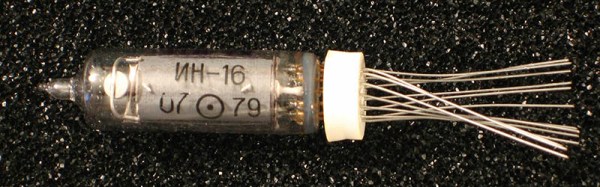
[Limpkin] has an idea for a project that uses a lot of IN-9 Nixie tubes. Where a Nixie tube clock would only use four or six tubes, [Limpkin] is looking at fifty IN-9 bar graph Nixie tubes. These tubes only light up above 100 Volts and draw about half an amp. That’s 64 Watts, according to the math on the project page, so how does [Limpkin] plan on powering these tubes? With a big high voltage power supply.
The power supply [Limpkin] designed is more or less what you would expect to find in any power supply. There’s a transformer, a bunch of caps, and a rectifier. Going with a standard laminated core transformer would mean this power supply would be huge and heavy, but once again eBay comes to the rescue with a small, 150 Watt toroidal transformer. The largest output on the transformer was two 24 V outputs. Combining those outputs gets [Limpkin] to 48V AC, or 68V peak to peak. A full wave voltage doubler with two caps and two diodes gives [Limpkin] the 136V DC that will power the tubes.
Combine the high voltage circuit with a 9V AC tap, a small bridge rectifier, and a few more caps, and [Limpkin] had a supply that would power the tubes and the rest of the electronics in his multiple Nixie tube project. A few passes with a CNC mill gave the power supply a nice case topped off with a foreboding toroidal transformer ready to power a beautiful neon project.
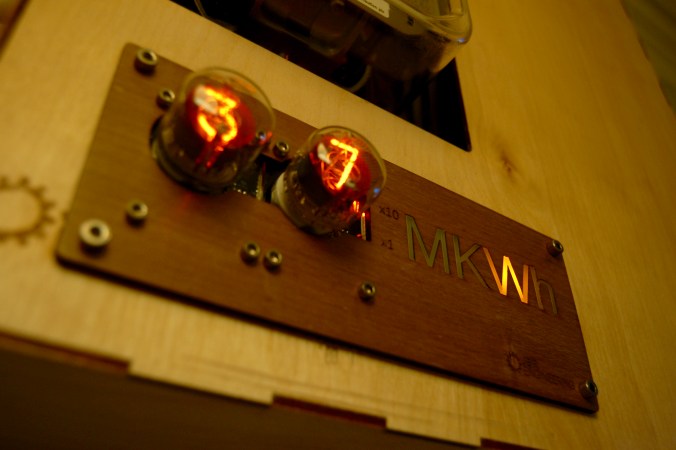
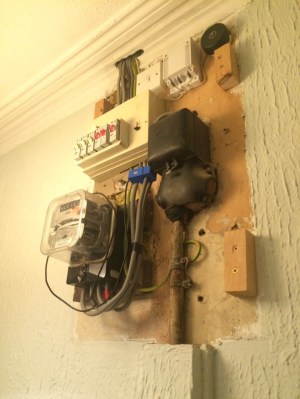 Looking at the “before” pictures on [John]’s blog, we can see why he’d want to invest the effort – not exactly an attractive way to greet guests at the front door. A simple wooden box to replace the previous cover would have sufficed, but why pass up the opportunity to add value? [John] opted for a Nixie tube display to complement the glass of the electric meter. The Nixie modules were a bit on the pricey side, though, so with only a pair of tubes to work with, [John] came up with a clever system to indicate the scale of the display. We doubt he’ll ever see megawatt-level instantaneous power draw, but the meter is also capable of totalling energy use, and as a bonus an ESP-8266 gives lets him stream data to the web.