
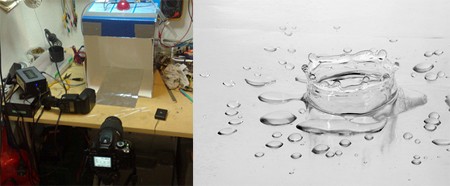
Droplet photography (link translated from French) often produces simple and beautiful images, but timing the exposure can be tricky. Snapping the photo too early or too late can cause you to miss the action, which only lasts a fraction of a second. EquinoxeFR (the people behind the Asus WL500GP audio hack) came up with a solution to this problem using a circuit with an ATmega168 running an Arduino environment. The circuit controls a syringe that contains a liquid and is triggered remotely to release a drop into a darkened chamber. A camera with the shutter open is attached to the chamber, and before the droplet hits, it crosses an IR sensor that triggers the flash to go off a few milliseconds later, capturing the unique crown shape of the impact. No schematic is available as yet, but comments at the bottom of the post suggest one will be coming soon.
photography211 Articles
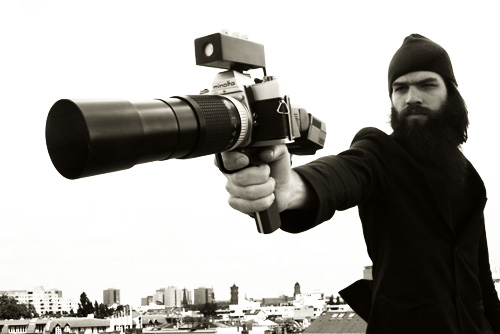
Hack Cameras With The Image Fulgurator
[Wallace] sent in this awesome project built by [Julius Von Bismarck]. The “Image Fulgurator” is the result of mating an optical slave flash with a camera body turned projector. The result is the ability to project ghost images onto a picture being taken by anyone using a camera with their flash. Check out the demo video after the break or hit the project site for more.
Eye-Fi Explore Review
[flickr video=http://www.flickr.com/photos/pauls/2611298593/]
The WiFi uploading Eye-Fi SD card made a big splash when it was first introduced, but now Eye-Fi has a whole line of different products. The top of the line is the Eye-Fi Explore, which supports geotagging without using a GPS. Instead of GPS hardware, it uses the Skyhook Wireless Wi-Fi Postitioning System, which correlates the position of the Eye-Fi’s access point to GPS locations, creating virtual GPS functionality. This allows photos taken with the Eye-Fi to be be geotagged. Of course, the accuracy of the system is noticeably lower than true GPS and seems to be affected by a number of external factors, but it is still accurate enough to tag the photo within the immediate vicinity of where it was taken.
WiFi positioning is great feature, but certainly not limited to photography. Since the Eye-Fi is at its core SD storage media, you could probably have it geotag data saved to the card, even if it wasn’t created by a digital camera..
Consumer Reports Releases Vintage Photos

Consumer Reports has just released this photoset of vintage photos of consumer product tests. It includes photos of conventional products like the one above (a portable hair dryer), but also some interesting tech that never took off, like a motorized scour pad and a record player for cars. The products depicted in the set are all from before the 1970s (and remember, a few machines from back then were able to do some pretty impressive things), so whether you’re into old tech for its own sake or you’re just looking for photography of really old tv consoles, get a look.
[via Laughing Squid]
Laser Insect Photography Rig
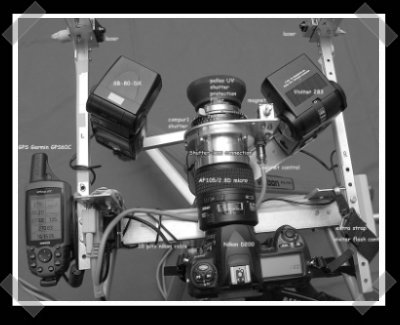
[Marc] sent in this awesome insect photography rig. The camera is manually pre-focused and set for a 30 second exposure at ISO100. The aluminum cylinder in front of the lens is an external shutter mounted with a custom turned lens adapter. It’s used because the built in shutter is too slow for insect capture. The camera/shutter is triggered by a pair of lasers with photo detectors. When both beams are broken, the insect should be in front of the lens. A Garmin GPS provides position information that’s tagged on the image by the Nikon D200. A large photo of the rig is here, while a more detailed writeup on building it is here.
Update: It looks like we covered a previous version of this rig, but the old links are down and we didn’t have a shot of the setup. Oh, and I forgot to mention [Marc] new control box for running this rig.
Camera Lightning Capture
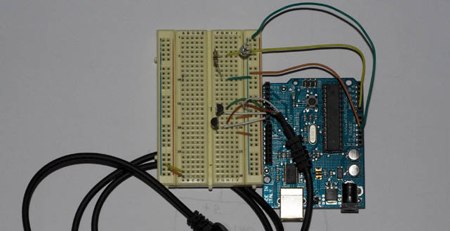
The people at [Hobby Robotics] decided to build a trigger circuit for lightning photography. There are more complex ways to do this, but they just used a photo transistor and an Arduino. The Arduino watches the photo transistor’s value and compares it to the previously captured one. If the difference is above a certain threshold, it means a rapid change in the amount of light has occurred, which triggers the shutter. An earlier post covered how to directly control the Canon 30d using an Arduino. All of this works because the shutter lag and code execution together are less than lighting’s 100ms duration.
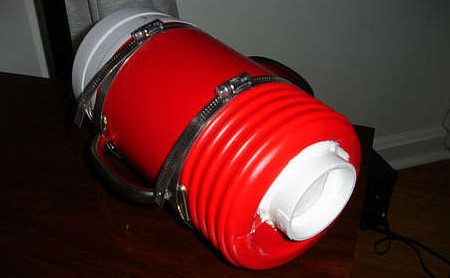
Underwater Camera Housings
Underwater cameras can produce some amazing photography, but who wants to pay for housing if you can make something yourself?
This underwater camera housing on Instructables doesn’t require a specific container, allowing you to choose anything you have around the house that’s watertight and large enough to fit your camera. A finger from a glove is added so you can still operated the controls. A similar project uses an insulated water jug, accommodating any camera that fits inside. Neither of these involve any camera mods.









