Newest PlayStation Exploit Skips The Disc

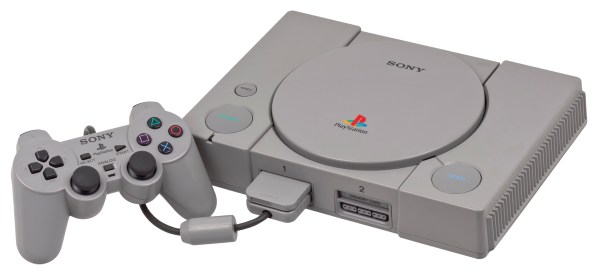
Last month we brought you word of tonyhax, a clever exploit for the original Sony PlayStation that leveraged a buffer overflow in several of the games from the Tony Hawk Pro Skater series to load arbitrary code from a specially prepared memory card. But now [Bradlin] has taken that idea a step further and developed a software exploit for Sony’s iconic console that doesn’t need to be triggered from a game.

The exploit is considerably more complex this time around, but [Bradlin] does an excellent job of breaking it down for those who want the gritty details. The short version is that missing boundary checks in the PlayStation’s built-in memory card handling routines mean a carefully formatted “block” on the memory card can get the console to execute a small 128 byte payload. That’s not a lot of room to work with, but it ends up being just enough to load up additional code stored elsewhere on the memory card and really kick things off.

Unlike tonyhax, which was designed specifically to allow the user to swap their retail Tony Hawk disc with a game burned to a CD-R, [Bradlin]’s FreePSXBoot is presented as more of a generic loader. As of right now, it doesn’t allow you to actually play burned games, although its inevitable that somebody will connect those last few dots soon.

If you want to check out the progress so far, all you need is wire a PlayStation memory card up to an Arduino, write the provided image to it, and stick it in the slot. [Bradlin] says the exploit doesn’t work 100% of the time (something else that will surely be addressed in future releases), but it shouldn’t take too many attempts before you’re greeted with the flashing screen that proves Sony’s 27 year old console has now truly been bested.

Continue reading “Newest PlayStation Exploit Skips The Disc”
PlayStation Unlocked With New Software Hack

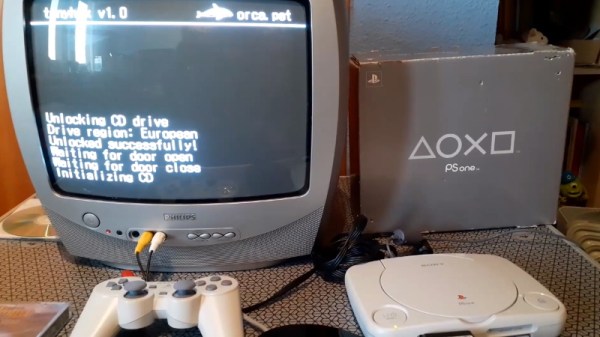
The original PlayStation might be pushing 30 years old now, but that doesn’t mean hackers have given up on chipping away at it. A new exploit released by [Marcos Del Sol Vives] allows users to run copied games on all but the earliest hardware revisions of this classic console, and all you need to trigger it is a copy of Tony Hawk’s Pro Skater 2.

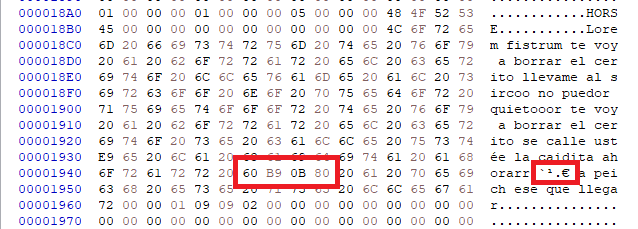
Aptly named tonyhax, this exploit uses a classic buffer overflow found in the “Create Skater” mode in Tony Hawk 2, 3, and 4. When the game sees a custom character saved on the memory card it will automatically load the name field to show it on the screen, but it turns out the developers didn’t think to check the length of the name before loading it. Thanks to this oversight, a long and carefully crafted name can be used to load an executable payload into the console’s memory.

The name contains the memory address of the payload.

That payload could be anything, such as a homebrew game, but in this case [Marcos] went all in and developed a simple tool that unlocks the console’s optical drive so it will play games burned to CD-Rs. Once the tonyhax exploit has been loaded, you simply swap the authentic Tony Hawk disc for whatever burned title you want to play. So far every game tested has worked, even those that span across multiple discs.

[Marcos] is providing not only the save files ready to load on your PlayStation memory card (either through a PC tool, or with the help of a hacked PS2), as well as the complete source code for tonyhax. This opens the door to the exploit being used to load other tools, emulators, and indie games, but as the PlayStation homebrew scene is relatively limited when compared to newer consoles, the demand might be limited.

Compared to the traditional physical modifications used to play copied games on the PlayStation, this new software approach is far more accessible. Expect to see memory cards with this exploit preinstalled hit your favorite import site in the very near future.

Continue reading “PlayStation Unlocked With New Software Hack”

Console Controller Mod Gets Amputee Back In The Game

No matter how it happens, losing one or more fingers is going to change one’s life in thousands of ways. We’re a manipulative species, very much accustomed to interacting with the world through the amazing appendages at the ends of our arms. Finding ways around the problems that result from amputations is serious business, of course, even when it’s just modifying a game console controller for use with a prosthetic hand.

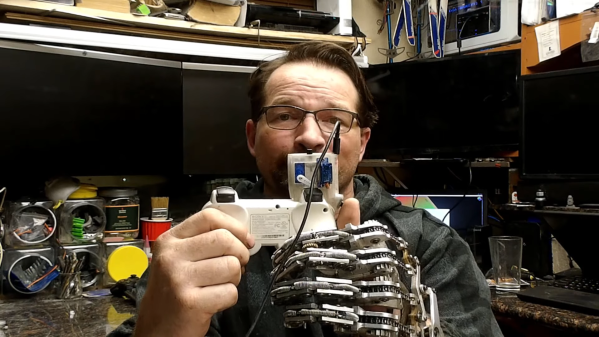
We’ve gotten to know [Ian Davis] quite well around these parts, at least from his videos and Instagram posts. [Ian]’s hard to miss — he’s in the “Missing Parts Club” as he puts it, consisting of those who’ve lost all or part of a limb, which he has addressed through his completely mechanical partial-hand prosthetic. As amazing as the mechanical linkages of that prosthetic are, he hasn’t regained full function, at least not to the degree required to fully use a modern game console controller, so he put a couple of servos and a Trinket to work to help.

An array of three buttons lies within easy reach of [Ian]’s OEM thumb. Button presses there are translated into servo movements that depress the original bumper buttons, which are especially unfriendly to his after-market anatomy. Everything rides in an SLA-printed case that’s glued atop the Playstation controller. [Ian] went through several design iterations and even played with the idea of supporting rapid fire at one point before settling on the final design shown in the video below.

It may not make him competitive again, but the system does let him get back in the game. And he’s quite open about his goal of getting his designs seen by people in a position to make them widely available to other amputees. Here’s hoping this helps.

Continue reading “Console Controller Mod Gets Amputee Back In The Game”

Burning Your Own PS1 Modchip Is Easy

The original Sony PlayStation came out just in time for CD piracy to really start taking off. Aware of this threat to sales, Sony engineers included a copy protection and region locking mechanism that placated executives and annoyed end-users alike. [MattKC] explores how this copy protection worked, and how you can burn your own modchip at home for just a few dollars.

Sony’s method of copy protection relied on steps taken during the manufacturing process, pressing a special groove into the game media that regular CD burners couldn’t replicate, a topic our own [Drew Littrell] has covered in depth. This groove contained a four letter code that could be read by the console, corresponding to the region in which the game was sold. The console would read this groove on startup, and check that the code in the game matched the code in the console before booting. Modchips circumvent this by injecting a spoof code into the console that matches the local region, regardless of what is read off the disc. This has the effect of both allowing users to run bootleg CD-Rs, homebrew code, as well as games from other regions.

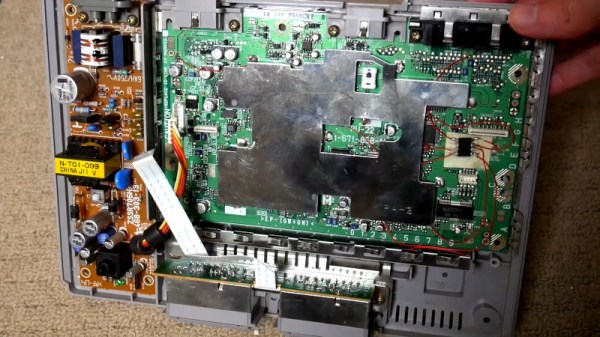
Today, we’re blessed with the Internet and cheap hardware. As [MattKC] demonstrates, it’s no longer necessary to mail-order a chip from a dodgy ad in the back of a games magazine; instead, one can download source code and flash it to a commodity PIC microcontroller for just a few bucks. With the chip soldered in to the relevant points of the PS1’s motherboard, you’re good to go.

As far as console modding goes, the PS1 is a great platform to start with — simple to work on, and also the best selling console of all time, so the stakes are low if you mess up. Video after the break. Continue reading “Burning Your Own PS1 Modchip Is Easy”

Xbox PlayStation Logos Wood Grain

Console Identity In The Age Of PlayStation 5 And Xbox Series

Consoles are obsolete the minute they are released. The onward march of silicon innovation ensures that consoles never are able to keep up with the times, but technical superiority rarely results in being remembered. That kind of legacy is defined by the experiences a device provides. A genre defining game, a revolutionary approach to media, or a beloved controller can be enough to sway popular opinion. But really…it all boils down to a box. All the spurious promises of world-class hardware specs, all the overly ambitious software ship dates, and even the questionable fast-food crossover promotions exist in service to the box. The boxes vying for attention in 2020 A.D. are the PlayStation 5 (PS5) and Xbox Series X/S/Seriessss (XSX or whatever the common nomenclature eventually shakes out to be). These boxes likely represent the minimum spec for the next decade in big-budget video games, however, it is the core identity of those consoles that will define the era.

Continue reading “Console Identity In The Age Of PlayStation 5 And Xbox Series”

Official Teardown Gives Unexpected Look Into PS5

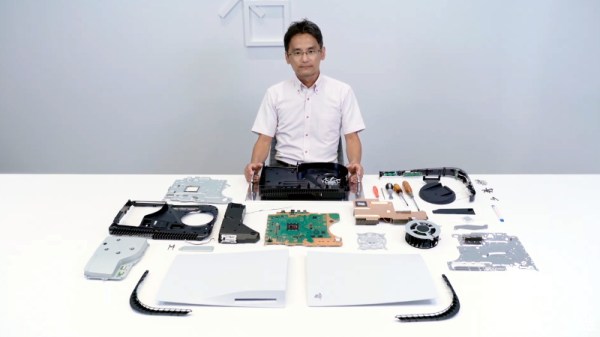
With Sony and Microsoft still a month away from the public release of their next-generation game consoles, you’d expect technical details of their respective systems to still be under a veil of secrecy. But both companies look to be taking things a bit differently this generation, as it becomes increasingly clear that modern consumers are interested in what makes their devices tick. Today, Sony really threw down the gauntlet by beating the tech media to the punch and posting their own in-depth teardown on the new PlayStation 5.

Unsurprisingly, the video after the break is almost entirely in Japanese. But even if you don’t know the language, there’s plenty of interesting details to be had. For one thing, the heatsink and fan that cools the PS5’s AMD CPU and GPU are collectively so massive that they appear to take up most of the console’s internal volume.

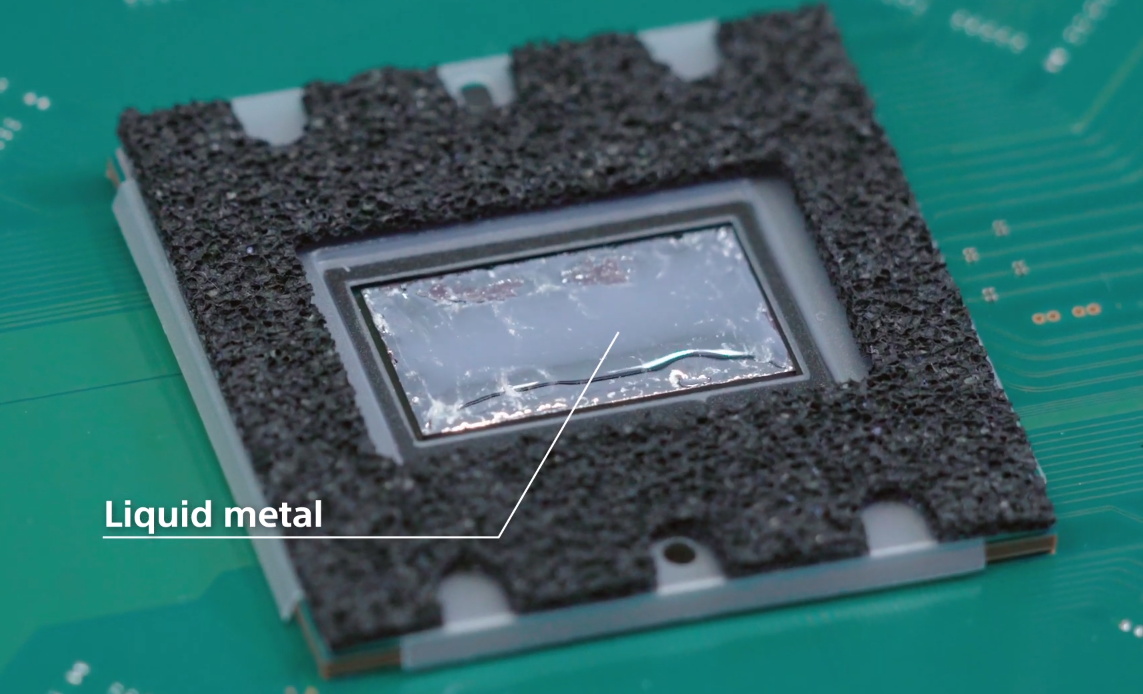
In fact, the heatsink itself is so large that the motherboard is actually mounted to it instead of the other way around. So if you want to take out the board, you have to unbolt it from the heatsink and remove it first. In the process you’ll expose the unique liquid metal thermal compound that Sony apparently developed specifically for this application. Good luck to you if any dust gets in that expensive-looking goop.

It’s also interesting to note that, unlike the previous two generations of Sony consoles, the PS5 has no discrete hard drive. Instead, onboard flash with a custom controller is used to provide 825 GB of storage for software. Hopefully Sony has put the requisite amount of R&D into their wear leveling, as a shot flash chip will mean a whole new motherboard. That said, gamers with extensive collections will be happy to see there appears to be an expansion bay where you can install your own M.2 drive.

Between this and the recent PS4 assembly line tour, it’s refreshing to see a company like Sony be a bit more transparent. After years of adversarial treatment from the tech giants, we’d almost forgotten that the customer is supposed to be king. Continue reading “Official Teardown Gives Unexpected Look Into PS5”

Ultra-Rare Nintendo Play Station Prototype Hits Auction Block

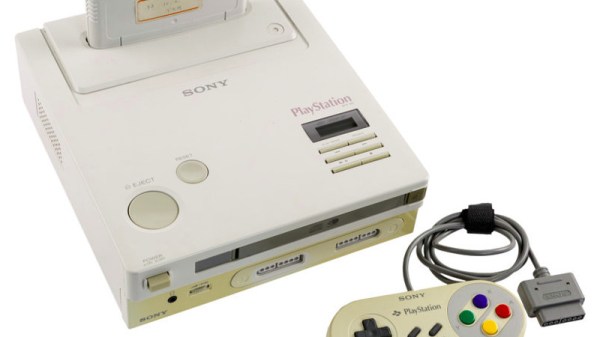
If you are interested in such things, you can buy a 1990s Sony Play Station via Heritage Auctions. We’re sure this will have caught your interest, after all it’s not every day you get the chance to catch such a machine. But before you call us out for seemingly reporting the news of an unremarkable sale featuring the runaway success story of 1990s gaming, take a look at the first sentence again. This is not a PlayStation, the ubiquitous grey console of the 1990s, but a Play Station, said as two words rather than one. This ill-fated collaboration between Sony and Nintendo was intended to be an SNES with a CD-ROM drive, but the project faltered and all that remained was the almost mythical tale of a few prototype consoles.

So far there has only been one of these devices that has surfaced, and this is the machine in the auction. So what seemed as though it might be a mundane console turns out to be one of the rarest machines ever created, a true Holy Grail of console collecting.

This machine has a known provenance, and has appeared on these pages before. In 2016 Ben Heck did a teardown to reveal the combination of Sony CD drive and SNES motherboard, and by 2017 he had it working with some homebrew games. There was no official software produced for this console, so it seems the lucky purchaser may have only homebrew games with which to try their console.

At the time of writing the auction is standing at $57,600, and we’d expect this to increase significantly. So you may not have the chance to own the Play Station, but with such a rare machine it’s always worth noting its appearances. It’s also worth remembering that there was more than one of them produced, in fact when your scribe was working in the same industry in the 1990s a senior colleague talked about having been shown one during dealings with Nintendo UK a few years earlier. The machine on sale today may be the only one we know to have survived, but it’s a fair possibility that there are others still gathering dust in long-forgotten archive boxes or collections of gaming hardware junk. Keep an eye out, you might just find your own rarest console ever produced!