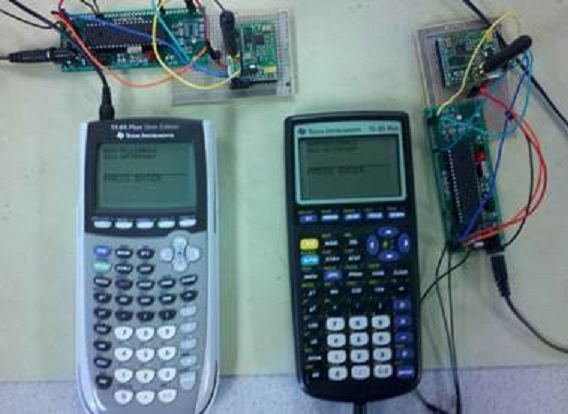
 [Texane] had been thinking about how to monitor the state of his garage door from a remote place. The door itself isn’t around any power outlets, and is a few floors away from where his server would be located in his apartment. This presented a few design challenges – namely, the sensor itself should have a wireless connection to the server, and being low power would be a great idea. This led to the development of a minimalist framework for wireless communication that allows a sensor to run for weeks without a battery swap.
The wireless protocol itself is based on a simple key value pair; each individual sensor, coupled with a NRF905 radio, has passes an address, a key, and a value. There are allowances for checksums and acknowledgement, but as the PDF says, this is a very minimal protocol.
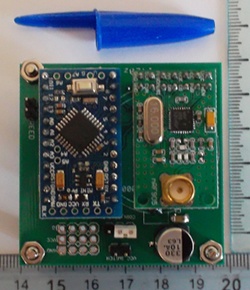
With the software out of the way, [Texane] turned to the hardware. The microcontroller is a simple Arduino clone, paired with a radio and a coin cell on a small board. The micro spends most of its time in a low power state, with the sensor, in this case a reed switch, tied to an interrupt pin.
There was a problem with the power consumption of the radio, though: when the short 17-byte message was transmitting, there was a significant voltage drop. This was okay with a fully charged battery, but with a partially drained coin cell, the possibility of brownouts was high. A big cap in parallel was enough to offset this voltage drop.
It’s still a little expensive for an all-in-one home automation and monitoring system, but developing a functional wireless protocol and the hardware to go with it is no small feat. It’s actually a great piece of kit that [Texane] is sure to find a few uses for.


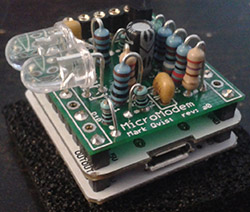 Them kids with those Arduinos don’t know what they’re missing. A serial connection is just too easy, and there’s so much fun to be had with low bandwidth modems. [Mark]
 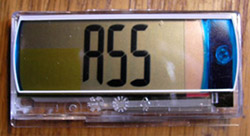 While they’re probably rare as hen’s teeth in the US, there have been a few major stores around the world that have started rolling out electronic shelf labels for every item in the store. These labels ensure every item on a shelf has the same price as what’s in the store’s computer, and they’re all controlled by an infrared transceiver hanging on the store’s ceiling. After studying one of these base stations, [furrtek] realized they’re wide open if you have the right equipment. The right equipment, it turns out,