Generating G-code with Common Lisp

posted Feb 1st 2009 7:31pm by Eliot Phillips
filed under: cnc hacks, digital audio hacks, tool hacks

gcode

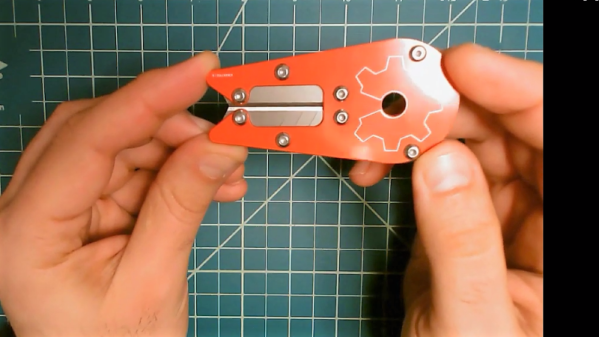
Ruin & Wesen are a two person shop creating specialized music gear. As part of their recent MIDI Command development, they got into case manufacturing. They purchased a mini CNC mill to cut the aluminum cases. Unhappy with the software options provide [Wesen] decided to write his own G-code generator. G-code is part of the numerical control used to command CNC machines. He implemented his interpreter using the language he’s most familiar with: Common Lisp (not surprising if you notice the website’s backend). The post covers the design philosophy used and some of the problems that came up. We look forward to future releases since the interpreter can generate milling code using processing.org sketches and cut PCBs directly from Eagle.

You may remember Ruin & Wesen from when they shared their Eagle layout videos.

[Thanks fbz]

How-to: Prepare your Eagle designs for manufacture

posted Jan 15th 2009 4:11pm by Ian
filed under: how-to, parts

back

Cadsoft Eagle is a multi-platform freeware circuit layout program. Lots of open source hardware is designed in Eagle, and it’s become a hobbyist favorite. We use it for all of our hardware designs.

There are several ways to turn an Eagle design into an actual printed circuit board (PCB). We’ll show you how to save Eagle designs as industry-standard gerber files that are accepted by any PCB manufacturer. You can use the gerbers to order a single prototype, or a full panel.

Read the rest of this entry »


Arduino shield scaffold

posted Dec 6th 2008 11:00am by Eliot Phillips
filed under: arduino hacks, misc hacks, tool hacks

arduinoshield

[Garrett] from macetech has been prototyping shields for the Arduino development platform. Arduino’s have an inexplicable nonstandard spacing between two of the banks of output pins. This means that you can’t use regular perfboard with them. To make the design process quicker, [Garrett] has put together an Eagle file that just includes the male header pins. The file also has a line indicating the tall lower board components so you can avoid creating shorts.

Design for manufacture

posted Nov 8th 2008 5:27pm by Eliot Phillips
filed under: misc hacks, news, tool hacks

sparkfun

SparkFun has posted an excellent guide to the many different issues you could run into when you finally decide to get a circuit board professionally produced. We assume that most of you aren’t running a professional design firm and will appreciate these tips gleaned from years of experience. They provided a rule list, Eagle DRC, and CAM file to help you get it right the first time. The end goal is designing a board that won’t be prone to manufacturing errors. The tutorial starts by covering trace width and spacing. They recommend avoiding anything less than 10mil traces with 10mil spacing. For planes, they increase the isolation to 12mil to avoid the planes pouring onto a trace. They also talk about annular rings, tenting, labeling, and generating the appropriate gerber and drill files. SparkFun isn’t completely infallible though, and manages to produce a coaster from time to time.

SparkFun naturally followed up this strict tutorial with a guide to unorthodox header hole placement. If you want to learn more about Eagle, have a look at [Ian]’s overview of Eagle 5 and Ruin & Wesen’s layout videos.

Eagle 5 overview

posted Jun 11th 2008 11:00pm by Eliot Phillips
filed under: misc hacks


Not sure how we missed this when it was originally published, but our friend [Ian Lesnet] at DIY Life posted an overview of Cadsoft’s new release Eagle 5. This upgrade seems to be all usability tweaks-it really took 5 versions before you could right click? They also made CTRL+Z undo. Really. Eagle3D works nearly the same as before, but has a few changes to help you figure out why certain parts aren’t rendering. We’re happy to see the OSX version is now Universal and no longer needs X11.


Hack a Day serves up fresh hacks each day, every day from around the web and a special How-To hack each week.

Send us your hacks