[Tom] has taken a DIY approach to smart sailing with a Raspberry Pi as the back end to the navigation desk on his catamaran, the SeaHorse. Tucked away neatly in a waterproof box with a silicone gasket, he keeps the single board computer safe from circuit-destroying salt water. Keeping a board sealed up so tightly also means that it can get a little too warm. Because of this he under-clocks the CPU so that it generates less heat. This also has the added benefit of saving on power which is always good when you aren’t connected to the grid for long stretches of time.
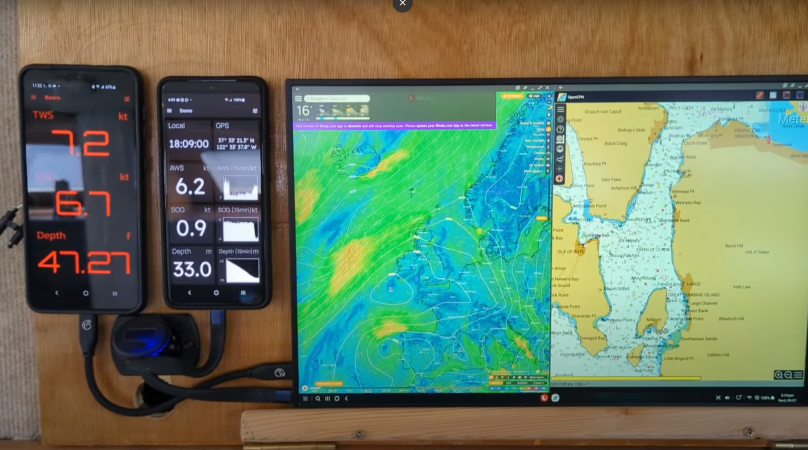
A pair of obsolescent phones and a repurposed laptop screen provide display surfaces for his navdesk. With these screens he has weather forecasts, maps, GPS, depth, speed over ground — all the data from all the onboard instruments a sailor could want to stream through a boat’s WiFi network — at his fingertips.
There’s much to be done still. Among other things, he’s added a software defined radio to the Pi to integrate radio monitoring into the system, and he’s started experimenting with reprogramming a buoy transmitter, originally designed for tracking fishing nets, so that it can transmit his boat’s location, speed and heading instead.
The software that ties much of this system together is the open source navigational platform OpenCPN which, with its support for third-party plugins, looks like a great choice for experimenting with new gadgets like fishing net buoy transmitters.
For more nautical computing fun check out this open source shipboard computer, and this data-harvesting, Arduino-driven buoy.