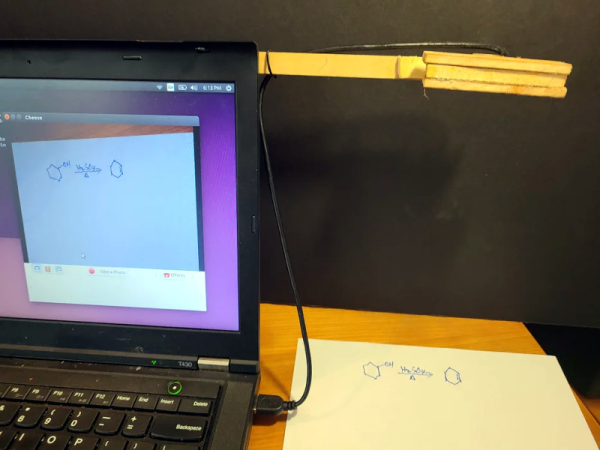
Video conferencing is nothing new, but the recent world events have made it much more mainstream than it has been in the past. Luckily, web camera technology is nothing new and most software can also show your screen. But what about your paper documents? Turns out that [John Nelson] can show you how to spend $5 for an old laptop camera module and put your documents center stage on your next Zoom, Skype or other video conferences.
This is especially good for things that would be hard to draw in real time during a conference like a quick sketch, a schematic, or as you can see in the post and the video demo below, chemical molecule diagrams.
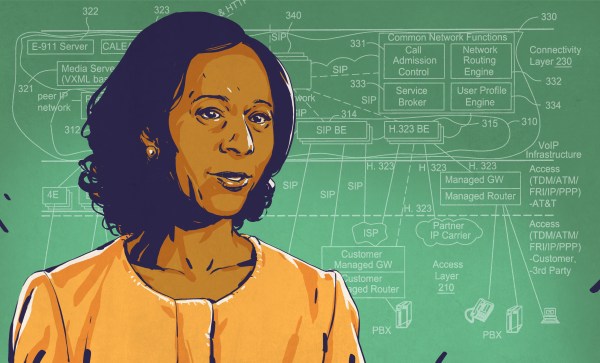
If you’ve ever used FaceTime, Skype, own a Magic Jack, or have donated money after a disaster by sending a text message, then you have Marian Croak to thank. Her leadership and forward thinking changed how Ma Bell used its reach and made all of these things possible.
Marian Croak is a soft-spoken woman and a self-described non-talker, but her actions spoke loudly in support of Internet Protocol (IP) as the future of communication. Humans are always looking for the next best communication medium, the fastest path to understanding each other clearly. We are still making phone calls today, but voice has been joined by text and video as the next best thing to being there. All of it is riding on a versatile network strongly rooted in Marian’s work.
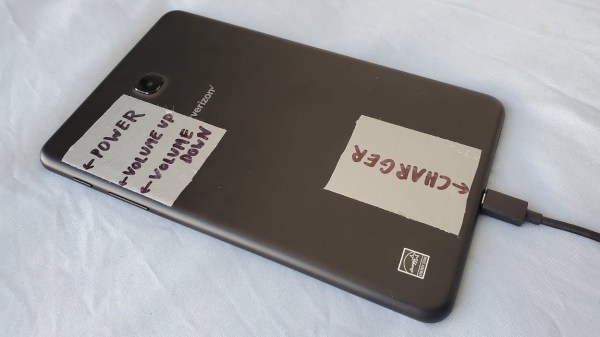
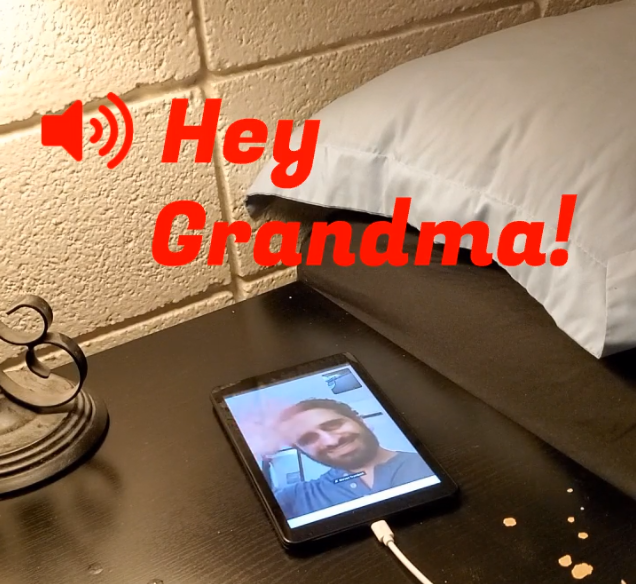
With social distancing it can be harder to stay in touch with our relatives, especially those who are elderly and not particularly tech-savvy. Looking for a solution to that end for his own grandmother, [Steve] came up with the idea of using an inexpensive used tablet and a mobile data plan in order to mail her a “video phone” that works out of the box.
This method requires zero button presses in order to pick up a video call.
Since the tablet is configured to use cellular networks rather than WiFi, it requires no setup process at all to the recipient. And with the Android version of Skype, it’s possible to configure it so that calls are automatically picked up and video chat enabled. That way, whoever gets the tablet after it’s prepared doesn’t have to tap a single button on the screen in order to receive a call.
[Steve] has also developed the simple idea into a full-fledged easy-to-follow tutorial so that just about anyone is able to replicate the process for their own loved ones. And if you’re still having any trouble with it, there’s a team of volunteers right on the website who can help you with tech support. Just remember to disinfect whatever device you’re sending, since viruses can typically stick to surfaces like plastic and glass for longer.
Now, if showing up to your relatives as a disembodied video screen doesn’t cut it for you, then you might want to send them something more substantial like this cute little telepresence robot that can drive around on a desk.
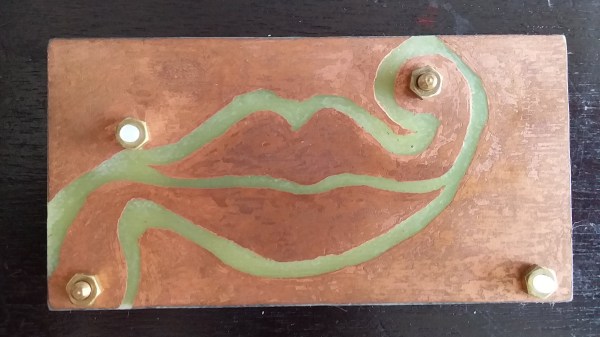
This project of [Nathan]’s certainly has a playful straightforwardness about it. His Skype ‘Kiss’ Interface has a simple job: to try to create a more intuitive way to express affection within the limits of using Skype. It all came about from a long distance relationship for which the chat program was the main means of communicating. Seeking a more intuitive and personal means of expressing some basic affection, [Nathan] created a capacitive touch sensor that, when touched with the lips, sends the key combination for either a kissy face emoji or the red lips emoji, depending on the duration.
Capacitive touch sensing allows for triggering the sensor without actually physically touching one’s lips to the electrodes, which [Nathan] did by putting a clear plastic layer over the PCB traces. His board uses an STM32 microcontroller with software handling the USB HID and STM’s TSC (Touch Sensing Controller) functionality. As a result, the board has few components and a simple interface, which was in keeping with the goal of rejecting feature creep and focusing on a simple task.
Clearly the unit works; but how well does it actually fulfill its intended purpose? We don’t know that yet, but we do know that [Nathan] seems to have everything he needs in order to find out. Either way, it’s a fun project that definitely fits the spirit of the Human-Computer Interface Challenge of The Hackaday Prize.
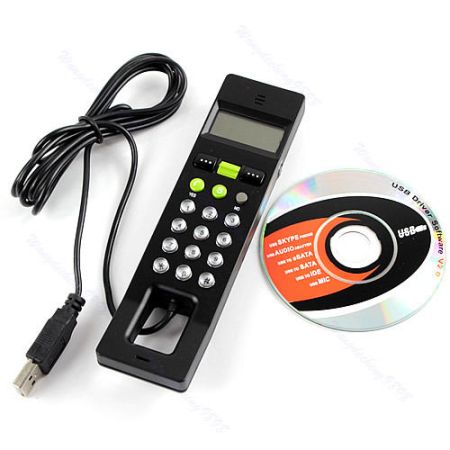
[Daniel] picked up a cheap USB handset to use with his VoIP provider, and included in the box was a CD with all the software that would make this handset work with Windows. [Daniel] is running Linux on his main battlestation, rendering the included CD worthless. Using the handset under Linux would be a problem; although the speaker and mic worked, the buttons and screen did not. No problem, then: [Daniel] just played around with the command line until he figured it out.
The handset presented itself to the Linux box as a soundcard and HID device. The soundcard was obviously the speaker and mic, leaving the buttons and display as the HID device. [Daniel] checked this out by running a hexdump on the HID device and pressed a few buttons. His suspicions were confirmed, and he could easily read the button with a little bit of Python.
With the speaker, mic, and buttons on the handset figured out, [Daniel] turned his attention to the one bit of electronics on the phone he hadn’t yet conquered: the display. After firing some random data at the phone, the display blinked and showed a messy block of pixels, confirming the display was controlled through the HID driver. Loading up usbsnoop to see what the original software does to update the screed showed [Daniel] the data format the display accepts, allowing him to control everything in this VoIP phone.
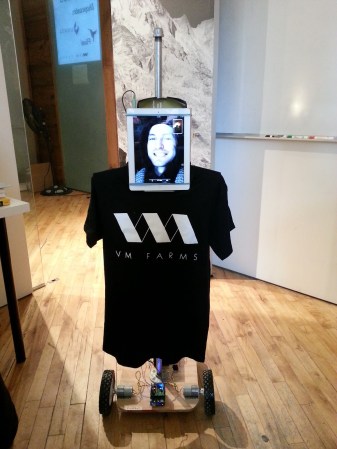
This telepresence upgrade lets an employee take part in the office from more than four thousand kilometers away. It’s an upgrade of their previous setup which used a laptop on a rotating platform to add a bit of control to the video conferencing experience. But all that original version could do was swivel, this one lets you drive your virtual self around for fifteen hours between battery charges.
The real work is in the base of the robot, as the audio and video are handled by a tablet independently from the locomotion. The team spent about four hundred bucks to throw the thing together. It starts with a hunk of plywood. Two 3A motors were mated with lawnmower wheels for the front of the bot. Dragging under the back of the base are a couple of casters that make it possible to turn without skidding. A motor shield and a WiFi shield for the Arduino make it possible to control the thing over the Internet. They even added some functionality on the client side to use a PlayStation 3 controller. Check out the completed machine in the clip after the break.
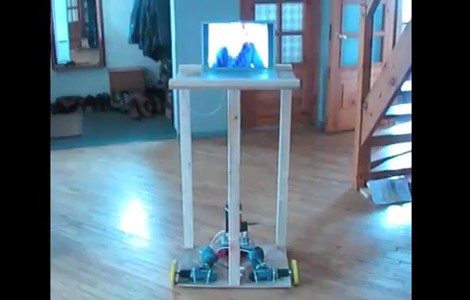
This telepresence robot will never let your Skype callers sneak up on you. [Priit] built the project, which he calls Skype Got Legs, so that his distant friends could follow him around the house during chats. But as you can hear after the break, the electric drills used to motorize the base are extremely loud.
Noise pollution aside, we like the roughness of the hack. It’s utilitarian but seems to work quite well. Commands are sent via the web using a combination of Ajax and PHP function calls. The two drills are controlled by an Arduino via a couple of automotive relays. The drills are powered by their original rechargeable battery packs. So as not to alter those batteries, [Priit] figured out a way to use synthetic wine bottle corks as a connector. They’ve been cut to size, and had tinned wires pushed through holes in them. Now, when he inserts the altered corks they press the wires against the battery contacts. Continue reading “Loudest Telepresence Robot Ever”→