Hackaday Links Column Banner

Hackaday Links: August 18, 2019

To the surprise of nobody with the slightest bit of technical intuition or just plain common sense, the world’s first solar roadway has proven to be a complete failure. The road, covering one lane and stretching all of 1,000 meters across the Normandy countryside, was installed in 2016 to great fanfare and with the goal of powering the streetlights in the town of Tourouvre. It didn’t even come close, producing less than half of its predicted power, due in part to the accumulation of leaves on the road every fall and the fact that Normandy only enjoys about 44 days of strong sunshine per year. Who could have foreseen such a thing? Dave Jones at EEVBlog has been all over the solar freakin’ roadways fiasco for years, and he’s predictably tickled pink by this announcement.

I’m not going to admit to being the kid in grade school who got bored in class and regularly filled pages of my notebook with all the binary numbers between 0 and wherever I ran out of room – or got caught. But this entirely mechanical binary number trainer really resonates with me nonetheless. @MattBlaze came up with the 3D-printed widget and showed it off at DEF CON 27. Each two-sided card has an arm that flops down and overlaps onto the more significant bit card to the left, which acts as a carry flag. It clearly needs a little tune-up, but the idea is great and something like this would be a fun way to teach kids about binary numbers. And save notebook paper.

Is that a robot in your running shorts or are you just sporting an assistive exosuit? In yet another example of how exoskeletons are becoming mainstream, researchers at Harvard have developed a soft “exoshort” to assist walkers and runners. These are not a hard exoskeleton in the traditional way; rather, these are basically running short with Bowden cable actuators added to them. Servos pull the cables when the thigh muscles contract, adding to their force and acting as an aid to the user whether walking or running. In tests the exoshorts resulted in a 9% decrease in the amount of effort needed to walk; that might not sound like much, but a soldier walking 9% further on the same number of input calories or carrying 9% more load could be a big deal.

In the “Running Afoul of the FCC” department, we found two stories of interest. The first involves Jimmy Kimmel’s misuse of the Emergency Alert System tones in an October 2018 skit. The stunt resulted in a $395,000 fine for ABC, as well as hefty fines for two other shows that managed to include the distinctive EAS tones in their broadcasts, showing that the FCC takes very seriously indeed the integrity of a system designed to warn people of their approaching doom.

The second story from the regulatory world is of a land mobile radio company in New Jersey slapped with a cease and desist order by the FCC for programming mobile radios to use the wrong frequency. The story (via r/amateurradio) came to light when someone reported interference from a car service’s mobile radios; subsequent investigation showed that someone had programmed the radios to transmit on 154.8025 MHz, which is 5 MHz below the service’s assigned frequency. It’s pretty clear that the tech who programmed the radio either fat-fingered it or misread a “9” as a “4”, and it’s likely that there was no criminal intent. The FCC probably realized this and didn’t levy a fine, but they did send a message loud and clear, not only to the radio vendor but to anyone looking to work frequencies they’re not licensed for.
Suntracker Optimizes Solar Panels While Visualizing Sun’s Path

If you have solar panels, you want soak up as much sunshine as you can to get your money’s worth. If you don’t have space for a lot of panels, the next best thing is repositioning the panels to catch the most rays. For his entry into the Hackaday Prize, [Frank] built a gorgeous solar tracker prototype to both validate his theories and to serve as a learning platform.

A solar tracker’s purpose is — you guessed it — tracking the Sun’s location to determine optimal positioning for solar panels and other sun-seeking payloads. In the latest revision, [Frank]’s tracker follows the Sun’s azimuth angle, aka its horizontal movement.

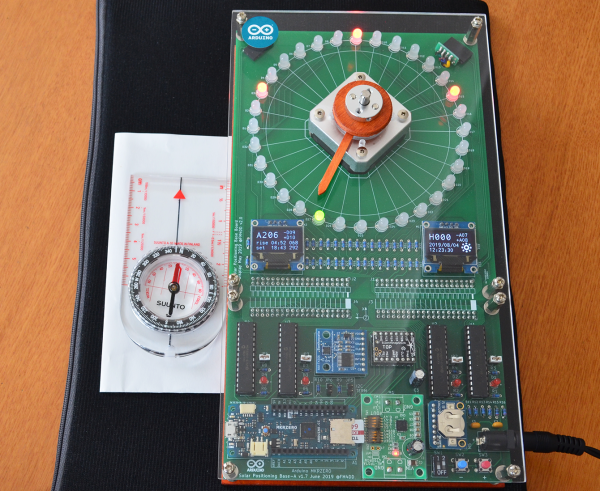
The Sun’s path is represented along a ring of 32 red/green LEDs. It moves around the ring as a green LED, according to a real-time clock and a set of pre-determined solar positions stored on an SD card.

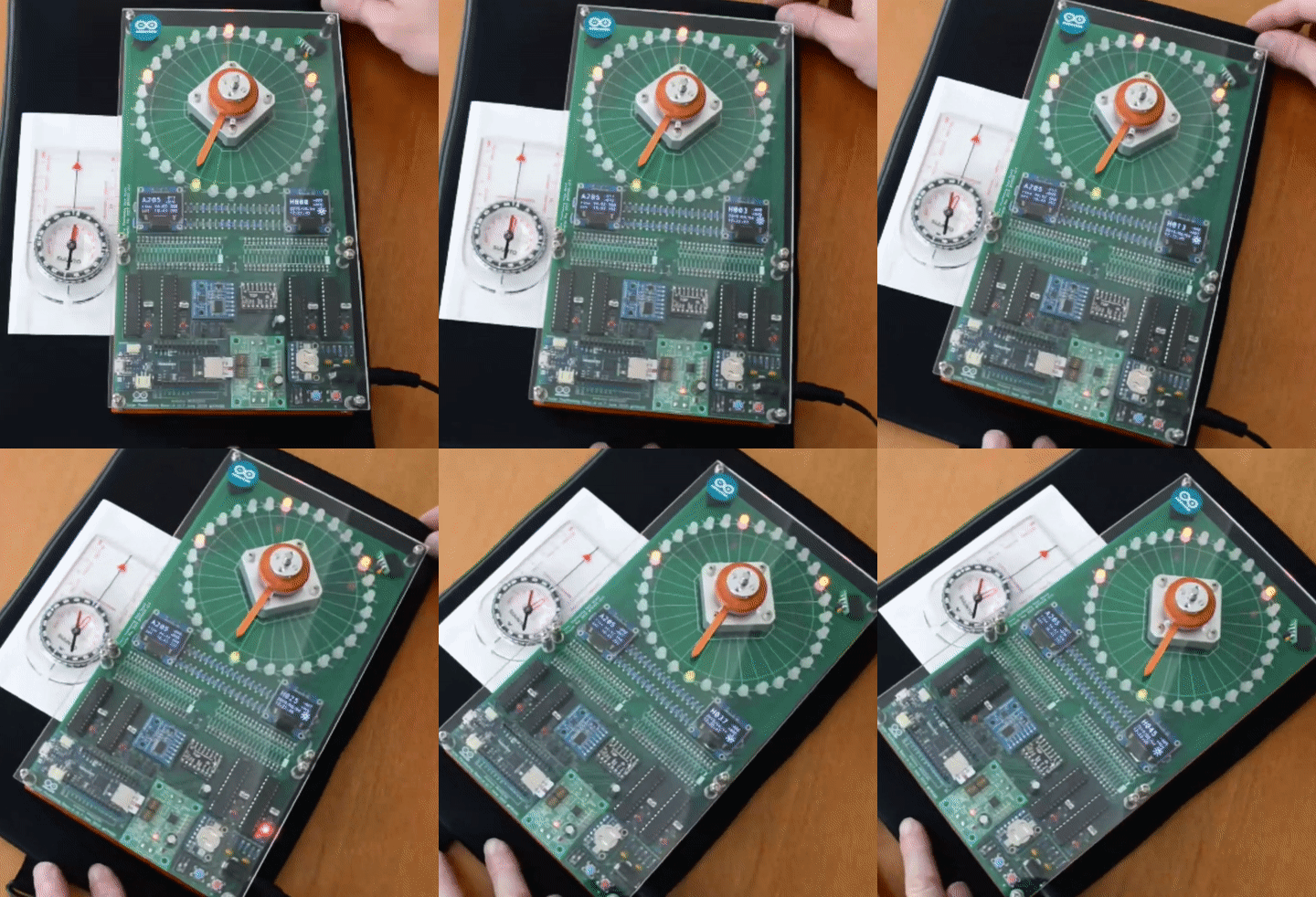
Two red LEDs show the sunrise and sunset azimuth angles, and a third LED indicates North as detected with a magnetometer and adjusted for local magnetic declination. In the center of the ring, a stepper motor drives an arrow that always points at the Sun LED. As the tracker is moved around, all the LEDs shift around the ring to follow their targets.

Though it already shines, we think this ongoing project has a bright future. Be sure to check out the demo video after the break.

Continue reading “Suntracker Optimizes Solar Panels While Visualizing Sun’s Path”

An All-In-One Conference Video Streaming Box

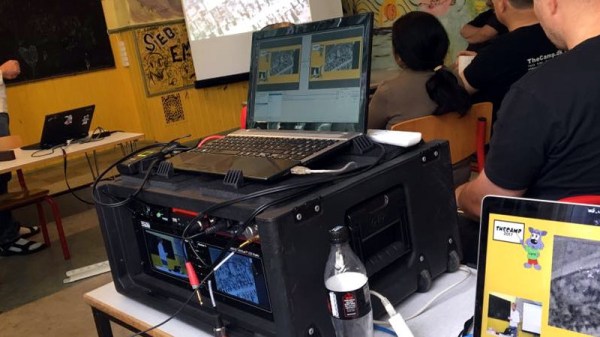
When running a hacker camp or other event, one of the many challenges faced by the organisers concerns the production and distribution of event videos. As the talks are recorded they must be put online, and with a load of talks to be processed it quickly becomes impractical to upload them one by one through a web interface such as that provided by YouTube. At the BornHack 2019 hacker camp in Denmark they were using a particularly well-integrated unit to do the video uploading in real time, and its creator [Mikkel Mikjær Christensen]  was good enough to share the video we’ve put below the break, a talk he gave about it at The Camp 2017, a Danish open source software camp.

It takes the viewer through the evolution over several years, from simple camcorders with integrated microphones and post-event processing, through a first-generation system with a laptop and rack-mount monitors, and into a final system in a rugged portable case with a significantly powerful laptop running OBS with a hardware MPEG encoder. Careful choice of power supplies and the use of good quality wireless microphones now give instantaneous video streaming to events such as BornHack without the need for extensive infrastructure.

If you were wondering where you might have heard that name before, [Mikkel] is the [Mike] from the Retrocomputing with Mike YouTube channel. It’s being honest to say that more of our conversation was about retrocomputers than the video box.

Continue reading “An All-In-One Conference Video Streaming Box”

Turning Scrap Metal Into Something To Work With

Blacksmiths will frequently work to a customer’s commission, and sometimes those commissions can be somewhat unusual. [Copperrein] had just such a piece of work come his way, a ceremonial sword to be made from a supplied collection of iron and steel items. To render them into something useful he had to melt them together, and the story of how he did that is particularly interesting.

We’re introduced to the Aristotle furnace, a fairly simple top-fed air blast charcoal furnace capable of melting almost any ferrous scrap into a so-called “bloom”, a lump of iron with some slag and carbon inclusions. These furnaces are often built as holes in the ground, but he’s made his atop a portable forge at working height to save bending over it for seven hours.

The source material was a very mixed bag, so the first order was to strip it in an acid bath of any coatings which might contaminate the resulting bloom. The parts, including things as diverse as a huge wrought-iton bolt, a scythe blade, and a pair of dividers, were then cut into small pieces one by one and fed into the furnace. They melt as they progress down through the furnace, resulting in a bloom of iron. The bloom is impure and will need significant working to expel any inclusions, but the final result will be something like the wrought iron of old. Let’s hope he has a power hammer, working the bloom would be hard work by hand!

If this catches your attention, you may be interested in a bit of blast furnace iron smelting. And of course, there is also our ongoing blacksmithing series to get you going at the anvil. You could even make a nail.

Via Reddit.

Thanks [Mike] for the tip.

ArduRover Boat Uses Tub To Float

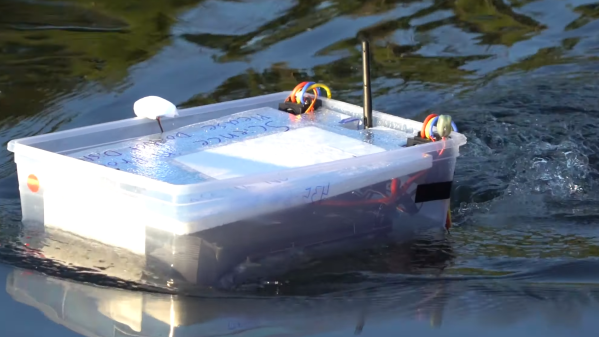
There’s nothing quite like the sight of a plastic box merrily sailing its way around a lake to symbolise how easy it is to get started in autonomous robotics. This isn’t a project we’re writing about because of technical excellence, but purely because watching an autonomous plastic box navigate a lake by itself is surprisingly compelling viewing. The reason that [rctestflight] built the vessel was to test out the capabilities of ArduRover. ArduRover is, of course, a flavour of the extremely popular open source ArduPilot, and in this case is running on a Pixhawk.

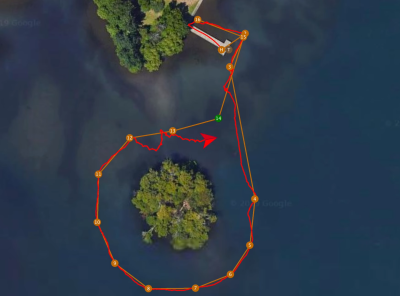
The hardware itself is deliberately as simple as possible: two small motors with RC car ESCs, a GPS, some power management and a telemetry module are all it takes. The telemetry module allows the course/mission to be updated on the fly, as well as sending diagnostic data back home. Initially, this setup performed poorly; low GPS accuracy combined with a high frequency control loop piloting a device with little inertia lead to a very erratic path. But after applying some filtering to the GPS this improved significantly.

Despite the simplicity of the setup, it wasn’t immune to flaws. Seaweed in the prop was a cause of some stressful viewing, not to mention the lack of power required to sail against the wind. After these problems caused the boat to drift off course past a nearby pontoon, public sightings ranged from an illegal police drone to a dog with lights on its head.

If you want to use your autonomous boat for other purposes than scaring the public, we’ve written about vessels that have been used to map the depth of the sea bed, track aircraft, and even cross the Atlantic.

Continue reading “ArduRover Boat Uses Tub To Float”

Adding A Co-Processor To Help SNES Games With Slowdown

The Super Nintendo port of Gradius III is notable for being close to the arcade original, with its large, bright and colorful graphics. However, due to the limitation of the console’s hardware, the port is also well known for having constant slowdowns during gameplay, particularly during later sections. [Vitor] hacked away at the game and made a patched version of the ROM use a co-processor to eliminate those issues.

The slowdown seen here in Gradius is not uncommon to SNES players, many games of that era suffer from it when several sprites appear on the screen at once. This is partially due to the aging CPU Nintendo chose, supposedly in order to maintain NES backwards compatibility before the idea got scrapped. Unable to complete its tasks by the time the next frame needs to be shown, the hardware skips frames to let the processor catch up before it can continue. This is perceived as the aforementioned slowdown.

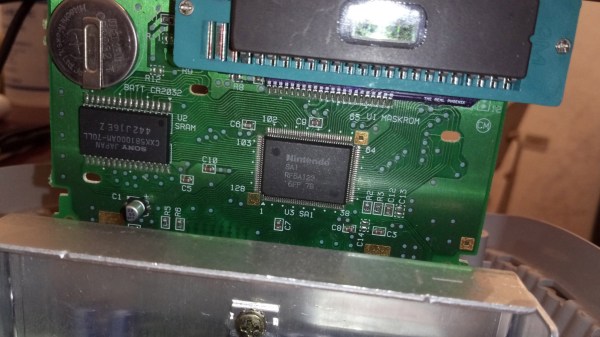
Around the later stage of the SNES’s life, games started using additional chips inside the cartridges in order to enhance the console’s performance. One of them is the SA1, which is a co-processor with the same core as the main CPU, only with a higher clock rate. By using it, games had more time to run through the logic and graphics manipulation before the next frame. What [Vitor] did was port those parts of Gradius III to the SA1, essentially making it just like any other enhanced cartridge from back in the day.

Unlike previous efforts we’ve seen to overclock the SNES by giving it a longer blanking time, this method works perfectly on real unmodified hardware. You can see the results of his efforts after the break, particularly around stage 2 where several bubbles fill the screen on the second video.

Continue reading “Adding A Co-Processor To Help SNES Games With Slowdown”

Great Artificial Daylight Via Broken TVs

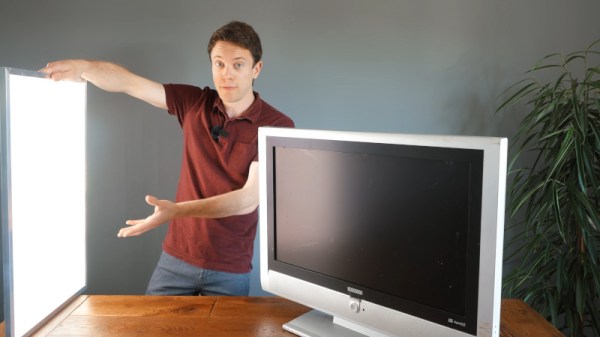
[DIY Perks] has long been a fan of lights that accurately mimic real daylight. Often choosing high-quality LEDs for his projects, lately he’s taken a different tack – using broken televisions to produce attractive home lighting solutions.

The hack involves removing the backlight from the damaged television or monitor. These have a powerful white light inside, but the real key is that they also features a Fresnel lens. This helps the backlight appear very similar to a real skylight, due to the way it scatters light around the room.

Due to the difficulty of driving most LED and CCFL backlights, the project strips the original lighting out and replaces it with a set of high-CRI LED strips readily available off eBay. These are easily driven from 12 volts and give a white light more similar to actual daylight compared to most backlights. With the LEDs in place, the monitor’s original diffusers and Fresnel lens are put back in place, and the light is finished off with an aluminium frame.

Fitted to an angled ceiling, the light really does look as if actual sunlight is streaming through a window on a rainy day. It’s a pleasant effect that does a great job of lighting a room, and we suspect it would be excellent for general video work, too. [DIY Perks] is no stranger to a good studio light build, after all. Video after the break.

Continue reading “Great Artificial Daylight Via Broken TVs”