Can you remotely unlock an encrypted hard disk? [Jyn] needed to unlock their home server after it rebooted even if they weren’t home. Normally, they used Tailscale to remote in, but you can’t use tailscale to connect to the machine before the hard drive decrypts, right? Well, you can, sort of, and [Jyn] explains how.
The entertaining post points out something you probably knew, but never thought much about. When your Linux box boots, it starts a very tiny compressed Linux in RAM. On [Jyn’s] machine using Arch, this is the initramfs.
That’s not news, but because it is an actual limited Linux system (including systemd), you can add tools to it. In this case, adding dropbear (an ssh server) and Tailscale to the limited boot-time Linux.
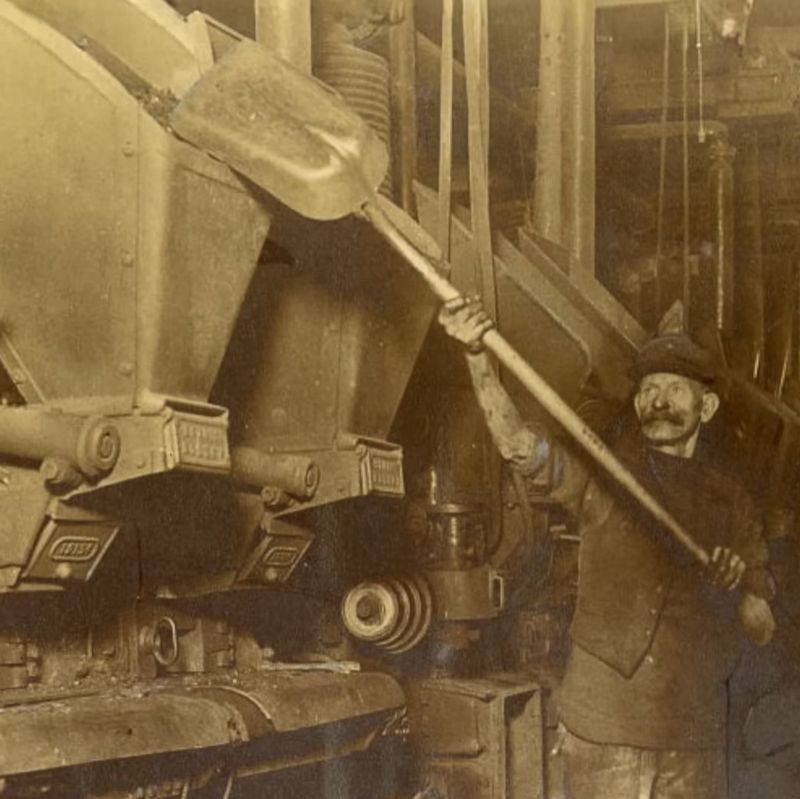
Usage of an automatic stoker. (Source: Claymills Pumping Station, YouTube)
Hacks are of all ages, with the Victorian-era Claymills Pumping Station being no exception. When its old Lancashire boilers from the 19th century were finally replaced with modern 1930s boilers, the 1920s-era automatic stokers were bodged onto the new boilers with a rather ill-fitting adapter plate, as there was no standard Lancashire boiler design. Nearly a hundred years later it was up to the volunteers at this Victorian-era pumping station to inspect and refurbish this solution, before fitting it back onto the boiler.
Lancashire boilers have two flue channels in which the coal is burned, which used to be done purely by hand. The automatic stokers are belt-driven devices that continuously add fresh fuel and massively lighten the workload. The 1920s stokers are still in place at this pumping station and a feature that they would love to retain.
Thus, after previously pressure-testing this #1 boiler to well beyond its operating pressure, the refurbished adapter plate was mounted back on with some percussive persuasion of the ‘very large beam’ variety.
Before the stokers could be mounted again, however, the boiler inspector had to give his OK to put the brickwork around the boiler back in place which helps to insulate it, among other functions. Once this is completed the boiler can finally see a fire again since it was last used in the 1970s. Whether these vintage stokers will work flawlessly will remain a surprise until then, but it’ll be a treat to see them operate.
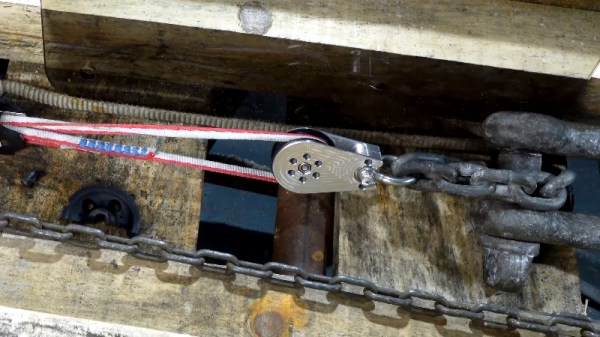
When thinking of humanity’s ability to harness wind energy, many people will conjure images of windmills from places like The Netherlands or Persia. But people have been using wind energy for far longer than that in the form of sailing ships. Using the wind for transportation goes back another four thousand years or so, but despite our vast experience navigating the seas with wind alone there is still some room for improvement. Many modern sailboats use a number of different pulleys to manage all of the rigging, but this new, open-source pulley can replace many of them.
The pulley, or “block” as they are sometimes called, is built with a polymer roller made out of a type of nylon, which has the benefit of being extremely durable and self-lubricating but is a bit expensive. Durability and lack of squeakiness is important in sailing applications, though. The body is made from CNC-machined aluminum and is composed of two parts, which pivot around the pulley’s axis to allow various ropes (or “lines”) to be inserted without freeing one end of the rope. In testing, this design outperformed some proprietary stainless steel pulleys of similar size.
Another perk of this design is that it can be set up to work in many different applications on a sailboat, whether that’s for hoisting a mainsail or pulling in a jib or any other task a pulley could be used for. It can also be stacked with others in many different configurations to build custom pulleys of almost any type, and can support up to 14 mm lines. For a sailor this could be extremely valuable, because as it stands each pulley on a ship tends to be used in only certain applications, and might also be proprietary from a specific company. This pulley is being released into the open-source world, allowing anyone to create them who wants one.
Clocks come in many styles and sizes, with perhaps the most visually pleasing ones involving marbles. Watching these little spheres obey gravity and form clearly readable numbers on a clock has strong mesmerizing qualities. If you’re not into really big marble clocks, or cannot quite find the space for a desk-sized clock, then the tiny marble clock by [Jens] may be an option.
While he totally loved the massive marble clock that [Ivan Miranda] built, it is a massive contraption that’s hard to justify as a permanent installation. His take on the concept thus makes it as small as possible, by using a pick-and-place style arm to place the marbles instead. Although the marbles don’t do a lot of rolling this way, it’s decidedly more quiet, and replace the rumbling and click-clacking of marbles with the smooth motion of a robotic arm.
Another benefit of this clock is that it’s cheap to make, with a price tag of less than $23. A big part of this is the use of cheap SG90 micro servos, and a permanent magnet along with a mechanism that pushes the marble off said magnet. Perhaps the biggest issue with this clock is that the arm somewhat obscures the time while it’s moving around, but it’s definitely another interesting addition to the gallery of marble clocks.
We have previously seen such clocks built out of wood and brass as well as 3D-printed using pendulum mechanisms, which can be made pretty compact as well, albeit with a more analog vibe.
Out of all of Batman’s massive array of tools which turn a relatively ordinary person into a superhero, perhaps his most utilitarian is his grappling gun — allowing him the ability to soar around his city like Spiderman or Superman. [John Boss] isn’t typically fighting crime, but he did develop his own grappling gun of sorts which gives him another superpower: the ability to easily scale snowy hills to quickly get back to the top.
The grappling gun takes inspiration from a commonly used tool called a power ascender, which is often used in industry applications where climbing is required. This one is held in the hand and uses a brushless motor with a belt-driven 3:1 reduction for increased torque. The pulley system, bearings, and motor are all housed in a 3D printed enclosure and are powered by rechargeable Milwaukee power tool batteries. During prototyping the rope intake and output feed locations had to be moved to increase the pulley’s grabbing ability, and with a working prototype he swapped a lot of the plastic 3D printed parts out for metal to increase the sturdiness of the device.
The grappling gun was originally designed for a smaller child to get hoisted up a hill on a sled, but when stress testing the device [John] found out that it actually has more than enough capability to haul even an adult up a hill on skis. As an added bonus, the outfeed for the rope can be put into a bag and used to automatically coil the rope up when he’s done at the hill. Although this is a great solution for a portable rope tow, for something more permanent and more powerful take a look at this backyard rope tow that was built from spare parts.
An early print of the linoleum block that Kristina started carving during the podcast. (It’s the original Cherry MX patent drawing, re-imagined for block printing.)
This week, Hackaday’s Elliot Williams and Kristina Panos met up over assorted beverages to bring you the latest news, mystery sound results show, and of course, a big bunch of hacks from the previous seven days or so.
In the news, we’ve launched a brand-new contest! Yes, the Green-Powered Challenge is underway, and we need your entry to truly make it a contest. You have until April 24th to enter, so show us what you can do with power you scrounge up from the environment around you!
On What’s That Sound, Kristina was leaning toward some kind of distant typing sounds, but [Konrad] knew it was our own Tom Nardi’s steam heat radiator pinging away.
After that, it’s on to the hacks and such, beginning with an exploration of all the gross security vulnerabilities in a cheap WiFi extender, and we take a look inside a little black and white pay television like you’d find in a Greyhound station in the 80s and 90s.
We also discuss the idea of mixing custom spray paint colors on the fly, a pen clip that never bends out of shape, and running video through a guitar effects pedal. Finally, we discuss climate engineering with disintegrating satellites, and the curse of everything device.
Check out the links below if you want to follow along, and as always, tell us what you think about this episode in the comments!
Download in DRM-free MP3 and savor at your leisure.
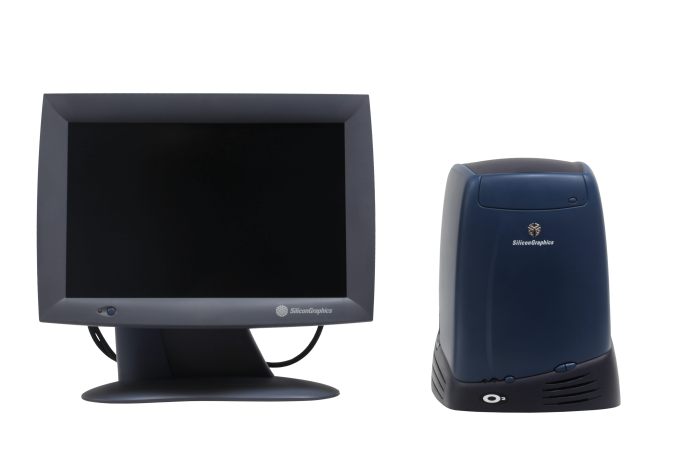
The SGI O2 was SGI’s last-ditch attempt at a low-end MIPS-based workstation back in 1996, and correspondingly didn’t use the hottest parts of the time, nor did it offer much of an upgrade path. None of which is a concern to hobbyists who are more than happy to work around any hardware- and software limitations to e.g. install much faster CPUs. While quite a few CPU upgrades were possible with just some BGA chip reworking skills, installing the 900 MHz RM7900 would require some PROM hacking, which [mattst88] recently took a shake at.
The initial work on upgrading SGI O2 systems was done in the early 2000s, with [Joe Page] and [Ian Mapleson] running into the issue that these higher frequency MIPS CPUs required a custom IP32 PROM image, for which they figured that they’d need either SGI’s help or do some tricky reverse-engineering. Since SGI is no longer around, [mattst88] decided to take up the torch.
After downloading a 512 kB binary dump of the last version of the O2’s PROM, he set to work reverse-engineering it, starting by dissembling the file. A big part of understanding MIPS PROM code is understanding how the MIPS architecture works, including its boot process, so much of what followed was a crash-course on the subject.
With that knowledge it was much easier to properly direct the Capstone disassembler and begin the arduous process of making sense of the blob of data and code. The resulting source files now reassemble into bit-identical ROM files, which makes it likely that modifying it to support different CPUs is now possible with just a bit more work.