Yay! Another videoconference call is in the books, so that must mean that it’s time to fumble around awkwardly for the hang-up button with a fading smile. [lanewinfield] knew there had to be a better way, and looked to the pull chain switch for salvation. Sure, this could just as easily be a button, but what’s the fun in that? Besides, few buttons would be as satisfying as pulling a chain to a Zoom call.
The pull chain switch is connected to an Adafruit Feather nRF52840 Express that’s emulating a Bluetooth keyboard. Firmware-wise it sends command + F6, which triggers an AppleScript that manually exits and and all Zoom calls and kills Chrome tabs pointed to meet.google.com. He’s using Apple’s hotkey wizard Alfred, but this could be handled just as easily with something like AutoHotKey.
Pull chain switches are neat little mechanisms. The chain is connected to a cam that engages a wheel with copper contacts on half the outside. When you pull the chain, the wheel moves 90° and the wheel contacts connect up with the fixed contacts inside the housing to make a connection. Pulling the chain again moves the wheel which slides to the half without the contacts. Check it out in the video below.
As the world waits for COVID-19 vaccines, some pharmaceutical companies stand armed and ready with an exciting improvement: better vials to hold the doses. Vials haven’t changed much in the last 100 years, but in 2011, Corning decided to do something about that. They started developing an alternative glass that is able to resist damage and prevent cracks. It’s called Valor glass, and it’s amazingly strong stuff. Think Gorilla glass for the medical industry.
Traditionally, pharmaceutical vials have been made from borosilicate glass, which is the same laboratory-safe material as Corning’s Pyrex. Borosilicate glass gets its strength from the addition of boron. Although borosilicate glass is pretty tough, it comes with some issues. Any type of glass is only as strong as its flaws, and borosilicate glasses are prone to some particularly strength-limiting flaws. Pharmaceutical glass must stand up to extreme temperatures, from the high heat of the vial-making process to the bitterly cold freeze-drying process and storing temperature required by the fragile viral RNA of some COVID-19 vaccines. Let’s take a look at how Valor glass vials tackle these challenges.
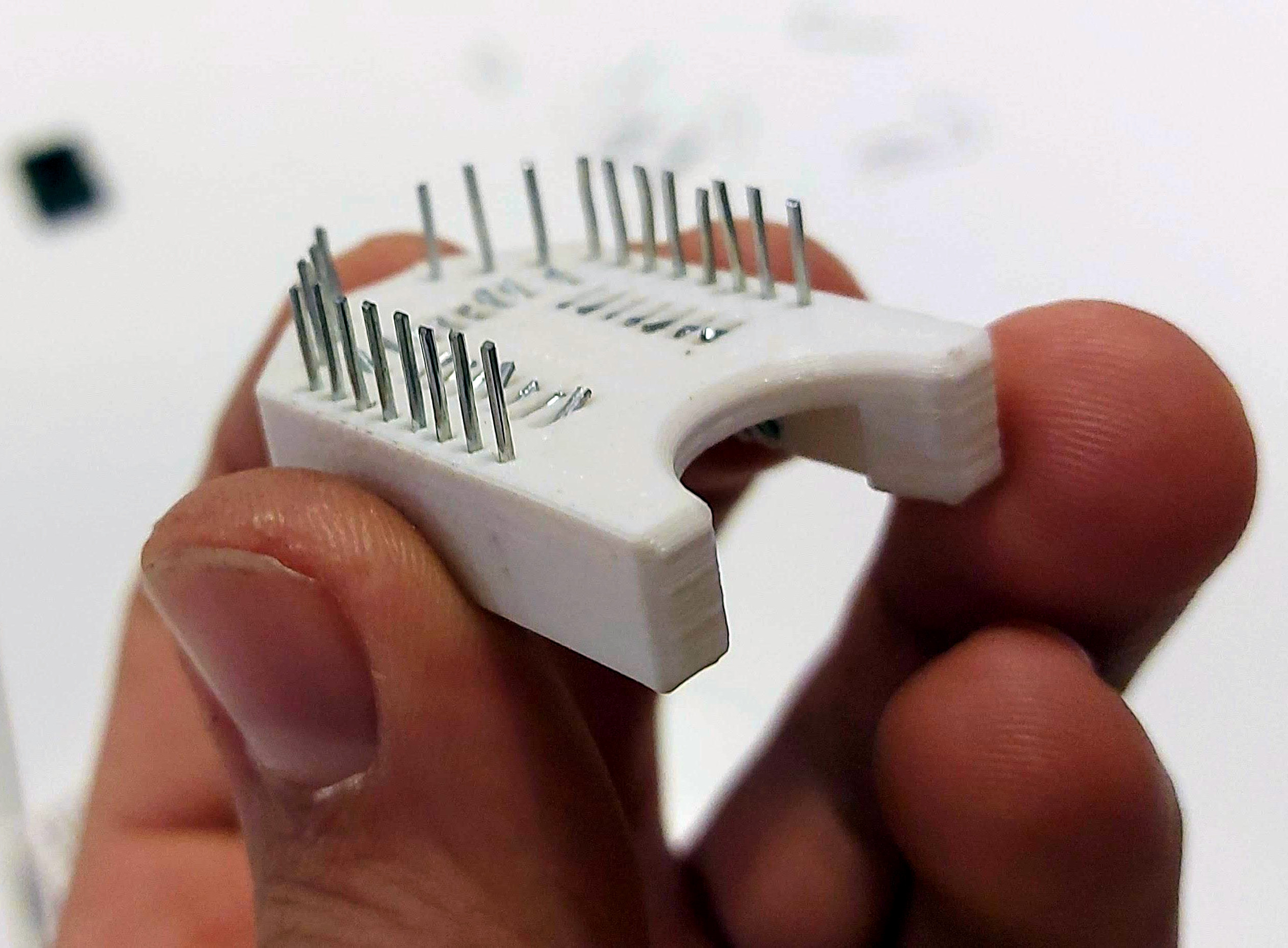
The AlphaSmart NEO and NEO2 are great little word processors for distraction-free writing anywhere you want to go, but they lack the backlight of the later Dana model. Well, [starboyk] has done what many thought impossible and added a backlight to a NEO2. Experience gained from a ton of console mods and repairs led to the question of whether the NEO2’s LCD is similar to a Game Boy’s.
[starboyk] started with a fresh NEO2 from ebay, then swapped out the reflective polarizer for a translucent polarizer and added a trio of LED backlights meant for the original Game Boy across the back of the screen. The best part is that the backlight has its own power switch and a brightness control pot. It sounds easy enough, but this mod is not for the faint of heart as it sounds like a really tight fit in the end. Apparently we only need 500 orders to get a custom backlight manufactured, but barring that does anyone know of a backlight that’s 157mm x 44mm?
You can always stick with the mod where you power the USB-A port and use a USB reading light like I did with my NEO.
[BrittLiv] started with an open-source Charmander model and added a thread to the flame and the corresponding end of the tail. We love that [BrittLiv] was able to use up a bunch of old filament to print this — a total of 5kg worth over 280+ hours of print time.
[BrittLiv] added lead ballast in the feet for weight while gluing the pieces together and sealed it off at the ankles with epoxy. The entire outside surface was sanded and smoothed with clay and Bondo before getting epoxy, primer, black primer, and then a copper automotive paint that turned out to be too bright. Charmander ended up with copper paint that patinas, which is why it looks so much like a real statue. Check out the build video after the break.
There’s no word on whether there’s a future where Charmander’s flame steams when it rains, but [BrittLiv] does have plans to expand the garden with a Squirtle fountain and a Bulbasaur planter.
The best part is that the status can been seen on both sides of the door so you don’t forget to keep it updated. Or maybe it’s the super-low part count. There’s no BLE, LoRa, or Wi-Fi, just two sets of red and green LEDs, a three-way switch, and a power source. Well, and current-limiting resistors of course.
[Bob] already had all the components on hand, including the nifty enclosure, which is another great thing about this build. Like [Bob] says, you could house the control side of this circuit in just about anything you’ve got lying around.
This new pen cost $12.50, which is about $180 today. For many people, the improved experience that the ballpoint promised over the fountain pen was well worth the price. You might laugh, but if you’ve ever used a fountain pen, you can understand the need for something more rugged and portable.
Ballpoint pens are everywhere these days, especially cheap ones. They’re so ubiquitous that we don’t have to carry one around or really think about them at all. Unless you’re into pens, you’ve probably never marveled at the sheer abundance of long-lasting, affordable, permanent writing instruments that are around today. Before the ballpoint, pens were a messy nuisance.
A Revolutionary Pen
A ballpoint, up close and personal. Image via Wikipedia
Fountain pens use gravity and capillary action to evenly feed ink from a cartridge or reservoir down into the metal nib. The nib is split in two tines and allows ink to flow forth when pressed against paper. It’s not that fountain pens are that delicate. It’s just that they’re only about one step above dipping a nib or a feather directly into ink.
There’s no denying that fountain pens are classy, but you’re playing with fire if you put one in your pocket. They can be a bit messy on a good day, and the cheap ones are prone to leaking ink. No matter how nice of a fountain pen you have, it has to be refilled fairly frequently, either by drawing ink up from a bottle into the pen’s bladder or inserting a new cartridge. And you’re better off using it as often as possible, since a dormant fountain pen will get clogged with dried ink.
Early ballpoint pens were modeled after fountain pens, aesthetically speaking. They had metal bodies and refillable reservoirs that only needed a top-up every couple of years, compared to once a week or so for fountain pens. Instead of a nib, ballpoints have a tiny ball bearing made of steel, brass, or tungsten carbide. These pens rely on gravity to bathe the ball in ink, which allows it to glide around in the socket like a tiny roll-on deodorant.
You don’t have to wire this to the ignition or anything — all you have to do is power it with the cigarette lighter (or straight-up outlet, if you’re lucky). Every time you turn the key, this pump powers up and performs a little song to remind you to use it. Electronically speaking, it couldn’t be simpler — an Arduino UNO reads your hand from the distance sensor and activates a servo that dispenses three short pumps of isopropyl alcohol. Check it out in action after the break.