
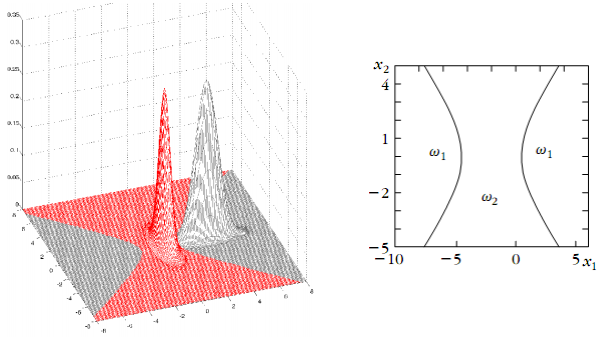
 [Steven] likes music. Like many of us, he uses Pandora to enjoy the familiar and to discover new music. Now, Pandora means well, but she gets it wrong sometimes. [Steven] has had a Mindwave Mobile EEG headset lying around for a while and decided to put it to good use. With the aid of a Raspberry Pi and a bluetooth module, he built a brainwave-controlled Pandora track advancing system.
The idea is to recognize that you dislike a song based on your brainwaves. The Mindwave gives data for many different brainwaves as well as approximating your attention and meditation levels. Since [Steven] isn’t well-versed in brainwavery, he used Bayesian estimation to generate two multivariate Gaussian models. One represents good music, and the other represents bad music. The resulting algorithm is about 70% accurate, so [Steven]’s Python script waits for four “bad music” estimations in a row before advancing the track.
[Steven] streams Pandora through pianobar and has a modified version of the control-pianobar script in his GitHub repo. His script will also alert you if the headset isn’t getting good skin contact, a variable that the Mindwave reports on a scale of 0 to 200.
Stick around for a demo of [Steven] controlling Pandora with his mind. If you don’t have an EEG headset, you can still control Pandora with a Pi, pianobar, and some nice clicky buttons.
Continue reading “Thumbs-Down Songs On Pandora With Your Mind”
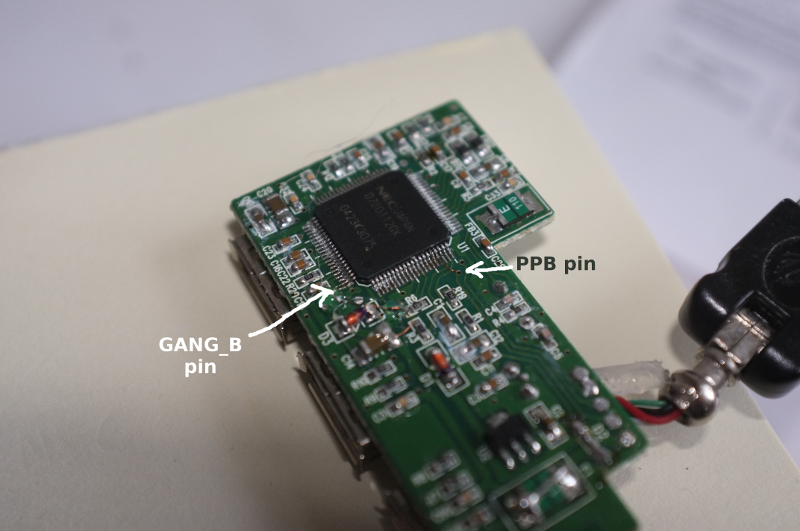 [Befi] wanted to add a second stage backup disk to his ODROID embedded-board server, which typically draws ~1.5W at idle. After adding the disk, he saw power consumption increase by 2W when the new disk wasn’t spinning. He thought about using one of those USB hubs with the adorable little rocker switches for each port and replacing them with transistors, but that was going to be messy. After some poking around in the USB standard, he found that most support per-port power switching (PPPS), and set about to
 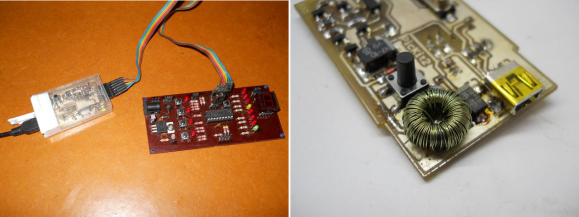 Sure, mint tin housings are great. But you have to defend against shorts, and cutting out holes for ports and buttons is dangerous business. [Daniel] prefers plastic, and he tipped us off about
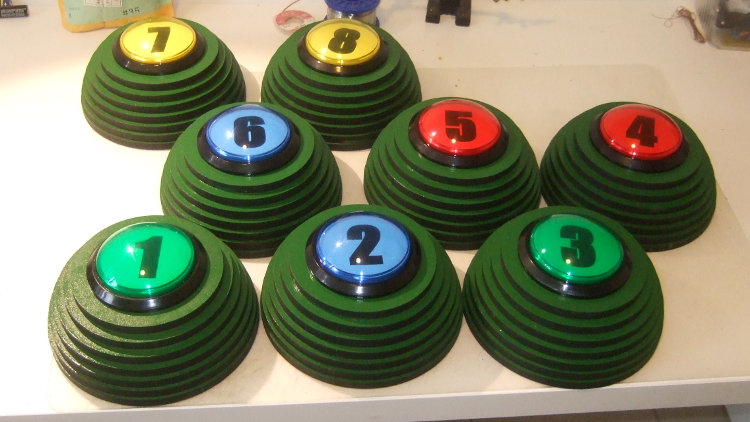 In what we hope is a new trend in interviewing, some of the people at [Anthony]’s place of work asked him to
 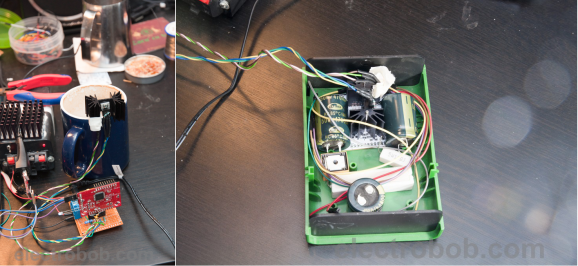 [Bogdan] knows that it’s hard to model the cooling needs of any given project. It’s important to know how much heat a system can dissipate given the housing material, airflow opportunity, and the proximity of neighboring components. Inspired by an aluminium-walled enclosure that allows for mounted transistors,
 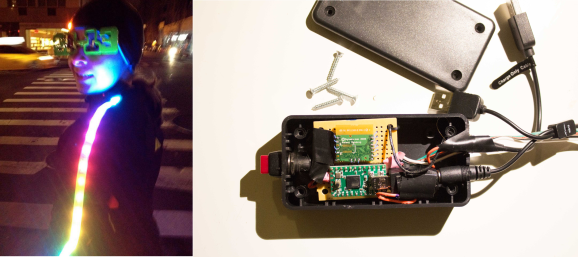 [Miria] was tired of tangling with bicyclists on her nighttime runs. It was obvious to her to illuminate herself, but she thought it would be really cool if the lights responded to her heart rate. The short summary that tipped us off is








