The DOOM Chip

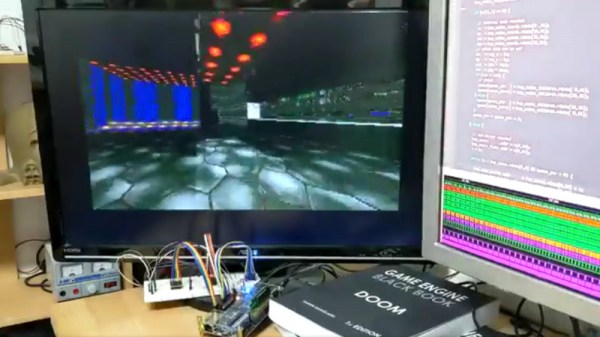
It’s a trope among thriller writers; the three-word apocalyptic title. An innocuous item with the power to release unimaginable disaster, which of course our plucky hero must secure to save the day. Happily [Sylvain Lefebvre]’s DOOM chip will not cause the world to end, but it does present a vision of a very 1990s apocalypse. It’s a hardware-only implementation of the first level from id Software’s iconic 1993 first-person-shooter, DOOM. As he puts it: “Algorithm is burned into wires, LUTs and flip-flops on an #FPGA: no CPU, no opcodes, no instruction counter. Running on Altera CycloneV + SDRAM”. It’s the game, or at least the E1M1 map from it sans monsters, solely in silicon. In a very on-theme touch, the rendering engine has 666 lines of code, and the level data is transcribed from the original into hardware tables by a LUA script. It doesn’t appear to be in his GitHub account so far, but we live in hope that one day he’ll put it up.

“Will it run DOOM” is almost a standard for new hardware, but it conceals the immense legacy of this game. It wasn’t the first to adopt a 1st-person 3D gaming environment, but it was the game that defined the genre of realistic and immersive FPS releases that continue to this day. We first played DOOM on a creaking 386, we’ve seen it on all kinds of hardware since, and like very few other games of its age it’s still receiving active development from a large community today. We still mourn slightly that it’s taken the best part of three decades for someone to do a decent Amiga port.

Understanding A Bit About Noise Can Help You Go A Long Way

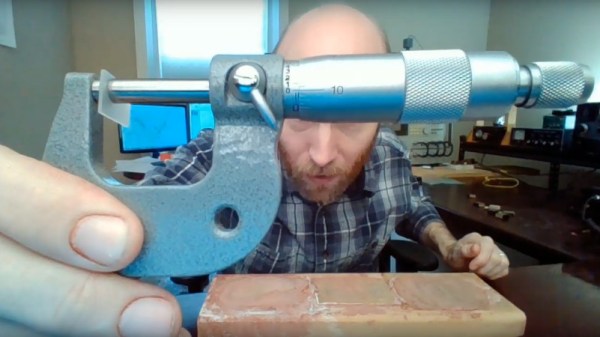
There are many ways in which one’s youth can be misspent, most of which people wish they’d done when they get older and look back on their own relatively boring formative years. I misspent my youth pulling TV sets out of dumpsters and fixing them or using their parts in my projects. I recognise with hindsight that there might have been a few things I could have done with more street cred, but for me, it was broken TVs. Continue reading “Understanding A Bit About Noise Can Help You Go A Long Way”

Iron Pipe Makes A Great Workbench

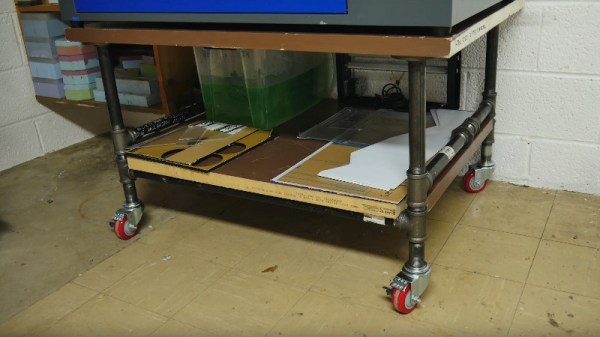
It’s a frequently encountered problem in any workshop; how do you make a bench? And once you’ve made a bench, how do you put it on wheels to move it about? [Eric Strebel] needed a cart for his laser cutter, so he designed his own in an unexpected material: malleable iron pipe.

The attraction of iron pipe is its ready availability and ease of assembly. [Eric] created a sturdy table complete with a worktop made from a solid door in a very short time. T pieces and joiners were used, along with a hefty set of flanges for the tabletop itself. The casters are the expanding stem variety, with a compressed rubber insert expanding to hold them securely in place.

The result as can be seen in the video below is a really neat trolley for the cutter, followed quickly by another workbench. It would be interesting to know more about this material, parameters such as its wall thickness and lateral strength, because in a table without any cross-bracing it becomes important to avoid an untimely collapse.

The most common material for benches seems still to be wood, indicating that for such a technophile community we can be surprisingly conservative in our choices. Sometimes though, benches are made from the most surprising things.

Continue reading “Iron Pipe Makes A Great Workbench”

Pulling A Crystal By Grinding It

If you own a radio transmitter, from a $10 Baofeng handheld to a $1000 fancy all-band transceiver, setting the frequency is simply a case of dialing in where you want to go. A phase-locked-loop frequency synthesizer or a software-defined radio will generate your frequency, and away you go. There was a time though when synthesizers were impossibly complex and radio amateurs were faced with a simple choice. Use an LC oscillator and put up with drifting in frequency, or use a crystal oscillator, and be restricted to only the frequencies of the crystals you had. [Mark Erdle, AE2EA] modified a 1950s broadcast AM broadcast transmitter for the 1.8MHz amateur band, and his friend [Andy Flowers, K0SM] thought it needed its crystal back for originality rather than the external frequency source [Mark] had provided. He documents the process of modifying a crystal oven and moving a crystal frequency in the video below the break.

A crystal oven is a unit containing the crystal itself alongside a thermostatic heater, and in this one, the crystal was a 1970s-vintage hermetically sealed HC6 device. He modified the oven to take a socket for older FT243 crystals because the quartz element can easily be accessed. [Andy] picked a crystal as close as he could find below the required frequency. He then ground it down with very fine grit on a glass plate, reducing its mass and thus its resonant frequency. We’re taken through the process of getting it close to frequency, but sadly don’t see the etching that he uses for the very last stage. At the end of the video, we see a QSO on the transmitter itself, which is something of an oddity in an age when AM on amateur bands has been supplanted by other modes for decades.

If you’re curious about the transmitter there’s a video thread following its restoration, and if the guts of older radio gear interests you then take a look at this aircraft receiver lovingly brought back to life.

Continue reading “Pulling A Crystal By Grinding It”

An Op-Amp From The Ground Up

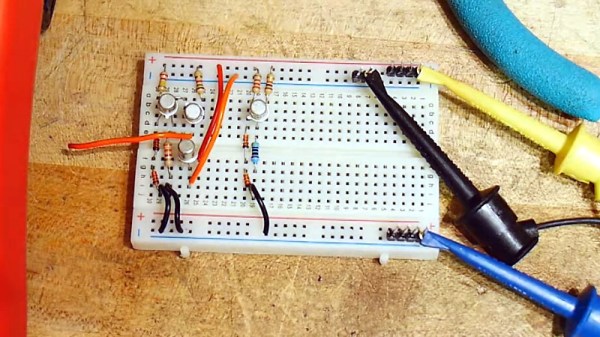
We are all used to the op-amp, as a little black box from which we can derive an astonishingly useful range of circuit functions. But of course within it lurks a transistor circuit on a chip, and understanding the operation of that circuit can give us insights into the op-amp itself. It’s a subject [IMSAI Guy] has tackled during the lockdown, recording a set of videos explaining a simple discrete-component op-amp.

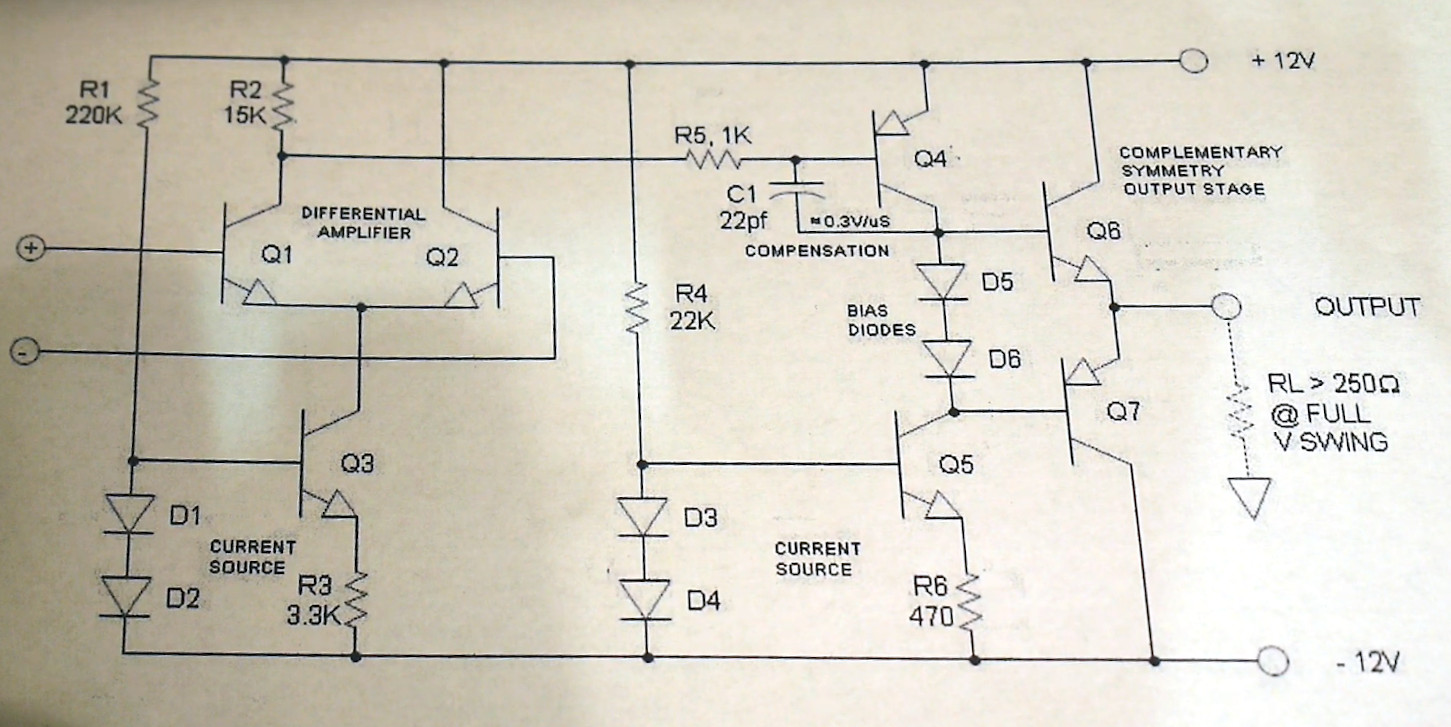
The op-amp circuit in question.

He starts with the current source, a simple circuit of two diodes, a resistor, and a transistor that sets the bias for the two-transistor differential amplifier. This is followed by a look at the output driver, and we would expect that shortly to come will be a video on the output itself. Start the series with the first episode, which we’ve placed below the break.

His style is laid-back, making it a restful watch as he builds each circuit on a breadboard and explains its operation with the aid of a multimeter. If this whets your appetite for more on simple op-amps, we looked at the first integrated circuit op-amp back in 2018.

Continue reading “An Op-Amp From The Ground Up”

Roll Your Own – Toilet Paper

Toilet paper has become a hot button issue over the last month or so, and the pandemic prompted panic buying, and consequent shortages. Now there are adequate supplies, at least where this is being written, but sometimes one’s rolls aren’t the domestic items we’re all used to. This happened to [Ebenezer], who had some of the large size rolls suitable for toilet roll dispensers rather than a domestic bathroom. To solve this problem he made a makeshift toilet roll winder.

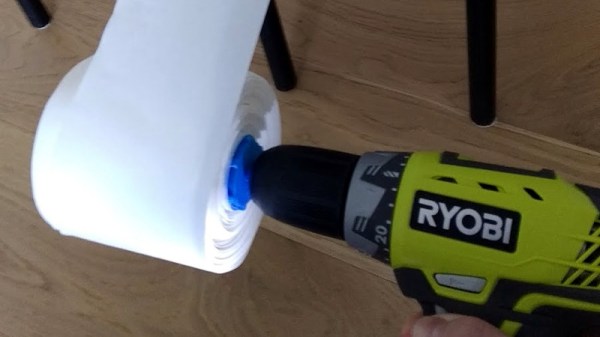
The adventures of small dogs aside, we all know that toilet rolls unroll themselves very easily indeed but are a significant pain to get back on the roll once they have done so. Rolling toilet paper must therefore be an exact science of velocity and tension, which he approached with a 3D printed shaft that mounts a toilet roll tube in a Ryobi drill. Getting the tension right was a bit tricky, but we’re extremely impressed with the result. Like him we’d have expected some side-to-side movement, but there was very little and a near perfect toilet roll was the result.

This is a simple hack, but one extremely well executed, and that it does something we might normally consider near-impossible is a bonus. Of course, should you wish to ration your toilet paper, you can always print it.

Automated Pancake Making For Devotees Of Fluffy Pancakes

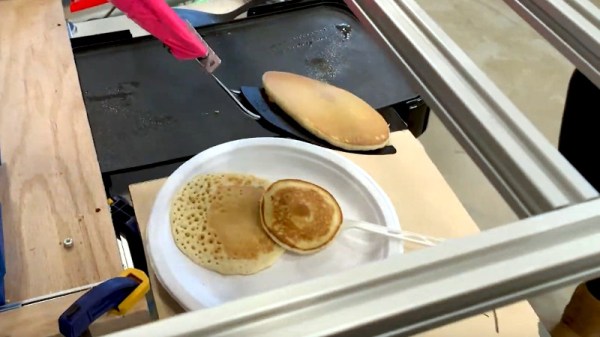
We have a weakness for automated pancake machines here at Hackaday, but in terms of complete pancake machines rather than CNC batter printers we’re surprised to see more from the rest of the world than we do from the USA. Perhaps this has something to do with differences in opinion on what constitutes a pancake, whether the moniker should be applied to a large and thin disk of cooked batter, or to a smaller, thicker, and fluffier variety. For Europeans only the former will do, while for Americans anything but the latter is simply crêpe. To restore American honour in the world of automated pancakes then, a team of students from Kennesaw State University in Georgia, USA, have built a pancake vending machine for fluffy American-style pancakes as part of their coursework.

Sadly for the team the COVID-19 pandemic put a stop to their lab work and stopped them making a fully functional vending machine, but the important part of robotic pancake making is something they’ve completely nailed. In the video below the break we see them testing various batter mixes before developing their mixer and batter delivery system, and finally a robotic flipper that cooks the pancakes on a griddle and delivers them to a plate.  It also has the unexpected benefit of stacking pancakes.

We’re sure that without the pandemic they would have made a fully-functional vending machine for lucky Georgia students to sate their appetites upon. Meanwhile for pancake-crazy readers, here are complete pancake making machines from South Africa, and from France.

Continue reading “Automated Pancake Making For Devotees Of Fluffy Pancakes”