Is This The Oldest Still-Working Geostationary Satellite?

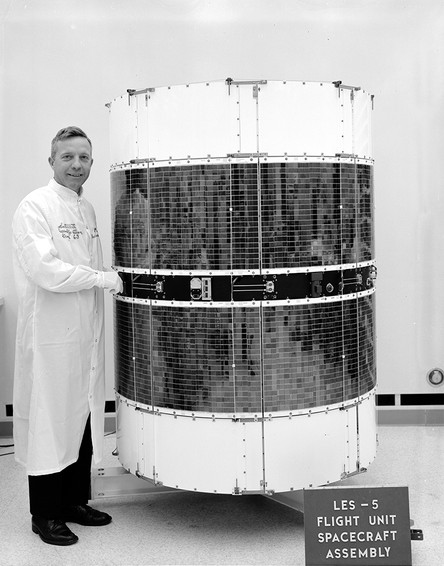
The LES-5 spacecraft

Regular followers of space news will know that when satellites or space probes reach the end of their life, they either are de-orbited in a fiery re-entry, or they stay lifeless in orbit, often in a safe graveyard orbit where they are unlikely to harm other craft. Sometimes these deactivated satellites spring back into life, and there is a dedicated band of enthusiasts who seek out these oddities. Dead satellite finder extraordinaire [Scott Tilley] has turned up a particularly unusual one, a craft that is quite likely to be the oldest still-working geostationary satellite.

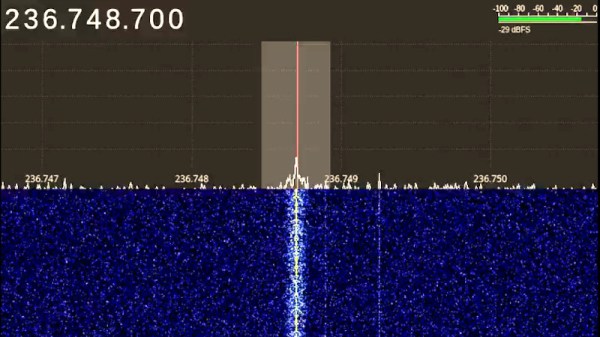
LES-5 is an experimental satellite built by MIT’s Lincoln Labs, launched in 1967, and used to test military UHF communications in a geosynchronous orbit. It had an active life into the early 1970s after which it was placed in a graveyard orbital slot for redundant craft. It’s lain forgotten ever since, until this month when [Scott]  found its beacon transmitting on 236.75 MHz. The Twitter thread is an extremely interesting glimpse into the satellite finder’s art, as first he’s not certain at all that it is LES-5 so he waits for its solar eclipse to identify its exact position.

Whether anything on the craft can find another use today is not certain, as he finds no evidence of its transponder. Still, that something is working again 53 years after its launch is a testament to the quality of its construction. Should its transponder be reactivated again it’s not impossible that people might find illicit uses for it, after all that’s not the first time this has happened.

Full-Colour, Full-Motion Video – On An Audio Cassette!

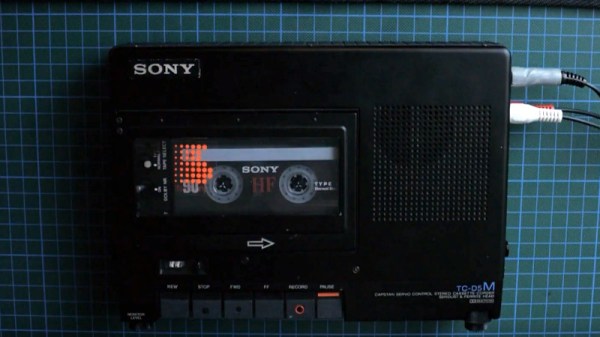
A lot of projects we feature use video in some form or other, but that video is invariably digital, it exists as a stream of numbers in a computer memory or storage, and is often compressed. For some of us who grew up working with composite video there is a slight regret that we rarely get up-close and personal with an analogue stream, so [Kris Slyka]’s project putting video on a conventional audio cassette is a rare opportunity.

It's fair to say this isn't the highest quality video.
It’s fair to say this isn’t the highest quality video.

Readers with long memories may recall the Fisher-Price PixelVision toy from the late 1980s which recorded black-and-white video on a conventional cassette running at many times normal speed. This system does not take that tack, instead it decreases resolution and frame rate to a point at which it can be recorded at conventional cassette speeds. The result is not particularly high quality, but with luminance on one side of a stereo recording and chrominance on the other it does work.

The video below the break is a run through the system, with an explanation of how video signals work. Meanwhile the code for both encoder and decoder are available through the magic of GitHub. If you’re interested further, take a look at our examination of a video waveform.

Continue reading “Full-Colour, Full-Motion Video – On An Audio Cassette!”

FDA Says PPE Can Be Reused After Trip Through Shipping Container Decontamination System

We are hearing so much in the news about shortages of personal protective equipment, or PPE, for healthcare workers. Factories are being asked to perform the impossible when it comes to production be the need is so real, so immediate, and so widespread.

The problem with rapid consumption of PPE is that once it has been exposed to infection, it’s contaminated and can’t be used again. Physically it may be fine, but it retains the capability to infect other people. If there were some way it could be effectively cleaned and decontaminated for re-use, it would reduce the strain on the supply chain and result in a greater availability of PPE for all those who require it.

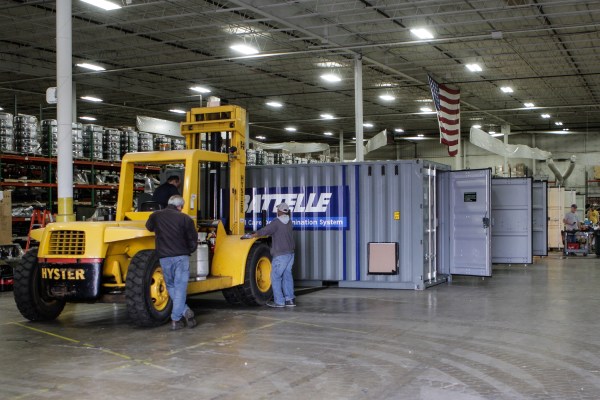
This is the promise of Battelle’s Critical Care Decontamination System, a shipping-container-sized unit which has received approval from the FDA at break-neck speed.

Continue reading “FDA Says PPE Can Be Reused After Trip Through Shipping Container Decontamination System”

Peel Apart Your ISP’s Router

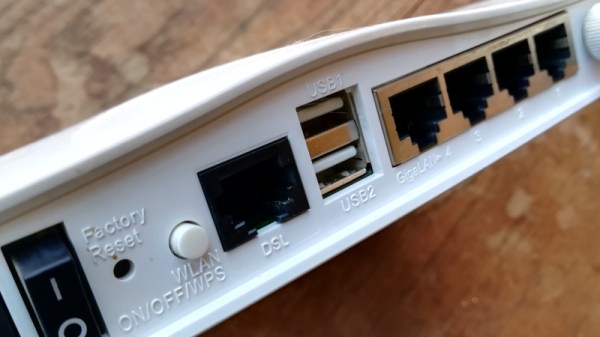
Whether your home Internet connection comes by ADSL, fibre, cable, or even satellite, at some point in the chain between your ISP and your computer will be a router in your home. For some of us it’s a model we’ve bought ourselves and loaded up with a custom distro, but for the majority it’s a box supplied by our ISP and subject to their settings and restrictions. [Paddlesteamer] has just such a router, a Huawei model supplied by the Turkcell ISP, and decided to do a little snooping into its setup.

In a tale of three parts, we see the device unravel, from uncovering a shell to reverse engineering its update process, to delving in its firmware and finally removing all its restrictions entirely. It’s a fascinating process in which we learn a lot, such as the way a man-in-the-middle attack is performed on the router’s connection tot he ISP, or that it contains an authorised SSH key seemingly giving Huawei a back door into it. You may never do this with your ISP’s router, but it pays to be aware of what can be put in your home by them without your realising it.

The Golden Age of router hacking may be behind us as the likes of the Raspberry Pi have replaced surplus routers as a source of cheap Linux boards, but  as this shows us there’s still a need to dive inside a router from time to time. After all, locked-down routers are hardly a new phenomenon.

Via Hacker News.

Accurate Dispensing Of Toilet Paper Will Get Us Through The Crisis

As we enter our second week of official COVID-19-related lockdown where this is being written, it’s evident that there are some resources we will have to conserve to help get us through all this. Instead of just using all of something because we can nip out to the store and buy more, we have to look at what we’ve got and treat it as though it will have to get us through the next three months. It’s not always certain that on our infrequent trips to the supermarket they’ll have stocks of what we want.

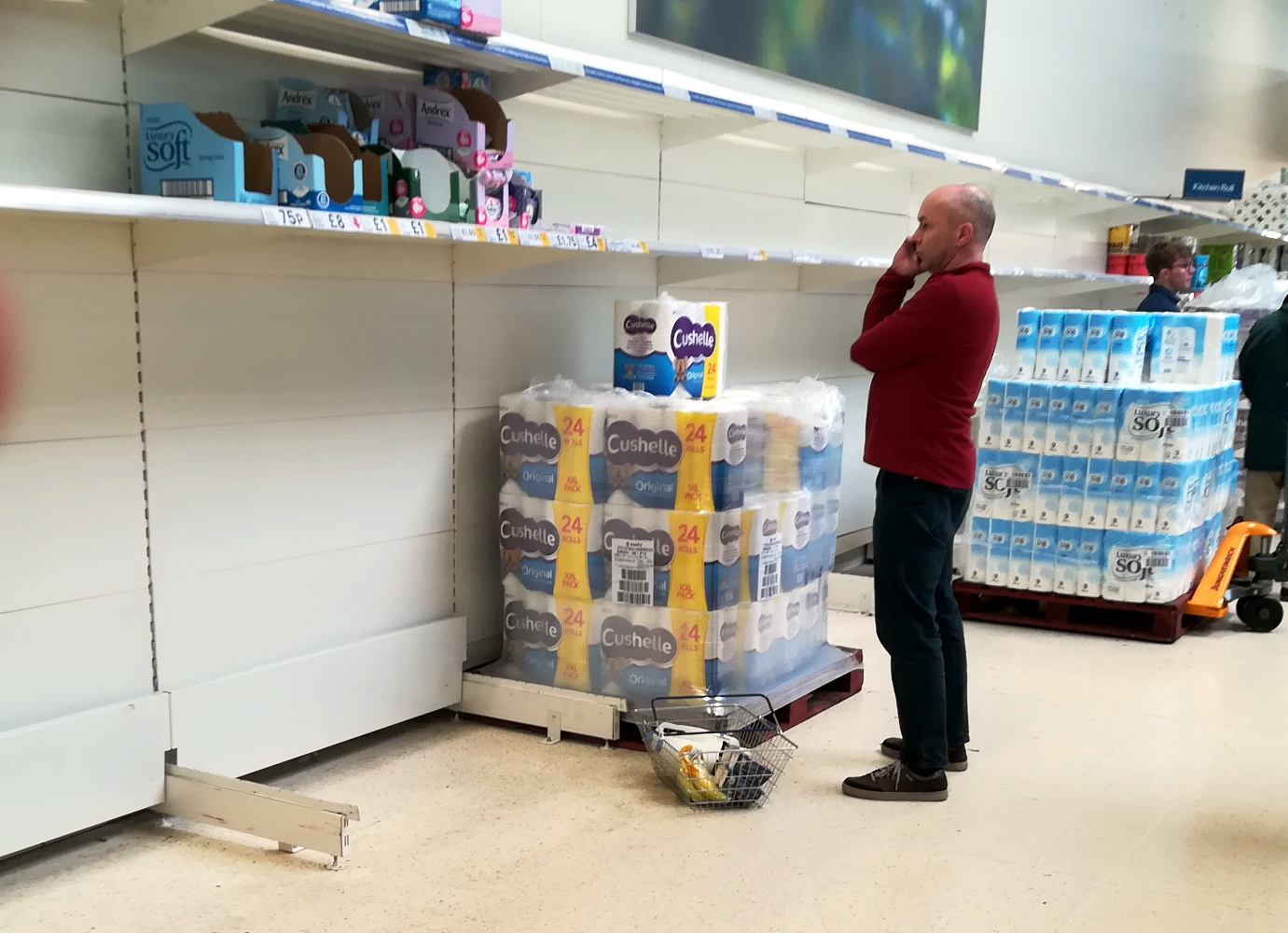
This is the very last of the toilet paper in my local supermarket, on the 8th of March.

A particular shortage has been of toilet paper. The news was full of footage showing people fighting for the last twelve-pack, and since early last month there has been none to be had for love nor money. To conserve stocks and save us from the desperate measures of having to cut the Daily Mail into squares and hang them on the wall, a technical solution is required. To this end I’ve created a computerised toilet roll dispenser which carefully controls the quantity of the precious sanitary product, in the hope of curbing its consumption to see us through the crisis.

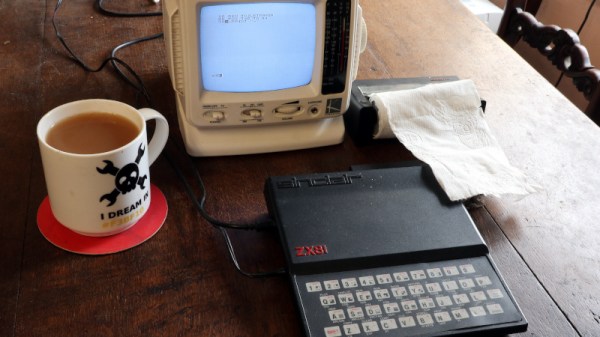
In the midst of a full lockdown it’s difficult to secure immediate delivery of our usual maker essentials, so rather than send off for the controller boards I might have liked it has been necessary to make do with what I had. In the end I selected an older single board computer I had in a box under my bench. The Sinclair ZX81 has a single-core Z80 processor running at 3.25 MHz, dual-channel memory, a Ferranti GPU, and plenty of expansion possibilities from its black plastic case. I chose it because I could repurpose its thermal printer peripheral as a toilet paper printer, and because it has an easily wiped and hygienic membrane keyboard rather than a conventional one that could harbour germs.

Hardware wise I found I was fairly easily able to adapt a standard roll of Cushelle to the ZX printer, and was soon dispensing sheets with the following BASIC code.

10 REM TOILET PAPER PRINTER
20 FOR T=0 TO 44
30 LPRINT ""
40 NEXT T
50 LPRINT "---------- TEAR HERE -----------"

For now it’s working on the bench, but it will soon be mounted with a small portable TV as a monitor on the wall next to the toilet. Dispensing toilet paper will be as simple as typing RUN and hitting the ZX’s NEW LINE key, before watching as a sheet of toilet paper emerges magically from the printer. It’s the little hacks like this one that will be so useful in getting us through the crisis. After all, this Sinclair always has a square to spare.

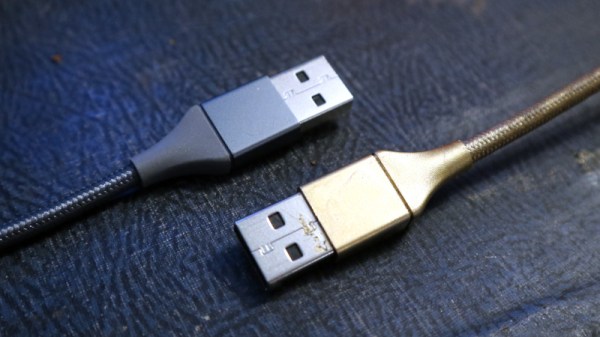
Gold Cables Really Do Work The Best

As a writer, I have long harboured a dream that one day an editor will buy me a top-of-the-range audio analyser, and I can set up an audio test lab and write pieces debunking the spurious claims made by audiophiles, HiFi journalists, and the high-end audio industry about the quality of their products. Does that amp really lend an incisive sibilance to the broader soundstage, and can we back that up with some measurable figures rather than purple prose?

An Audio Playground You Didn’t Know You Had

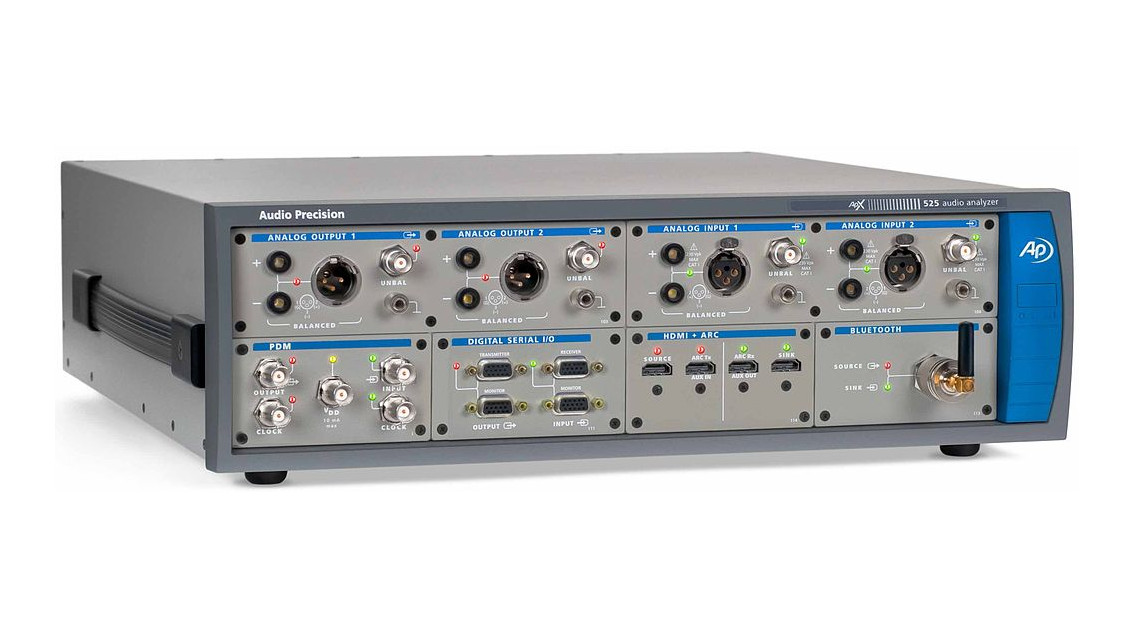
An Audio Precision APx525 audio analyser.
An Audio Precision APx525 audio analyser. Bradp723 (CC-BY-SA 3.0)

Sadly Hackaday is not an audio magazine, and if Mike bought me an Audio Precision he’d have to satisfy all the other writers’ test equipment desires too, and who knows where that would end! So there will be no Hackaday audio lab — for now. But that doesn’t mean I can’t play around with audio analysis.

Last month we carried a write-up of a Supercon talk from Kate Temkin and Michael Ossmann, in which they reminded us that we have a cracking general purpose DSP playground right under our noses; GNU Radio isn’t just for radio. Once I’d seen the talk my audio analysis horizons were opened up considerably. Maybe that audio analyser wouldn’t be mine, but I could do some of the same job with GNU Radio.

It’s important to stress at this point that anything I can do on my bench will not remotely approach the quality of a professional audio analyser. But even if I can’t measure infinitesimal differences between very high-end audio circuitry, I can still measure enough to tell a good audio product from a bad one.

Continue reading “Gold Cables Really Do Work The Best”

A 1950s Ampex Tape Recorder Microphone Preamplifier Restoration

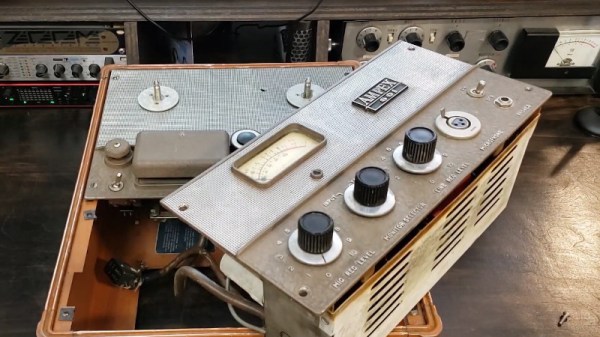
So often when we read of a modification on a classic piece of tube electronics we prepare to wince, as such work often results in senseless butchery of a well-preserved survivor. With [Frank Olson]’s work on a 1958 Ampex 601 tape recorder though we were pleasantly surprised, because while he makes a modification to allow its use as a stand-alone microphone preamplifier he also performs an extremely sympathetic upgrade to modern components and retains it in substantially the form it left the Ampex factory.

The video below the break is a satisfying wallow in pre-PCB-era construction for any of the generation who cut their teeth on tube, chassis, and tag strip electronics. We can almost smell the phenolic as he carefully removes time-expired capacitors and fits modern replacements complete with period features such as sheathing over their leads. The larger multiway can electrolytics are left in the chassis, with their modern miniaturised equivalents nestling underneath them out of sight. We all know that electronic components have become a lot smaller over the decades, but it’s still a bit of a shock to see just how tiny even a high voltage electrolytic has become.

The Ampex would have been a very high quality tape recorder when new, and while this one has a problem with its mechanism it’s that quality that makes it easier for him to do this work in 2020. There’s every chance that this one could be returned to service as a tape recorder if someone was of a mind to fix it, and meanwhile it will give Frank excellent service as a high quality pre-amp. This is how resto-mods should be done!

Ampex are very much still in existence making digital storage products, but back in the 1950s they were at the forefront of analogue magnetic tape technology. We’ve written in the past about how Bing Crosby had a hand in the development of high quality tape recorders, and also about Ampex’s part in the gestation of the video recorder.

Continue reading “A 1950s Ampex Tape Recorder Microphone Preamplifier Restoration”