Sometimes we see projects whose name describes very well what is being achieved, without conveying the extra useful dimension they also deliver. So it is with [Prasanth KS]’s Windows PC Lock/Unlock Using RFID. On the face of it this is a project for unlocking a Windows PC, but when you sit down and read through it you discover a rather useful primer for complete RFID newbies on how to put together an RFID project. Even the target doesn’t do it justice, there is no reason why this couldn’t be used with any other of the popular PC operating systems besides Windows.
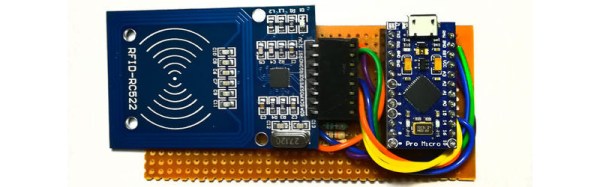
The project takes an MRFC-522 RFID module and explains how to interface it to an Arduino. In this case the Arduino in question is an Arduino Pro Micro chosen for its ability to be a USB host. The supplied code behaves as a keyboard, sending the keystroke sequence to the computer required to unlock it. The whole is mounted in what seems to be a 3D printed enclosure, and for ease of use the guts of the RFID tag have been mounted in a ring.
As we said above though, the point of this project stretches beyond a mere PC unlocker. Any straightforward RFID task could use this as a basis, and if USB is not a requirement then it could easily use a more run-of-the-mill Arduino. If you’re an RFID newbie, give it a read.
Sometimes when researching one Hackaday story we as writers stumble upon the one train of thought that leads to another. So it was with a recent look at an unmanned weather station buoy from the 1960s, which took us on a link to a much earlier automated weather station.
The restored Kurt in the Canadian National War Museum.
Weather Station Kurt was the only successful installation among a bold attempt by the German military during the Second World War to gain automated real-time meteorological data from the Western side of the Atlantic. Behind that simple sentence hides an extremely impressive technical and military achievement for its day. This was the only land-based armed incursion onto the North American continent by the German military during the entire war. Surrounded as it was though by secrecy, and taking place without conflict in an extremely remote part of Northern Labrador, it passed unnoticed by the Canadian authorities and was soon forgotten as an unimportant footnote in the wider conflagration.
Kurt took the form of a series of canisters containing a large quantity of nickel-cadmium batteries, meteorological instruments, a telemetry system, and a 150W high frequency transmitter. In addition there was a mast carrying wind speed and direction instruments, and the transmitting antenna. In use it was to have provided vital advance warning of weather fronts from the Western Atlantic as they proceeded towards the European theatre of war, the establishment of a manned station on enemy territory being too hazardous.
A small number of these automated weather stations were constructed by Siemens in 1943, and it was one of them which was dispatched in the U-boat U537 for installation on the remote Atlantic coast of what is now part of modern-day Canada. In late October 1943 they succeeded in that task after a hazardous trans-Atlantic voyage, leaving the station bearing the markings of the non-existent “Canadian Meteor Service” in an attempt to deceive anybody who might chance upon it. In the event it was not until 1977 that it was spotted by a geologist, and in 1981 it was retrieved and taken to the Canadian War Museum.
There is frustratingly little information to be found on the exact workings on the telemetry system, save that it made a transmission every few hours on 3940kHz. A Google Books result mentions that the transmission was encoded in Morse code using the enigmatic Graw’s Diaphragm, a “sophisticated contact drum” named after a Dr. [Graw], from Berlin. It’s a forgotten piece of technology that defies our Google-fu in 2017, but it must in effect have been something of a mechanical analogue-to-digital converter.
Should you happen to be visiting the Canadian capital, you can see Kurt on display in the Canadian War Museum. It appears to have been extensively restored from the rusty state it appears in the photograph taken during its retrieval, it would be interesting to know whether anything remains of the Graw’s Diaphragm. Do any readers know how this part of the station worked? Please let us know in the comments.
Weather station Kurt retrieval image, Canadian National Archives. (Public domain).
Weather station Kurt in museum image, SimonP (Public domain).
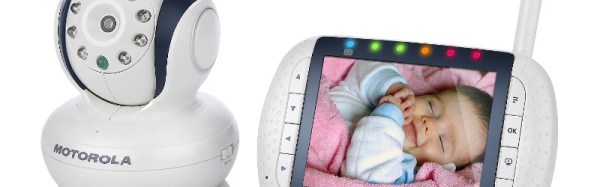
We’ve all seen the stories about IoT devices with laughably poor security. Both within our community as fresh vulnerabilities are exposed and ridiculed, and more recently in the wider world as stories of easily compromised baby monitors have surfaced in mass media outlets. It’s a problem with its roots in IoT device manufacturers treating their products as appliances rather than software, and in a drive to produce them at the lowest possible price.
The Australian government have announced that IoT security is now firmly in their sights, announcing a possible certification scheme with a logo that manufacturers would be able to use if their products meet a set of requirements. Such basic security features as changeable, non-guessable, and non-default passwords are being mentioned, though we’re guessing that would also include a requirement not to expose ports to the wider Internet. Most importantly it is said to include a requirement for software updates to fix known vulnerabilities. It is reported that they are also in talks with other countries to harmonize some of these standards internationally.
It is difficult to see how any government could enforce such a scheme by technical means such as disallowing Internet connection to non-compliant devices, and if that was what was being proposed it would certainly cause us some significant worry. Therefore it’s likely that this will be a consumer certification scheme similar to for example the safety standards for toys, administered as devices are imported and through enforcement of trading standards legislation. The tone in which it’s being sold to the public is one of “Think of the children” in terms of compromised baby monitors, but as long-time followers of Hackaday will know, that’s only a small part of the wider problem.
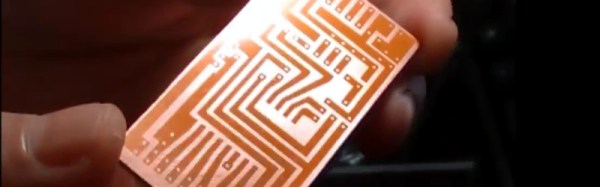
Most people who have dabbled in the world of electronic construction will be familiar in some form with the process of producing a printed circuit board by exposing a UV sensitive coating through a transparent mask, before moving on to etching. Older readers will have created their masks by hand with crêpe paper tape on acetate, while perhaps younger ones started by laser-printing from their CAD package.
How about a refinement of the process, one which does away with the acetate mask entirely? [Ionel Ciobanuc] may have the answer, in the form of an exposure through an LCD screen. The video below the break shows how it’s done, starting with a (probably a bit too lengthy) sequence on applying the photo-resist coating to the board, and then sitting LCD on top of UV lamp with the board positioned at the top of the pile.
It’s an interesting demonstration, and one that certainly removes a step in the process of PCB creation as it brings the pattern direct from computer to board without an intermediate. Whether or not it’s worth the expenditure on an LCD is up to you, after all a sheet of acetate is pretty cheap and if you already have a laser printer you’re good to go. We’re curious to know whether or not any plastic components in the LCD itself might be damaged by long-term exposure to intense UV light.
It seems that new stories of insecure-by-design IoT devices surface weekly, as the uneasy boundary is explored between the appliance and the Internet-connected computer. Manufacturers like shifting physical items rather than software patches, and firmware developers may not always be from the frontline of Internet security.
An interesting aside on the security of IoT traffic comes from [boz], who has taken a look at encryption of very low data rate streams from underpowered devices. Imagine perhaps that you have an Internet-connected sensor which supplies only a few readings a day that you would like to keep private. Given that your sensor has to run on tiny power resources so a super-powerful processor is out of the question, how do you secure your data? Simple encryption schemes are too easily broken.
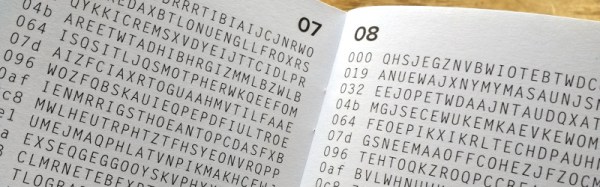
He makes the argument for encryption from a rather unexpected source: a one-time pad. We imagine a one-time pad as a book with pages of numbers, perhaps as used by spies in Cold-War-era East Berlin or something. Surely storing one of those would be a major undertaking! In fact a one-time pad is simply a sequence of random keys that are stepped through, one per message, and if your message is only relatively few bytes a day then you have no need to generate more than a few K of pad data to securely encrypt it for years. Given that even pretty meager modern microcontrollers have significant amounts of flash at their disposal, pad storage for sensor data of this type is no longer a hurdle.
Where some controversy might creep in is the suggestion that a pad could be recycled when its last entry has been used. You don’t have to be a cryptologist to know that reusing a one-time pad weakens the integrity of the cypher, but he has a valid answer there too, If the repeat cycle is five years, your opponent must have serious dedication to capture all packets, and at that point it’s worth asking yourself just how sensitive the sensor data in question really is.
A hundred years or more of consumer-level recorded music have moved us to a position in which most of us unconsciously consider music to be a recorded rather than live experience. Over a century ago this was not the case, and instead of a hi-fi or other device, many households would have had some form of musical instrument for their own entertainment. The more expensive ones could become significant status symbols, and there was a thriving industry producing pianos and other instruments for well-to-do parlours everywhere.
One of these parlour instruments came the way of [Alec Smecher], a pump organ, also known as a harmonium, or a melodeon. He’s carefully added a MIDI capability to it, and thus replaced its broken “Vox Humana” tremolo effect intended as a 19th century simulation of a choir, with a set of genuine human sounds. There is an almost Monty Python quality to his demonstration of this real Vox Humana, as you can see in the video below.
Lest you think though that he’s gutted the organ in the process of conversion, be rest assured that this is a sensitively applied piece of work. A microswitch has been placed beneath each key, leaving the original mechanism intact and working. An Arduino Leonardo has the microswitches multiplexed into a matrix similar to a keyboard, and emulates a USB MIDI device. It’s fair to say that it therefore lacks the force sensitivity you might need to emulate a piano, but it does result in rather an attractive MIDI instrument that also doubles as a real organ.
You have to hand it to Nintendo, for blazing the virtual reality trail in consumer products a couple of decades before everyone else, even if the best that can be said for their efforts in that direction is that they weren’t exactly super-successful. Their 1989 Power Glove became little more than a difficult-to-use peripheral for everyday console games, and their 1995 Virtual Boy console was streets ahead of its time but had a 3D effect that induced discomfort in its players.
They’ve taken a Power Glove, and through an Arduino Due with a custom shield, interfaced it to the Vive controller mounted where the buttons would have been in its Nintendo days. The Vive provides positional data, while the Nintendo sensors provide hand data. Thus they’ve made an accomplished glove peripheral with a lot less heartache than they would have seen had they done so from scratch.
They show us a couple of environments using the glove, an iPad simulation which we’re having a little difficulty getting our heads round, and a rock/paper/scissors game which looks rather fun. If you are interested in further work, all their code is on GitHub.