Advanced Robotic Arm Control Using Kinect

kinect_teleoperation

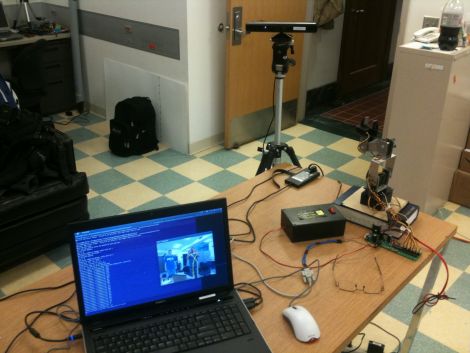
[Ryan Lloyd], [Sandeep Dhull], and [Ruben D’Sa] wrote in to share a robotics project they have been keeping busy with lately. The three University of Minnesota students are using a Kinect sensor to remotely control a robotic arm, but it’s not as simple as it sounds.

Using OpenNI alongside PrimeSense, the team started out by doing some simple skeleton tracking before working with their robotic arm. The arm has five degrees of freedom, making the task of controlling it a bit tricky. The robot has quite a few joints to play with, so the trio not only tracks shoulder, elbow, and wrist movements, but they also monitor the status of the user’s hand to actuate the robot’s gripper.

When everything was said and done, the results were pretty impressive as you can see in the video below, but the team definitely sees room for improvement. Using inverse kinematics, they plan on filtering out some of the joint tracking inaccuracies that occur when the shoulders are moved in a certain way. They also plan on using a robotic arm with even more degrees of freedom to see just how well their software can perform.

Be sure to check out their site to see more details and videos.

Continue reading “Advanced Robotic Arm Control Using Kinect”
Improve Charlieplexing Performance With Interrupts

single_chip_led_matrix

[Dmitry] was shopping for LEDs and accidentally pulled the trigger on the wrong type. Since he didn’t want to be wasteful, he figured he should at least take the time to build something with them.

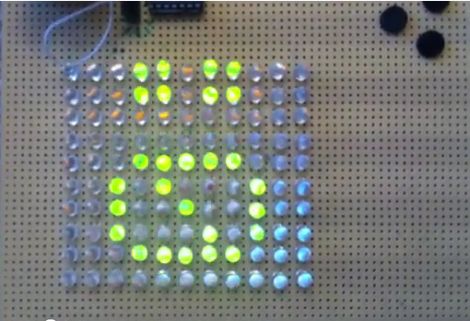
A LED matrix display was the obvious project choice, but he only had a PIC16F688 at his disposal. Since the micro controller only has 11 output pins, charlieplexing was the only way he would be able to light the entire matrix.

While testing his LED array, he found charlieplexing to be a bit disappointing. The fact that the LEDs can get relatively dim, depending on the number of units lit at any particular time struck him as annoying.

In order to improve the performance of his charlieplexed array, he first decided to scan through all of the LEDs rather than just those that needed to be lit. This ensured that all of his LEDs had the same 1/110 duty cycle and were always as bright as possible. He also chose to use interrupts when lighting the LEDs. This meant that his code does not need to take into consideration any specific timing requirements to maintain persistence of vision. He also double-buffers the display to help reduce flicker.

He says that he ran into certain constraints with the PIC chip he chose, so he used a handful of lookup tables to ensure smooth operation of his display. He was quite satisfied with the results, and we think that the interrupt-driven display looks like it works just fine from where we’re standing as well.

Be sure to stick around for a quick video explaining and demonstrating his single-chip LED matrix.

Continue reading “Improve Charlieplexing Performance With Interrupts”

Mini Light Table Fits Inside A Briefcase

portable_light_box

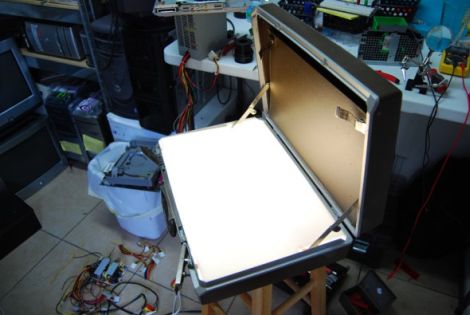
Hackaday forum member [Mike] was looking for project ideas when his girlfriend, an art major, suggested that he build her a light table to help with her various assignments. Having seen a few of these projects pop up from time to time, he figured he was up to the task. He started hunting around at his local thrift stores and finally came across what he was looking for – a hard-sided Samsonite briefcase.

He ripped out the bottom lining of the briefcase and proceeded to paint the inside white in order to properly reflect the lighting he would be adding shortly. A pair of under-cabinet lights were installed, and wired to be easily toggled on the outside of the case. He located some white acrylic to serve as the top of the table, trimming it to fit snugly in the case without any need for fasteners.

His girlfriend loved the table, though we would be interested in seeing a more portable version – it is built into a briefcase after all. We would love to hear your suggestions on how he might make this more portable, so let us know in the comments.

Modular Security System Is Portable Too

diy_security_system

Hackaday reader [Oneironaut] wrote in to share a modular, portable security system he built for himself.

He likes visiting the Caribbean, but his favorite vacation spot is apparently rife with cat burglars. He enjoys sleeping with the windows open and wanted to find a way to scare off ne’er do wells. At home, there are a few different buildings on the property he owns, and he was looking to keep curious trespassers away.

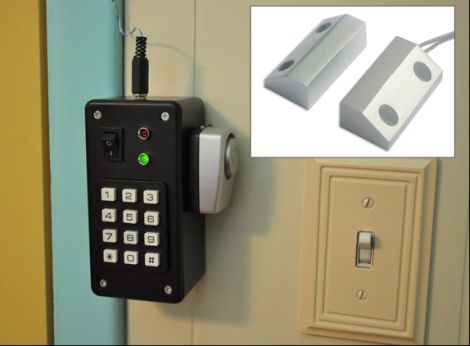
The alarm system was built using a matrix keypad that interfaces with an ATMega88 micro controller. The micro controller handles all the logic for the system, triggering an attached “pocket alarm” when ever the sensor is tripped. Like most household alarms, it is armed and disarmed via the keypad, giving the user 60 seconds to enter the disarm code if the alarm has been mistakenly tripped. A wide array of trigger methods can be used, from mercury switches to motion detectors, since his alarm uses a simple plug interface that accepts any two-wire sensor.

Now, no one is claiming that this is high security by any means – the alarm addresses a couple of specific scenarios that apply to [Oneironaut], which may also be applicable to others out there. At the end of the day, the alarm is more meant to scare an intruder into fleeing than anything else, and in that respect, it works perfectly.

Continue reading to see a quick video demonstration of his alarm system in action.

Continue reading “Modular Security System Is Portable Too”

Gitbrew Brings OtherOS Back To The PS3

otheros

Instead of simply watching the days pass by while the PSN network continues to be unavailable, why not do something useful with your PS3 console? [MS3FGX] wrote in to share some news regarding efforts to bring the OtherOS option back to the PS3.

The team at gitbrew.org have been diligently working to bring Linux back to the console for a little while now, and have released a dual-boot firmware they are calling OtherOS++. This firmware has two huge benefits over Sony’s original attempt at Linux support for the console. It can be run on the original “fat” PS3s as well as the newer “slim” models – something that was not possible until now. Additionally, it gives the Linux install full access to the PS3’s hardware rather than running the OS inside a virtual machine.

The project is relatively new, so the installation procedures and associated documentation are not suitable for the less experienced individuals out there, so consider yourself warned.

We love that there are people doing all they can to bring this awesome feature back to the PS3 – it’s a huge step in the right direction.

[Image via gitbrew]

Automate Repetitive PC Actions With A Foot Pedal

foot_pedal

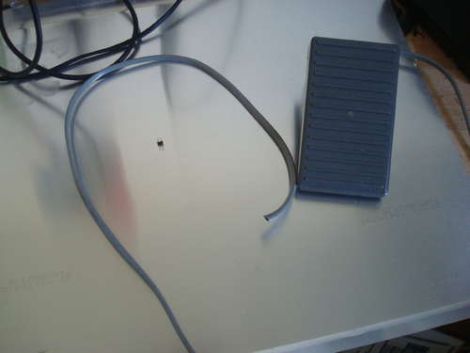
Instructables user [bkovac] was sick of clicking the terminal icon on his desktop whenever he wanted to launch a terminal window. Keyboard shortcuts aside, he figured the easiest way to take the tedium out of the process would be to launch terminal windows with a foot pedal.

He grabbed a pedal that he had sitting around in his workshop and took it apart to ensure the switch contacts were configured for his particular use. The wires were run to an Arduino which talks to the computer over serial using a Python script.

While the setup works just fine, it’s definitely not the most efficient or simplest way of getting the job done. In fact, we have seen other methods that are quite a bit simpler, though they lack the potential versatility of this particular modification.

Rather than simply loading a terminal window on his computer, we would love to see this pedal enhanced to perform multiple functions – at which point the Arduino would be a pretty decent choice. We would probably start out by swapping out the full-sized Arduino for a Teensy, mounting it inside the pedal. Multiple foot presses could be used to trigger different events, based upon the number of presses that occur within a given time period. It could be made even more useful by using it to trigger gesture-based events, similar to those seen in plug-ins for Chrome and Firefox.

How would you enhance [bkovac’s] pedal interface? Let us know in the comments.

Awesome Fan-powered Frankenscooter

fanscooter

We believe that some of the best things in life are built from half-assed ideas and held together with duct tape. Take this fan-powered Razor scooter [Charles Guan] built, for example – it’s chock full of both.

Having built a ducted fan-powered shopping cart in the past [Charles] is no stranger to ridiculous ideas. After a friend sent him a mockup of a fan powered scooter, he felt that he couldn’t “…take such an absurd image not seriously.”

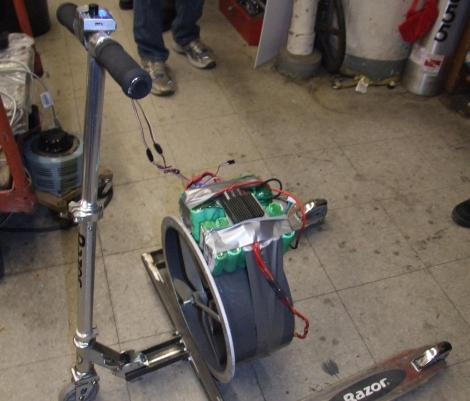
Determined to make his fan-powered dreams a reality, he hunted around for Razor scooter parts, and managed to scavenge just about everything he needed. Parts of three scooters were welded together, forming the wide-stanced trike you see in the picture above. He mounted a fan and some battery packs onto the scooter, both similar to those found on his Fankart. Once everything was in place, he hit the streets.

As you can see in the video below, the Fanscooter looks as fun as it is loud. [Charles] says they have hit a top speed of about 10 mph thus far, but they should be able to blow past that once they balance the blades and have a victim tester willing to suspend his babymakers over the fan duct. Keep your eyes on his site, we’re sure to see some tweaks and improvements over the coming weeks.

Continue reading “Awesome Fan-powered Frankenscooter”