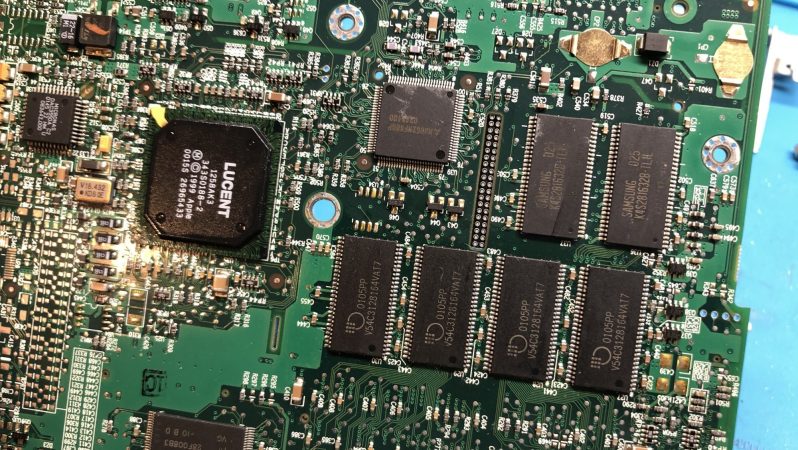
In the retrocomputing world, [DosDude1] is a name spoken with more than a little respect. He’s back again with a long-awaited hack for PowerPC Macintosh: soldered RAM upgrades!
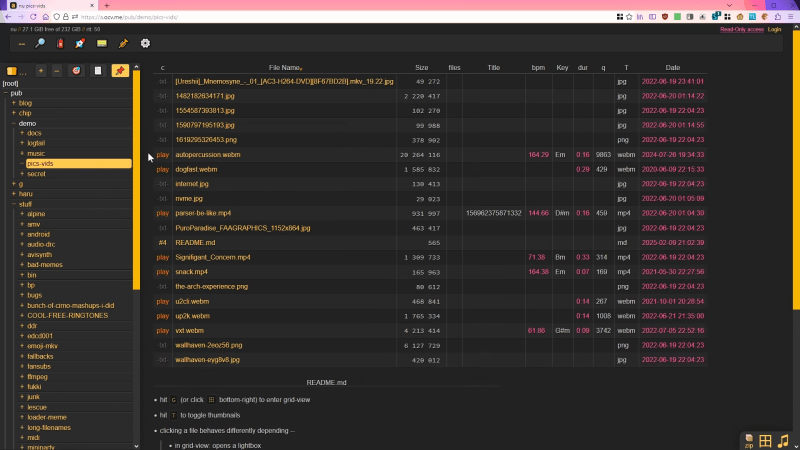
Setting up a file server can be intimidating to the uninitiated. There are many servers to choose from, and then you need to decide how to install it — Docker? Kubernates? Well, what’s all that then? [9001] has come to the rescue with Copyparty, a full-featured file server in a single Python script.
It’s light enough to run on nearly anything, and getting it running could not be easier: run copyparty-sfx.py, and you’ve got a server. There’s even a 32-bit .exe for older Windows machines — Windows 2000 seems to be the oldest version tested.
Browsers supported: almost all of them.
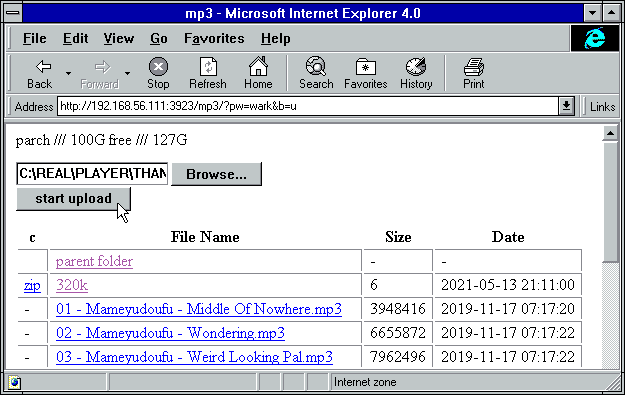
It’ll connect to anything, both in terms of the variety of protocols supported, and the browsers its web interface loads in. The GitHub documentation says browser support : “Yes”, which is pretty accurate going down the list. Sadly Copyparty’s pages do not work in NCSA Mosaic, but IE4 is A-OK.
There’s, FTP, TFTP, HTTP/HTTPS, WebDAV, SMB/CIFS, with unp/zeroconf/mdns/ssdp, etc etc. You need to check the readme for all features, some of which — like transcoding — are only available when dependencies such as ffmpeg installed on the server. Alternatively you can watch the video embedded below to get walked through the features. If the video whets your appetite, can also visit a read-only Copyparty server being demoed on a NUC sitting in [9001]’s basement.
Over the years we’ve seen plenty of folks create personal servers, but the focus is generally on the hardware side of things. While those with more software experience might prefer to configure the various services involved manually, we can definitely see the appeal of a project like Copyparty. In some ways it’s the inverse of the UNIX Philosophy: instead of doing one thing perfectly, this program is doing everything [9001] could think of, and doing it “good enough”.
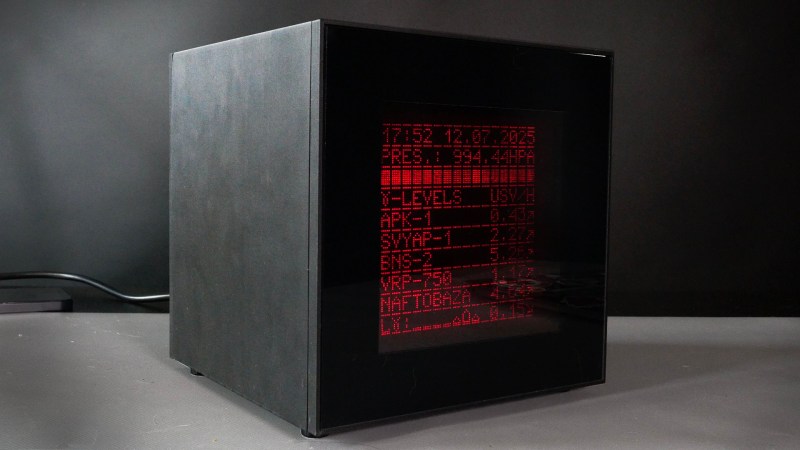
It’s hard to argue that Soviet-Era nuclear engineering may have some small flaws, what with the heavily-monitored exclusion zone around Chernobyl No.4. Evidently, their industrial designers were more on-the-ball, because [Alex] has crafted the absolute most stylish fallout monitor we’ve ever seen, with ESP32 and a vintage Soviet-designed plasma display to indicate radiation levels in the exclusion zone.
Since the device is not located within the zone, [Alex] is using the ESP32 to access sensor values published via an API at SaveEcoBot. He also includes a Geiger counter module for the background level at the current location. That’s straightforward enough– integrating the modern microcontroller with the vintage plasma display is where the real hacking comes in. Though they might not be as vintage as you think: apparently the Elektronika MS6205 remained in production until 2005, but 2005 is still vintage. [Alex] notes in the instructions on hackaday.io that we’re actually looking for a post-1995 model to follow along.
The Elektronika MS6205 is based on a 100×100 pixel plasma matrix, but it is operated as a text-only display with Latin and Cyrillic characters in ROM. The ROM also includes some extra symbols and Greek letters (the gamma will come in handy for this application) that can be unlocked by cutting a trace on the board and replacing it with a bodge wire. Igniting the display requires 250V, which will require more work for North Americans than it does in Ukraine. Driving the display requires interfacing with the 7-bit data bus and 8-bit address bus, but [Alex] has made the wiring and code available on the project site if you’re interested in these devices. If you want to watch it in action and get more background, check out the video embedded below.
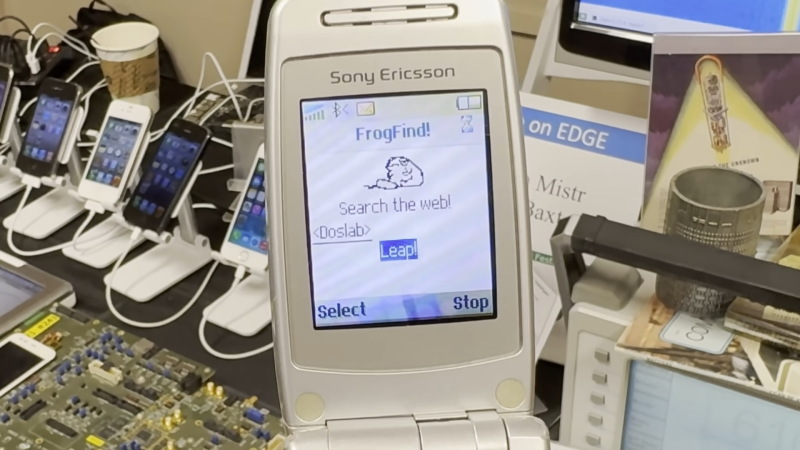
Yes, the Wireless Application Protocol! What other WAP could there possibly be? This long-dormant cellphone standard is now once again available on the web, thanks to [Sean] over at ActionRetromodifying his FrogFind portal as a translation engine. Now any web site can be shoved through the WAP!
WAP was rolled out in 1999 as HTML for phones without the bandwidth to handle actual HTML. The idea of a “mobile” and a “desktop” site accessed via HTTP hadn’t yet been conceived, you see, so phoning into sites with WAP would produce a super-stripped down, paginated, text-only version of the page. Now FrogFind has a WAP version that does the same thing to any site, just as the HTTP (no S!) FrogFind translates the modern web into pure HTML vintage browsers can read.
Of course you’ll need a phone that can connect to FrogFind with a WAP browser, which for many of us, may be… difficult. This protocol didn’t last much longer than PETS.COM, so access is probably going to be over 2G. With 2G sunset already passed in many areas, that can be a problem for vintage computer enthusiasts who want to use vintage phone hardware. [Sean] does not have an answer — indeed, he’s actively searching for one. His fans have pointed out a few models of handsets that should be able to access WAP via WiFi, but that leaves a lot of retro hardware out in the cold. If you have a good idea for a 2G bridge that can get out to the modern web and not attract the angry attention of the FTC (or its local equivalent), fans of ActionRetro would love to hear it — and so would we!
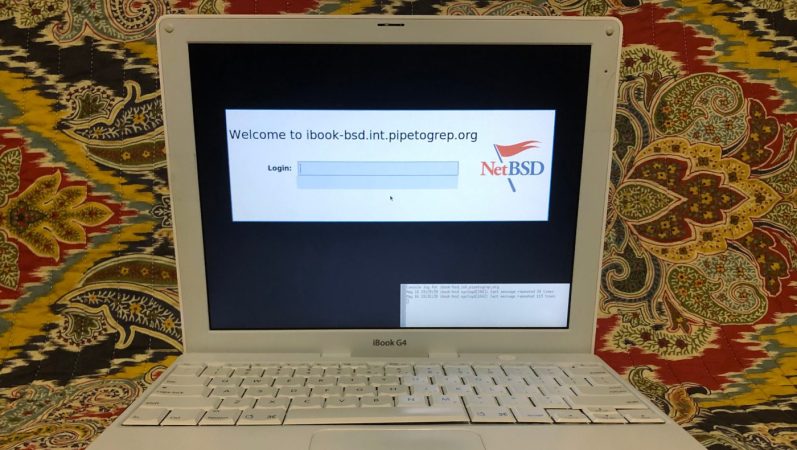
Some of you might consider game dev a strong word; obviously he’s not working on AAA titles on the machine he affectionately calls “Brick”. NetBSD includes pygame in its repositories, though, and that’s enough for a 2D puzzle game he’s working on called Slantics. It’s on GitHub, if you’re curious.
Slantics: possibly the only game written on PPC Macintosh hardware this year.
Why NetBSD? Well, [Chris] wants to use his vintage hardware so that, in his words “collecting does not become hoarding” and as the slogan goes: “Of course it runs NetBSD!” It’s hard to remember sometimes that it’s been two decades since the last PPC Macintosh. After that long, PPC support in Linux is fading, as you might expect.
[Chris] tried the community-supported PPC32 port of Debian Sid, but the installer didn’t work reliably, and driver issues made running it “Death by a thousand cuts”. NetBSD, with it’s institutional obsession with running on anything and everything, works perfectly on this legally-adult hardware. Even better, [Chris] reports NetBSD running considerably faster, getting 60 FPS in pygame vs 25 FPS under Linux.
This is almost certainly not the year of the BSD Desktop, but if you’ve got an old PPC machine you feel like dusting off to enjoy a low-powered modern workflow, NetBSD may be your AI-code-free jam. It’s great to see old hardware still doing real work. If you’d rather relive the glory days, you can plug that PPC into a wayback proxy to browse like it’s 2005 again. If you get bored of nostalgia, there’s always MorphOS, which still targets PPC.
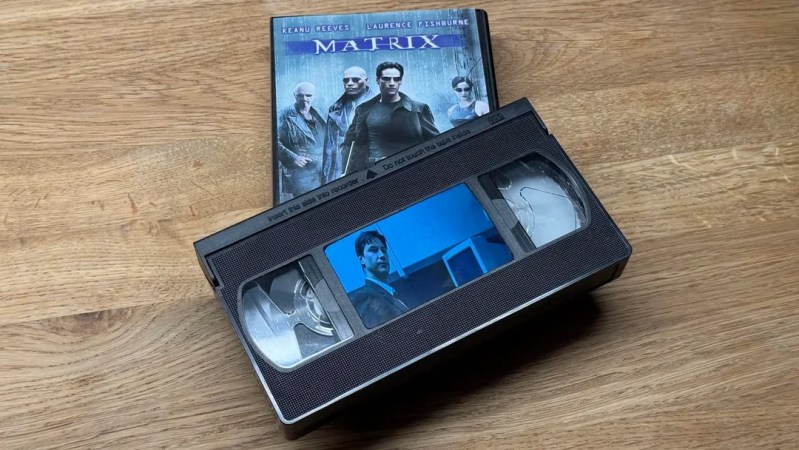
While it might not be accurate to say VHS is dead, it’s certainly not a lively format. It continues on in undeath thanks to dedicated collectors and hobbyists, some of whom may be tempted to lynch Reddit user [CommonKingfisher] for embedding a video player inside a VHS tape.
Miniaturization in action. The video player probably cost about the same as the original VHS when you account for inflation.
The hack started with a promotional video card via Ali Express, which is a cheap enough way to get a tiny LCD player MP4 playing micro. As you can see, there was plenty of room in the tape for the guts of this. The tape path is obviously blocked, so the tape is not playable in this format. [CommonKingfisher] claims the hack is “reversible” but since he cut a window for the LCD out of the casing of the cassette, that’s going to be pretty hard to undo. On the other hand, the ultrasonic cutter he used did make a very clean cut, and that would help with reversibility.
The fact that the thing is activated by a magnetic sensor makes us worry for the data on that tape, too, whether or not the speaker is a peizo. Ultimately it doesn’t really matter; in no universe was this tape the last surviving copy of “The Matrix”, and it’s a lot more likely this self-playing “tape” gets watched than the VHS was going to be. You can watch it yourself in the demo video embedded below.
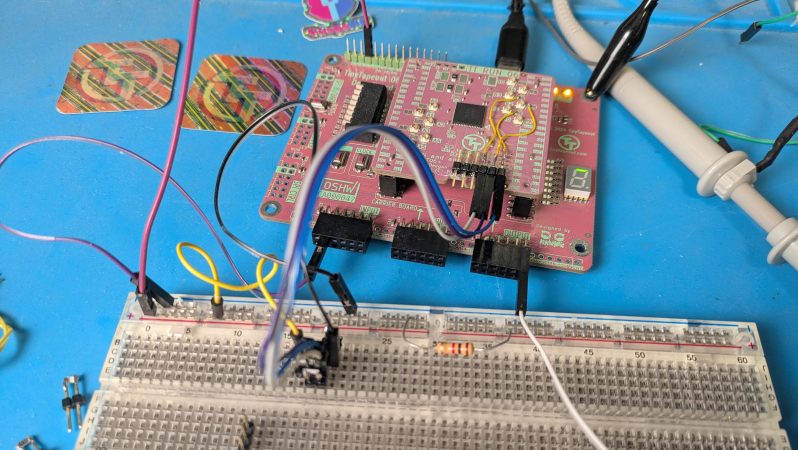
Hooking a 555 to blink an LED at one hertz is a bog-simple, first-electronics-project type of exercise, unless you have to make the 555 first. Rather than go big, as we have seen before, [matt venn] goes very small, with a 555 implemented on a tiny sliver of Tiny Tapeout 6.
Of course wiring it up is a bit more complicated than dropping in a 555 timer to the circuit: the Tiny Tapeout ASIC must be configured to use that specific project using its web interface. There’s a demo video embedded below, with some info about the project– it’s not just a blinking LED, so it’s worth seeing. The output isn’t exactly One Hertz, so it might not get the nod in the Timelord category, but it’s going to be a very strong competitor for other 555-based projects– of which we could really use more, hint-hint. You’ve got until August 19th, if you think you can use a 555 to do something more interesting than blink an LED.