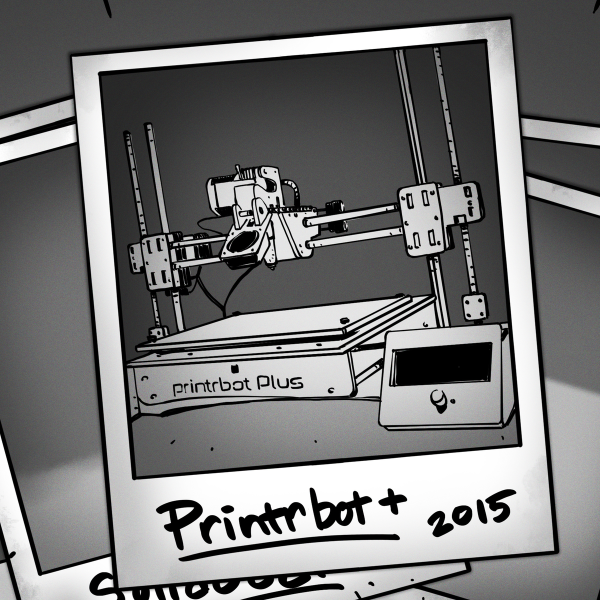
Mattel holds a fond place in most people’s hearts as they made many of the toys we played with as kids. You might remember the Thingmaker, which was essentially an Easy Bake Oven with some goop and molds that let you make rubbery creatures. But back in 2016, Mattel had an aborted attempt to bring 3D printing to kids under the Thingmaker label. You can see a promo video of the device below. You might not have seen one in real life, though. The product was delayed and eventually canceled. Even so, we frequently see press releases for “kids printers” and we’ve been wondering, should this be a thing? Continue reading “Ask Hackaday: Do Kids Need 3D Printers?”
Author: Al Williams4507 Articles
PCB Pen Holder Is Over The Top
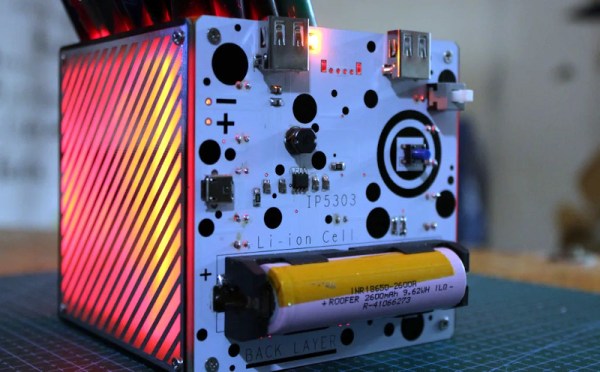
Like most of us, [Arnov] used a spare coffee mug to hold pens on his desk. But there has to be a better way, right? Surely if you build a better mouse trap… or, in this case, a pen holder. He’d be the first to admit that he might have gotten a little carried away, but the result is an attractive pen holder made from PCB material, one of which is actually an active circuit board.
The pen holder has some power management, as there’s a rechargeable battery that allows it to charge devices such as a smartphone or an embedded board. The power is also available for LEDs in the pen holder. The PCBs are bound together with 3D printed brackets.
The non-functioning PCBs still have patterns etched to make them more interesting looking. This is one of those things that isn’t technically a big deal, but we really liked the look of it, which was quite professional. We’ve seen PCBs used as enclosures before, but making the pattern and improving light transmission by removing the solder mask were nice touches.
If you don’t like the idea of making enclosures from PCB material, don’t forget they can form other components, as well. Clever arrangements can build resistors, capacitors, and inductors not to mention exotic transmission line elements.
Floppy Photog: Making An IR Filter From A 3.5″ Disk
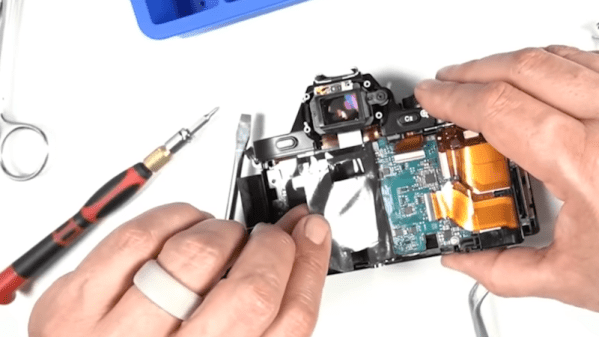
Sony used to sell digital cameras that recorded on actual floppy disks. We’ve come a long way, but [Mathieu] put a floppy in a digital camera recently for an entirely different reason. First, though, he had to modify the camera to work on the full spectrum, something he covered in an earlier video. You can see both videos, below.
As you might expect, he didn’t actually put an entire floppy inside the camera. He used the internal disk portion as an infrared filter to obtain some striking photos. In all honestly, the results were not as nice as what you get from a very expensive professional filter. But the pictures looked great and the difference was not as much as you’d expect compared to the cost difference.
The real work, though, is converting the camera to full spectrum as seen in the second video. A normal camera has an IR filter to prevent the sensor from seeing IR light. This prevents the image sensor from capturing things your eyes don’t see. The modification replaces the filter with a clear filter.
We’ve covered this kind of conversion before. You can even do it with a Raspberry Pi, if you like.
Continue reading “Floppy Photog: Making An IR Filter From A 3.5″ Disk”
Q Meter Measures… Q, Of Course
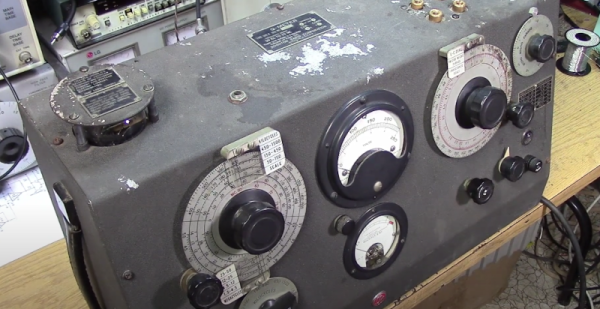
If you’ve ever dealt with RF circuits, you probably have run into Q — a dimensionless number that indicates the ratio of reactance to resistance. If you ever wanted to measure Q, you could do worse than pick up a vintage Boonton 160A Q meter. [Mikrowave1] did just that and shows us how it works in the video below.
Most often, the Q is of interest in an inductor. A perfect inductor would have zero resistance and be all reactance. If you could find one of those, it would have an infinite Q because you divide the reactance by the resistance. Of course, those inductors don’t exist. You can also apply Q to any circuit with reactance and the video talks about how to interpret Q for tuned circuits. You can also think of the Q number as the ratio of frequency to bandwidth or the dampening in an oscillator. A versatile measurement, indeed.
It sounds as though you could just measure the resistance of a coil and use that to compute Q. But you really need to know the total loss, and that’s not all due to resistance. A meter like the 160A uses a signal generator and measures the loss through the circuit.
The best part of the video is the teardown, though. This old tube gear is oddly beautiful in a strange sort of way. A real contrast to the miniaturized circuits of today. The Q meter is one of those nearly forgotten pieces of gear, like a grid dip oscillator. If you need to wind your own coils, by the way, you could do worse than see how [JohnAudioTech] does it.
Linux Fu: UEFI Booting
Unless your computer is pretty old, it probably uses UEFI (Unified Extensible Firmware Interface) to boot. The idea is that a bootloader picks up files from an EFI partition and uses them to start your operating system. If you use Windows, you get Windows. If you use Linux, there’s a good chance you’ll use Grub which may or may not show you a menu. The problem with Grub is you have to do a lot of configuration to get it to do different things. Granted, distros like Ubuntu have tools that go through and do much of the work for you and if you are satisfied with that, there’s no harm in using Grub to boot and manage multiple operating systems.
An alternative would be rEFInd, which is a nice modern UEFI boot manager. If you are still booting through normal (legacy) BIOS, the installation might be a hassle. But, in general, rEFInd, once installed, just automatically picks up most things, including Windows, Mac, and Linux operating systems and kernels. The biggest reasons you might change the configuration is if you want to hide some things you don’t care about or change the visual theme.
Frequency Tells Absolute Temperature
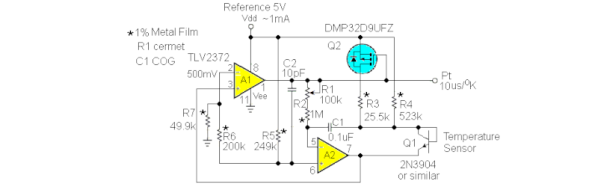
It is no secret that semiconductor junctions change their behavior with temperature, and you can use this fact to make a temperature sensor. The problem is that you have to calibrate each device for any particular transistor you want to use as a sensor, even if they have the same part number. Back in 2011 1991, the famous [Jim Williams] noted that while the voltage wasn’t known, the difference between two readings at different current levels would track with temperature in a known way. He exploited this in an application note and, recently, [Stephen Woodward] used the same principle in an oscillator that can read the temperature.
The circuit uses an integrator and a comparator. A FET switches between two values of collector current. A comparator drives the FET and also serves as the output. Rather than try to puzzle out the circuit just from the schematic, you can easily simulate it with LT Spice or Falstad. The Falstad simulator doesn’t have a way to change the temperature, but you can see it operating. The model isn’t good enough to really read a temperature, but you can see how the oscillation works
You can think of this as a temperature-to-frequency converter. It would be easy to read with, say, a microcontroller and convert the period to temperature. Every 10 microseconds is equal to a degree Kelvin. Not bad for something you don’t have to calibrate.
Thermistors are another way to measure temperature. Sometimes, you don’t need a sensor at all.
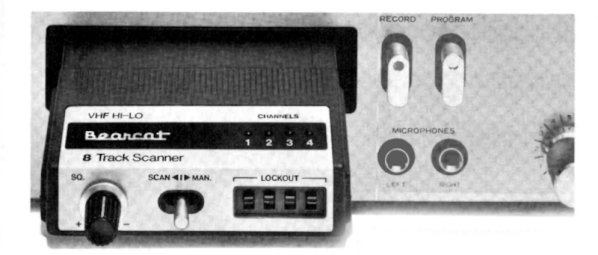
Retro Gadgets: Tired Of The Beatles On 8 Track? Try The Police
In the 1970s, 8-track audio players were very popular, especially in cars. For a couple of bucks, you could have the latest album, and you didn’t have to flip the tape in the middle of a drive like you did with a cassette. We’ve seen plenty of 8-tracks and most of us a certain age have even owned a few players. But we couldn’t find anyone who would admit to owning the Bearcat 8 Track Scanner, as seen in the 1979 Popular Electronics ad below.
Continue reading “Retro Gadgets: Tired Of The Beatles On 8 Track? Try The Police”