Levitating With Light

The University of Pennsylvania has a team that did a little light research. Well, not light in the usual sense of that phrase. They used very strong light to levitate Mylar disks in a vacuum chamber.

Of course, it is no secret that light can exert pressure. That’s how solar sails work and some scientists have used it to work with aerosols and the like. But this appears to be the first time light lifted a large item against gravity. The team claims that their tests showed that a sunlight-powered flying vehicle might carry up to ten milligrams of payload. That doesn’t sound like much, but it’s impressive and the paper mentions that since the lift is not from aerodynamic forces, there might be applications in flying at very high altitudes.

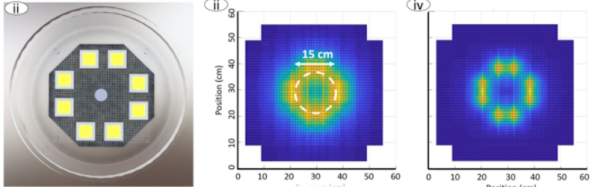
The Mylar disks were 500 nanometers thick and had a 300 nanometer layer of carbon nanotubes beneath. The nanotubes absorb light, make the disks more rigid, and improve the Mylar’s surface-gas characteristics. The light source had a strong center beam and an even stronger ring around the center beam that causes the disk to remain over the center beam. The LED system used eight arrays, each consuming 100 watts of input power.

Preparing the disk might be difficult, but the LED power isn’t that hard. Even if you do like the researchers did and use water cooling.

Winding Your Own Small Coils

Depending on what you build, you may or may not run into a lot of inductors. If you need small value coils, it is easy to make good-looking coils, and [JohnAudioTech] shows you how. Of course, doing the winding itself isn’t that hard, but you do need to know how to estimate the number of turns you need and how to validate the coil by measurement.

[John] uses a variety of techniques to estimate and measure his coils ranging from math to using an oscilloscope. He even uses an old-fashioned nomogram from a Radio Shack databook circa 1972.

Continue reading “Winding Your Own Small Coils”

How Big Is The Moon? Figure It Out Yourself

We have to confess that we occasionally send friends a link to “let me Google that for you” when they ask us something that they could have easily found online. Naturally, if someone asked us how big the moon is, we’d ask Google or another search engine. But not [Prof Matt Strassler]. He’d tell you to figure it out yourself and he would then show you how to do it.

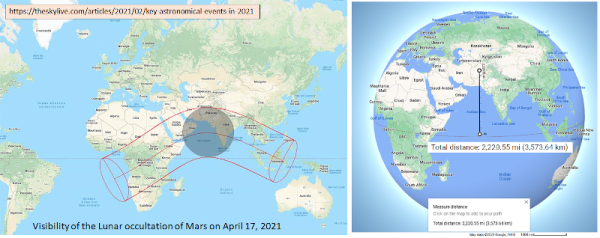
This isn’t a new question. People have been wondering about the moon since the dawn of human civilization. The ancient Greeks not only asked the question, but they worked out a pretty good answer. They knew approximately how big the Earth was and they knew the moon was far away because it is seen over a very wide area. They also knew the sun was even further away because the moon sometimes blocks the sun’s light in an eclipse. Using complex geometry and proto-trigonometry they were able to work out an approximate size of the moon. [Matt’s] method is similar but easier and relies on the moon occluding distant stars and planets.

Continue reading “How Big Is The Moon? Figure It Out Yourself”

AI Maybe Revives Dead Languages

While Star Trek’s transporter is hard to imagine — perfect matter movement across vast distances with no equipment on one end — it may not be the most far-fetched piece of tech on the Enterprise. While there are several contenders, I strongly suspect the universal translator is the most unlikely MacGuffin. After all, how would you decipher a totally unknown language in real-time? Of course, no one wants to watch 30 episodes of TV about how we finally figured out what Klingons call clouds, so pretty much every science fiction movie has some hand-waving explanation for speaking the viewer’s language. Farscape had microbes, some aliens have telepathy that works with alien brains of any kind, and still others study English from afar for decades off camera. Babelfish anyone?

I was thinking about this because of an article I read by [Alizeh Kohari] about [Jiaming Luo’s] work using AI to decode dead languages. While this might seem to be similar to Spock’s translator, it really isn’t. Human languages change over time and distance. You only have to watch the BBC or read something written by Thomas Jefferson to see that. But there is still a lot in common, at least within certain domains.

Continue reading “AI Maybe Revives Dead Languages”

No Privacy: Cloning The AirTag

You’ve probably heard of the infamous rule 34, but we’d like to propose a new rule — call it rule 35: Anything that can be used for nefarious purposes will be, even if you can’t think of how at the moment. Case in point: apparently there has been an uptick in people using AirTags to do bad things. People have used them to stalk people or to tag cars so they can be found later and stolen. According to [Fabian Bräunlein], Apple’s responses to this don’t consider cases where clones or modified AirTags are in play. To prove the point, he built a clone that bypasses the current protection features and used it to track a willing experimental subject for 5 days with no notifications.

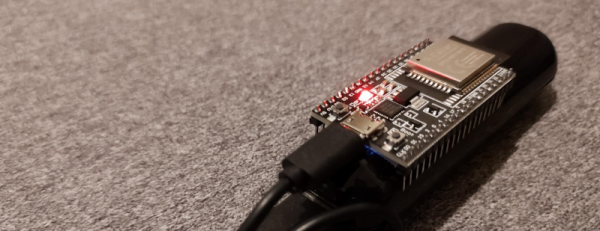
According to the post, Apple says that AirTags have serial numbers and beep when they have not been around their host Apple device for a certain period. [Fabian] points out that clone tags don’t have serial numbers and may also not have speakers. There is apparently a thriving market, too, for genuine tags that have been modified to remove their speakers. [Fabian’s] clone uses an ESP32 with no speaker and no serial number.

The other protection, according to Apple, is that if they note an AirTag moving with you over some period of time without the owner, you get a notification. In other words, if your iPhone sees your own tag repeatedly, that’s fine. It also doesn’t mind seeing someone else’s tags if they are near you. But if your phone sees a tag many times and the owner isn’t around, you get a notification. That way, you can help identify random tags, but you’ll know if someone is trying to track you. [Fabian] gets around that by cycling between 2,000 pre-loaded public keys so that the tracked person’s device doesn’t realize that it is seeing the same tag over and over. Even Apple’s Android app that scans for trackers is vulnerable to this strategy.

Even for folks who aren’t particularly privacy minded, it’s pretty clear a worldwide network of mass-market devices that allow almost anyone to be tracked is a problem. But what’s the solution? Even the better strategies employed by AirGuard won’t catch everything, as [Fabian] explains.

This isn’t the first time we’ve had a look at privacy concerns around AirTags. Of course, it is always possible to build a tracker. But it is hard to get the worldwide network of Bluetooth listeners that Apple has.

3D Printing Livers

The University of Utrecht has a team that is successfully bioprinting “liver units” that are able to do some of the functions of a human liver and may open the door to new medical treatments. This isn’t simply printing a fake liver in a jar though, instead the technique uses optical tomography to rapidly create small structures of about 1 cc of volume in less than 20 seconds.

Apparently, one problem with printing hydrogels full of biological structures is that passing them through a nozzle tends to disturb the delicate structures.  This technique uses no nozzle or layers, which makes it useful in this situation.

Continue reading “3D Printing Livers”

Hello (Many Quantum) World(s)

Historically, the first program you write for a new computer language is “Hello World,” or, if you are in Texas, “Howdy World.” But with quantum computing on the horizon, you need something better. Like “Hello Many Worlds.” [IonQ] proposes what that looks like and then writes it in seven different quantum languages in a post you should check out.

Here’s the description of the simple program:

The basic quantum program we’ll write is simple. It creates a fully-entangled state between two qubits, and then measures this state. This state is sometimes called a Bell State, or Bell Pair, after physicist John Stewart Bell.

The measurement results for this program should give us 0 for both qubits or 1 for both qubits, in equal amounts. When running these, we’ll be able to tell that we’re running on real hardware because that’s not always what we get! These errors are what currently limit quantum computers, but the first steps to overcome this with quantum error correction have already begun.

Continue reading “Hello (Many Quantum) World(s)”