Binaural Hearing Modeled With An Arduino

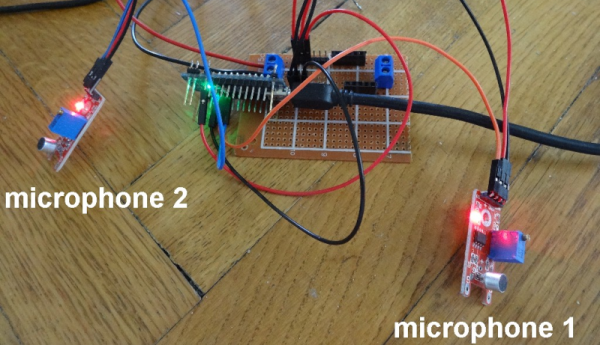
You don’t have two ears by accident. [Stoppi] has a great post about this, along with a video you can see below. (The text is in German, but that’s what translation is for.) The point to having two ears is that you receive audio information from slightly different angles and distances in each ear and your amazing brain can deduce a lot of spatial information from that data.

For the Arduino demonstration, cheap microphone boards take the place of your ears. A servo motor points to the direction of sound. This would be a good gimmick for a Halloween prop or a noise-sensitive security camera.

Continue reading “Binaural Hearing Modeled With An Arduino”

Tech In Plain Sight: Eyeglasses

Glasses wearers, try a little experiment. Take off your glasses and look at this page or, at least, at something you can’t see well without your glasses. Now imagine if you lived in a time where there was nothing to be done about your vision. If you wear contacts or you have good vision — perhaps you had surgery — then congratulations. But for most of us, vision changes with age are a fact of life. Even many young people need glasses or some other intervention to get good eyesight. At first glance, you might think eyeglasses are an obvious invention, but it turns out we didn’t get real glasses for quite some time and modern glasses are truly a piece of high tech that hides — quite literally — right in front of your face.

Continue reading “Tech In Plain Sight: Eyeglasses”

Pluto Spectrum Analyzer Uses Command Line

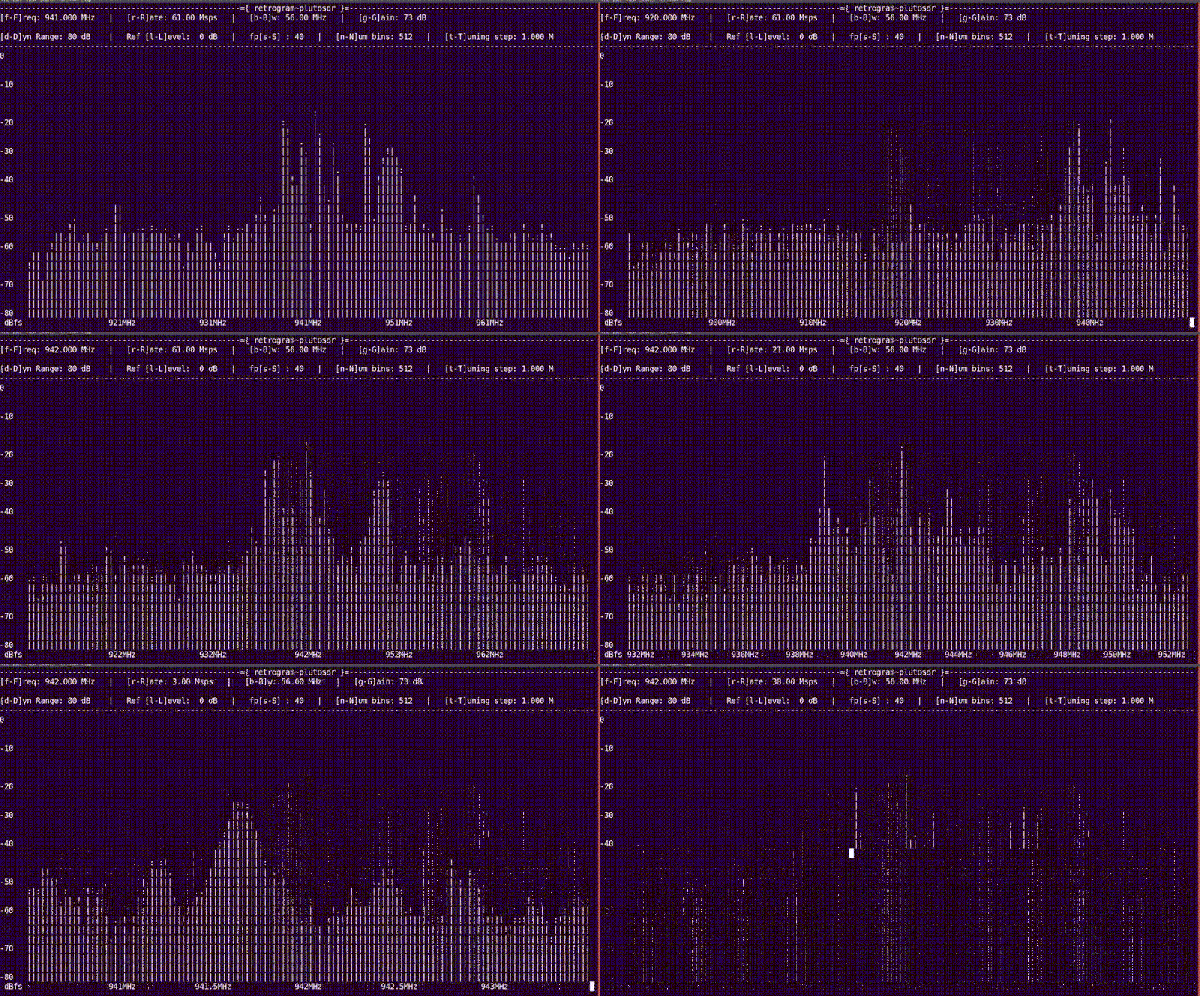
If you don’t care about shortwave frequencies, the PlutoSDR is a great deal. The device is supposed to be an evaluation board for Analog Device’s radio chips, but it does great as a software-defined radio that can receive and transmit and it even runs Linux internally. [SignalsEverywhere] shows how to use it as a spectrum analyzer that works from the command line in the video you can see below.

The software used is Retrogram. Despite the ASCII graphics, the program has many features. You can use simple keystrokes to change the center frequency, the sampling rate, the bandwidth, and more. You can run the software on a Linux host or compile a binary on the box or cross-compile using tools on the Raspberry Pi.

Continue reading “Pluto Spectrum Analyzer Uses Command Line”

Vacuum “Tube” Might Replace GPS One Day

GPS and similar satellite navigation systems changed everything. The modern generation is far less likely to have had to fold a service station map or ask someone for directions on the side of the road. But GPS isn’t perfect. You need to see the sky, for one thing. For another, an adversary could jam or take down your satellites. Even a natural disaster could temporarily or permanently knock out your access to the satellites.

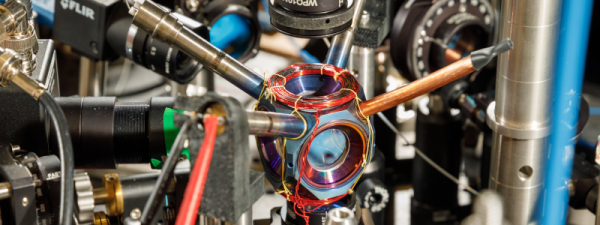
The people at Sandia National Labs worry about things like that and they want to replace GPS with quantum accelerometers and gyroscopes. The problem: those things take expensive and bulky vacuum systems and lasers. Sandia, however, has had a sealed device about the size of an avocado that weighs about a pound that could possibly do the job. Their goal is to see it work without maintenance for four more years.

This is no ordinary vacuum tube, though. It is made of titanium and sapphire. By itself, the device doesn’t do much of anything, but it shows that rubidium can be contained in a sealed chamber with no additional pumping. These quantum sensors aren’t anything new, but a tiny self-contained cold-atom sensor can pave the way for putting these sensors in vehicles like ships, aircraft, and ground vehicles. Submarines, which don’t usually have a clear shot at the sky without floating an antenna, are also candidates for the new technology.

A navigation system based on this technology uses a laser to cool the subject atoms and then measures their movements. This allows very precise determination of acceleration and rotation which allows for a more precise inertial navigation system.

If you need a refresher on how GPS works, we can explain it. If you think the idea of a module containing rubidium is far-fetched, don’t forget you can already get them for precision clock work.

Forget Radio! Transmitting With Neutrons

Throughout history, people have devised ways to send information across long distances. For centuries we relied on smoke signals, semaphores, and similar physical devices. Electricity changed everything. First the telegraph and then radio transformed communications. Now researchers at the University of Lancaster have demonstrated another way to send wireless data without using electromagnetic radiation. They’ve harnessed fast neutrons from californium-252 and modulated them with information with 100% success.

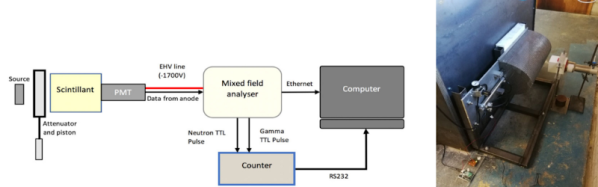
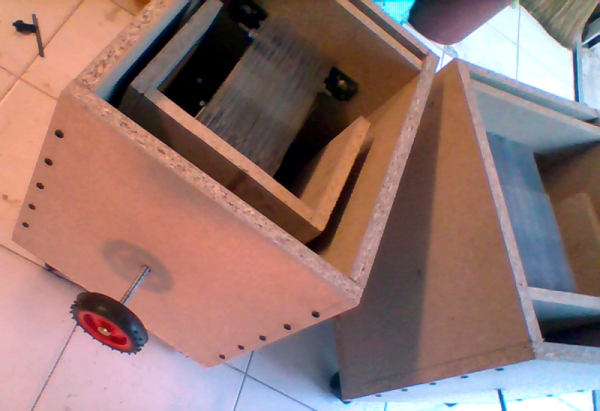
The setup was interesting. The radioactive material was encased in a cubic meter steel tank filled with water. A pneumatic system can move the material to one edge of the tank which allows fast neutrons to escape. A scintillating detector can pick up the increased neutron activity. It seems like it is akin to using what hams call CW and college professors call OOK (on off keying). You can do that with just about anything you can detect. A flashlight, knocking on wood, or — we suppose — neutrons.

We wondered what the practical application of this might be. The paper suggests that the technique could send data through metal containment structures like those of a nuclear reactor or, perhaps, a spacecraft where you don’t want anything unnecessarily breaching the containment. After all, neutrons cut through things that would stop a conventional radio wave cold.

It seems like you only have to prove you can detect something to make this work — it really doesn’t matter what it is you are detecting. It seems like it would be much harder to do more advanced types of modulation using neutrons. Maybe this is why we don’t hear aliens. They are all Morse code operators with neutron-based telegraphs.

Build Your Own HV Capacitors

Finding high voltage capacitors can be tricky. Sure, you can buy these capacitors, but they are often expensive and hard to find exactly what you want. [RachelAnne] needed some low-value variable capacitors that would work at 100 kV. So she made some.

Instead of fabricating the plates directly, these capacitors use laminations from a scrap power transformer. These usually have two types of plates, one of which looks like a letter “E” and the other just like a straight bar. For dielectric, the capacitors use common transparency film.

Continue reading “Build Your Own HV Capacitors”

Quantum computer

Scientific Honesty And Quantum Computing’s Latest Theoretical Hurdle

Quantum computers are really in their infancy. If you created a few logic gates with tubes back in the 1930s, it would be difficult to predict all the ways we would use computers today. However, you could probably guess where at least some of the problems would lie in the future. One of the things we are pretty sure will limit quantum computer development is error correction.

As far as we know, every quantum qubit we’ve come up with so far is very fragile and prone to random errors. That’s why every practical design today incorporates some sort of QEC — quantum error correction. Of course, error correction isn’t news. We use it all the time on unreliable storage media or communication channels and high-reliability memory. The problem is, you can’t directly clone a qubit (a quantum bit), so it is hard to use traditional error correction techniques with qubits.

After all, the whole point to a qubit is we don’t measure it until the end of the computation which, like Schrödinger’s cat, seals its fate. So if you were to “read” a bunch of qubits to form a checksum or a CRC, you’d destroy their quantum nature in the process making your computer not very useful. You can’t even copy a bit to use something like triple redundancy, either. There seems to be no way to practically duplicate a qubit.

Continue reading “Scientific Honesty And Quantum Computing’s Latest Theoretical Hurdle”