Broadband Across The Congo

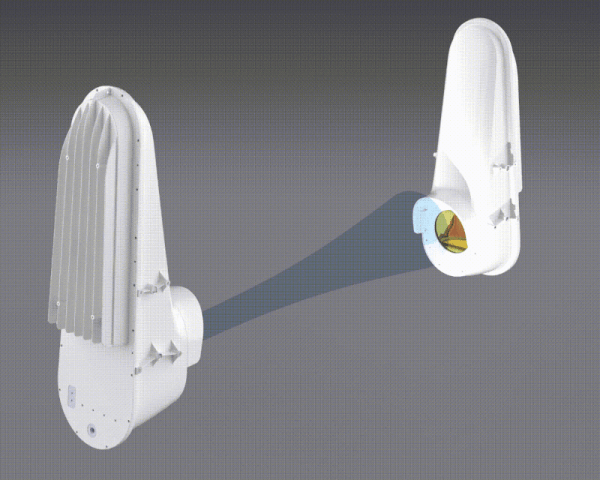
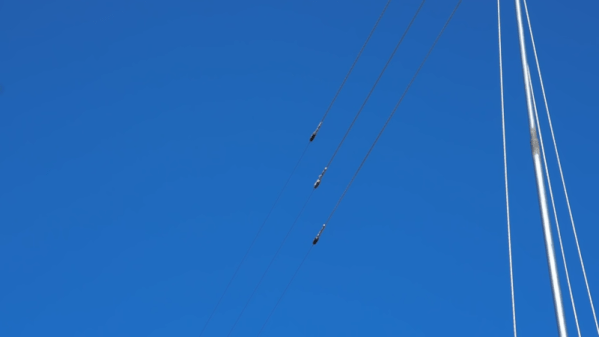
If you live in much of the world today, high-speed Internet is a solved problem. But there are still places where getting connected presents unique challenges. Alphabet, the company that formed from Google, details their experience piping an optical network across the Congo. The project derived from an earlier program — project Loon — that used balloons to replace traditional infrastructure.

Laying cables along the twisting and turning river raises costs significantly, so a wireless approach makes sense. Connecting Brazzaville to Kinshasa using optical techniques isn’t perfect — fog, birds, and other obstructions don’t help. They still managed to pipe 700 terabytes of data in 20 days with over 99.9% reliability.

Continue reading “Broadband Across The Congo”

Self Balancing Robot Needs A Little Work

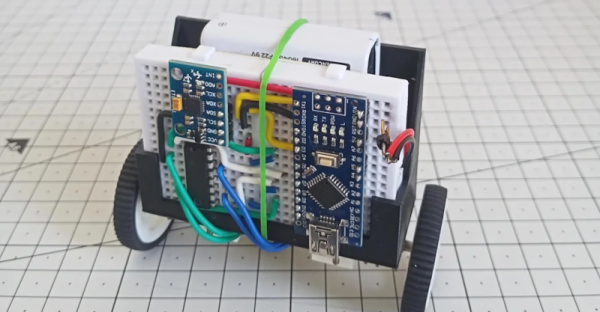
A self-balancing robot isn’t a new idea, but we liked the aesthetics of [Maker ATOM’s] build. The use of a breadboard and a printed bracket looks good, as you can see in the video, below.

Like most first-time projects, though, there were some lessons learned. The power supply needs a little work and the range of balance compliance didn’t meet expectations. But those problems are soluble and, as usual, you often learn more from working through issues like these.

Continue reading “Self Balancing Robot Needs A Little Work”

Line Following Robot Uses PID For Speed

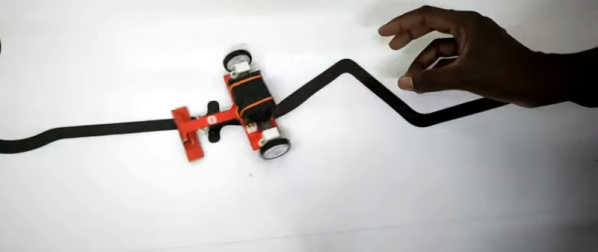
While a line-following robot may not be the newest project idea in the book, this one from [Edison Science] is a clean build using modern components and gets a good speed thanks to PID control feedback instead of the more traditional bang-bang control you see in low-end robots.

Of course, PIDs need tuning and that seems to be the weak link — you’ll have to experiment with the settings. The sensors also require calibration, but we bet both of those issues could be fixed pretty easily.

Continue reading “Line Following Robot Uses PID For Speed”

A CRT Monitor Restoration

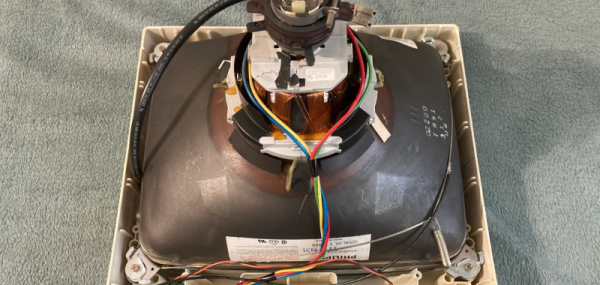
Nothing quite says vintage computer like a dedicated glass terminal. We enjoyed [Adam]’s restoration of an Acorn CRT monitor. The 14 inch display had a common problem: a defective power switch. Replacing a switch shouldn’t be a big deal, of course, but these old CRT monitors have exciting voltages inside and require special care.

One common issue, for example, is the fact that the old CRTs are really large capacitors and can hold a dangerous charge for some time. The easiest way to handle the potential problem is to make sure the device is unplugged, ground a screwdriver blade, and push the blade under the second anode cap. Most of the time, nothing happens. Once in a while, though, you’ll hear a loud pop and you just saved yourself a nasty shock.

Even though the actual repair was pretty mundane, the teardown was a great nostalgia trip and while we don’t want to give up our LCD, we do like the old glass. CRTs have a long history and came a long way before their last gasps. They even took a turn as mass storage devices.

A 3-6-9 Antenna Pulls In The Signals

Every time we see a dispatch from [Mr. Carlson], we imagine it is being beamed from his orbital station packed full of vintage radio gear. We are certain the reality is more terrestrial, but if we were going to build an orbiting lab, it might look like [Carlson’s] shack. In his latest communique, he shares his progress working on a high-performance 3-6-9 receiving antenna design and you can see it in the video below.

Although the antenna isn’t done, it is already working and looks impressive. There’s a lot of wire, so this probably isn’t a condo-friendly solution. The name of the antenna derives from the three wires, one tuned for 3 MHz, one for 6 MHz, and the other for 9 MHz.

Continue reading “A 3-6-9 Antenna Pulls In The Signals”

3D Printed Scooter Zips Around

Tooling around downtown on a personal electric vehicle is a lot of fun, but it is even better when you do like [James Dietz] and ride on your own 3D-printed electric scooter. As one of the entries for the Hackaday Prize, RepRaTS (Replicable Rapid prototyper Transportation System) has a goal of doing for scooters what the original RepRap project did for 3D printing: provide a user-friendly design base that you can extend, modify, and maintain. It doesn’t even require power tools to build, other than, of course, your 3D printer.

The design uses threaded rods and special plastic spacers made to hold a large load. The prototype is deliberately oversized with large hub motors, with the understanding that most builds will probably be smaller. As you can see in the video below, the scooter seems to go pretty fast and handles well.

Continue reading “3D Printed Scooter Zips Around”

Hacking The Wooly Mammoth

In case you can’t get enough Jurassic Park movies, you can look forward to plans a biotech company has to hybridize endangered Asian elephants with long-extinct wooly mammoths using gene splicing and other exotic techniques.

Expect a long movie, the team hopes to have calves after six years and we don’t think a theme park is in the making. The claim is that mammoth traits will help the elephants reclaim the tundra, but we can’t help but think it is just an excuse to reanimate an extinct animal. If you read popular press reports, there is some question if the ecological mission claimed by the company is realistic. However, we can’t deny it would be cool to bring an animal back from extinction — sort of.

We aren’t DNA wizards, so we only partially understand what’s being proposed. Apparently, skin cells from a modern elephant will serve as a base to accept extracted mammoth DNA. This might seem far-fetched but turns out the mammoth lived much more recently than we usually think. When they die in their natural deep-freeze environment, they are often well preserved.

Once the gene splicing is set up, a surrogate elephant will carry the embryo to term. The hope is that the improved breed would be able to further interbreed with natural species, although with the gestation and maturity times of elephants, this will be a very long time to bear fruit.

So how do you feel about it? Will we face a movie-level disaster? Will we get some lab curiosity creatures? Will it save the tundra? Let us know what you think in the comments.

DNA manipulation has gone from moon-shot-level tech to readily accessible in a very short amount of time. In particular, CRISPR, changes everything and is both exciting and scary on what it puts in the hands of nearly anyone.