Phase Coherent Beamforming SDR

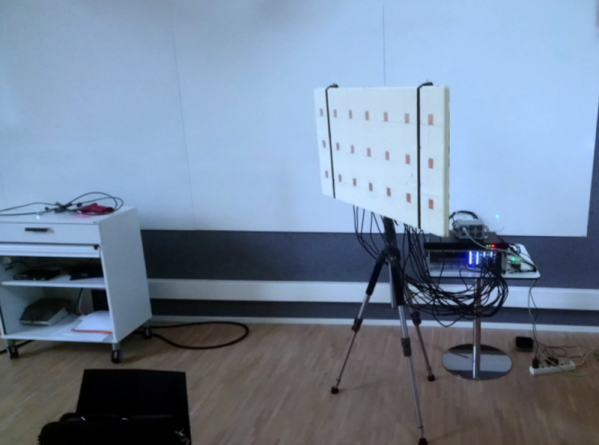
The days when software defined radio techniques were exotic are long gone, and we don’t miss them one bit. A case in point: [Laakso Mikko’s] research group has built a multichannel receiver using 21 cheap RTL-SDR dongles to create a phase coherent array. This is useful for everything from direction finding and passive radar or beam forming. The code is also available on GitHub.

The phase coherence does require the dongle’s tuner can turn off dithering. That means the code only works with dongles that use the R820T/2. The project modifies the dongles to use a common clock and a switchable reference noise generator.

Continue reading “Phase Coherent Beamforming SDR”

Better Mousetraps (or Screw Drives) Don’t Always Win

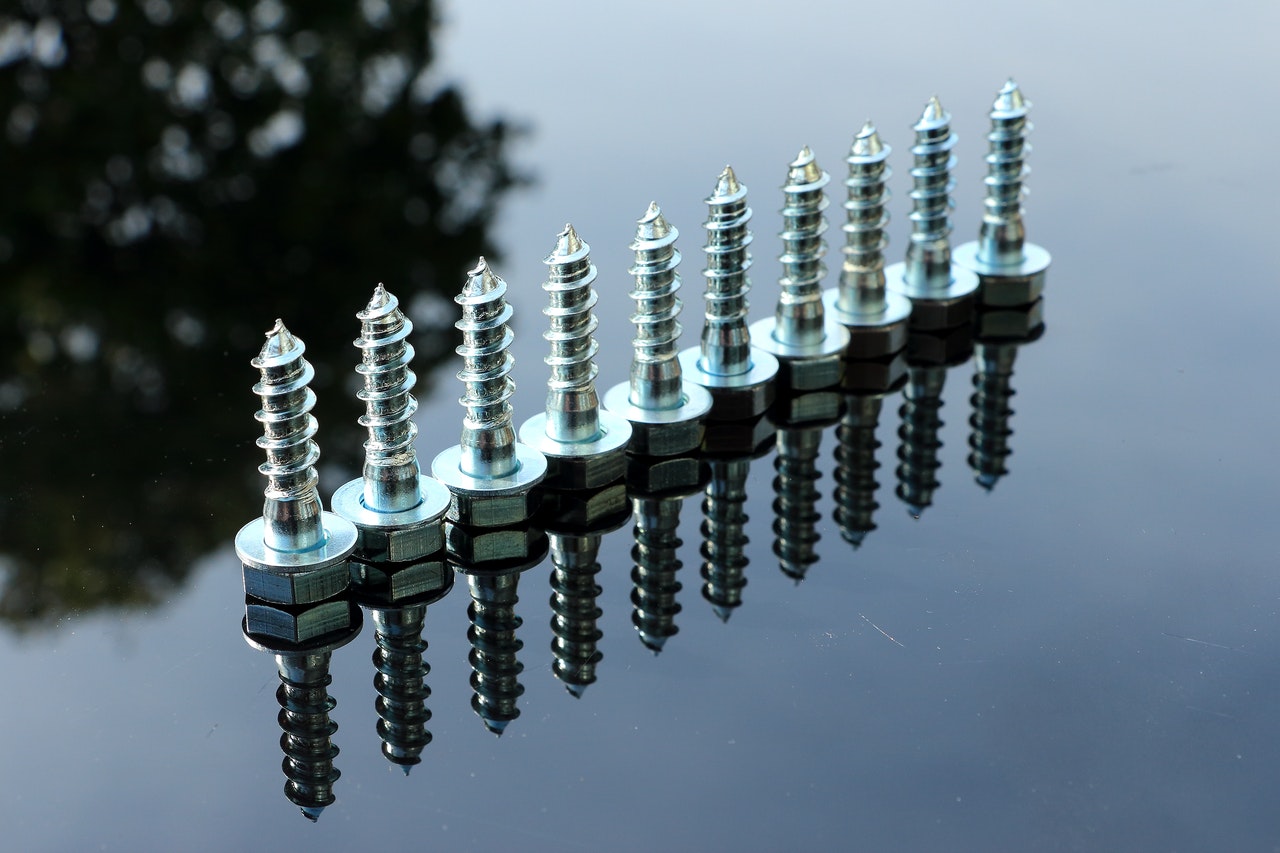
I’ve noticed, lately, that slotted screw heads are all but gone on new equipment. The only thing that I find remarkable about that is that it took so long. While it is true that slotted heads have been around for ages, better systems are both common and have been around for at least a century.

Check out those cool threads.

The reason slotted heads — technically known as the drive — are so common is probably because they are very easy to make. A hacksaw is sufficient for the job and there are other ways to get there, too. The only advantages I know of for the user is that you can easily clean a slotted drive and — possibly — use field expedient items like butter knives and quarters to turn the screw. I’ve heard people claim that it also is a feature that the screwdriver can pry things like paint can lids, but that’s a feature of the tool, not the screw drive.

The disadvantages, though, are significant. It is very hard to apply lots of torque to a slotted screw drive without camming it out or snapping the head off the screw. The screwdriver isn’t self-centering either, so applying force off-axis is common and contributes to the problem.

Continue reading “Better Mousetraps (or Screw Drives) Don’t Always Win”

Raspberry Pi Crammed Into Old Film Camera

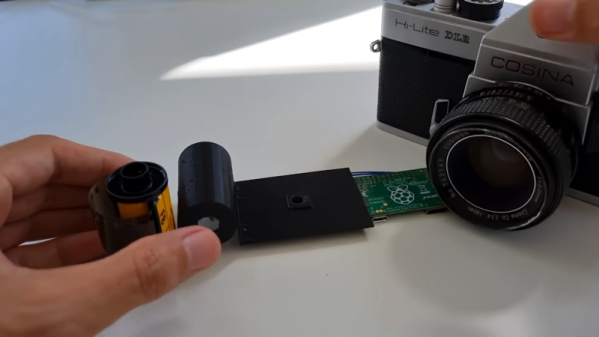
If you wanted an expensive film camera when you were a kid, you are in luck. Used film SLRs are super cheap now that everyone wants digital cameras. Of course, in reality, you want a digital camera, too. So do what [befinitiv] did. Make a film cartridge out of a Raspberry Pi that can convert your camera to digital. (Video, embedded below.)

In theory, this sounds like a genius idea. The practical aspect isn’t perfect, though. For one thing, the small image sensor used means that the camera is zoomed in quite a bit. Also, the shutter button isn’t integrated, so the shutter is open all the time. You may think that doesn’t matter, but don’t forget that the way an SLR works means if the shutter is open, there’s no viewfinder.

Continue reading “Raspberry Pi Crammed Into Old Film Camera”

3D Printing May Disprove Lord Kelvin

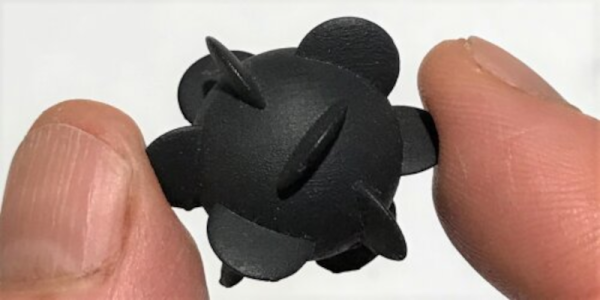
If you think 3D printing is only good for benchies, key chains, and printer parts, you might enjoy the paper by two physicists from Wesleyan University and the University of Gothenburg. Lord Kelvin — also known as William Thomson — hypothesized a shape known as an isotropic helicoid. As its name implies, the shape would look the same from any angle. Kelvin predicted that such a shape would spin as it sank in a liquid. Turns out, 3D printing proves it wrong. (The actual paywalled paper is available.)

It might seem strange that scientists are only now getting around to disproving a 150-year old hypothesis. However, the paper’s authors think Kelvin may have built the structures — he provided precise instructions — and simply dropped it when it proved incorrect.

Continue reading “3D Printing May Disprove Lord Kelvin”

Gladys West Modelled The Earth So That We Can Have GPS

The name Gladys West is probably unfamiliar, but she was part of creating something you probably use often enough: GPS. You wouldn’t think a child who grew up on a sharecropping farm would wind up as an influential mathematician, but perhaps watching her father work very hard for very little and her mother working for a tobacco company made her realize that she wanted more for herself. Early on, she decided that education was the way out. She made it all the way to the Naval Surface Warfare Center.

While she was there she changed the world with — no kidding — mathematics. While she didn’t single-handedly invent satellite navigation, her work was critical to the systems we take for granted today.

Continue reading “Gladys West Modelled The Earth So That We Can Have GPS”

Levitation By Sound

Levitating things with magnets is no great feat these days. We don’t see as many projects with sonic levitation. However, Japanese engineers have a new method to lift objects using sound. The process isn’t totally reliable yet, but it may lead to better methods in the future. You can see a video about the work below.

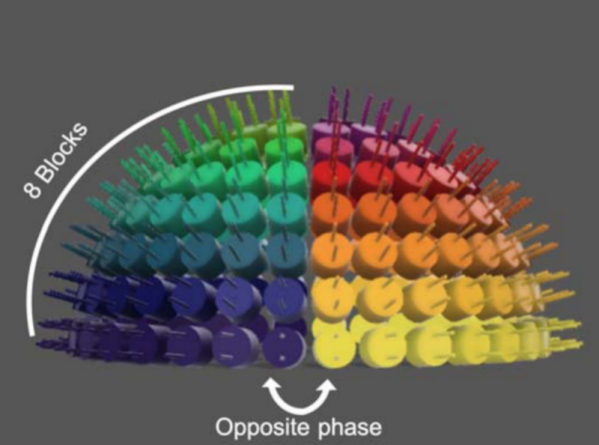
Manipulating very small items via laser or acoustics isn’t new. However, there are significant limitations to current methods. This new approach uses an array of hemispherical ultrasound transducers. By controlling the amplitude and phase of each transducer, an acoustic trap forms and can pick up a 3 mm polystyrene ball without direct contact.

Manipulating objects without contact interests us for a few reasons, not the least of which is circuit assembly. Robust technology of this type could also add new dimensions to additive manufacturing. Of course, it is a long way from a 3 mm polystyrene ball to a surface mount component. However, you have to admit watching components just float through the air to their final resting places would be something to see.

Not that we haven’t seen sonic levitation before. Magnetic levitation tends to be easier, but also has some limitations.

Continue reading “Levitation By Sound”

Hacking A PIC To Redefine A Microphone’s Transmit Frequency

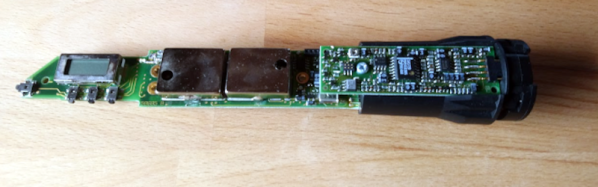
Software defined radio and widespread software-controlled PLL synthesis for RF has been a game changer. Things like the RTL-SDR can be any kind of radio you like on almost any frequency you like. But not every SDR or PLL system opens the configuration doors to you, the end user. That was the problem [vgnotepad] faced when trying to connect a Sennheiser wireless microphone to some receivers. They didn’t use the same frequencies, even though the transmitter was programmable. The solution to that is obvious — hack the transmitter!

The post is only part one of several parts and if you read to the end, you’ll learn a lot about what’s inside the device and how to crack it. Luckily, the device uses a PIC processor, so getting to the software wasn’t a big issue.

Continue reading “Hacking A PIC To Redefine A Microphone’s Transmit Frequency”