One of the many problems you run into when you work with SMD parts is trying to probe the little tiny pins. While we usually watch [Kerry Wong’s] videos for the oscilloscopes, it makes sense that he’d also be looking for probes. The video below shows some cheap probes from China that can clamp onto tiny QFP pins.
The probes look a little like tiny needles, but the needle part isn’t conductive. When you push them, very tiny and rigid clamps come out. On the other end is a pin that will take a female header or, of course, you could connect another test lead to that pin.
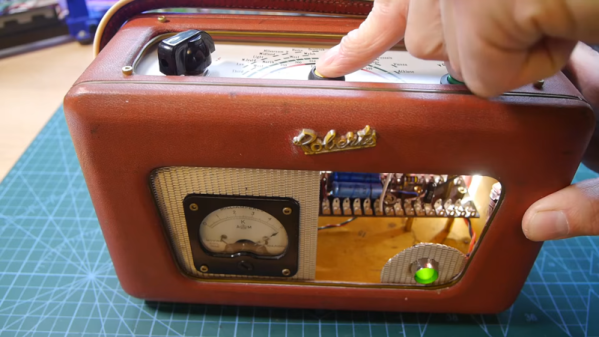
We’ve noticed a recent surge in people recreating old projects from vintage electronics magazines, and we approve. After all, parts and PCBs are easier to get than ever, so other than replacing obsolete parts, it is usually much easier to build these projects now compared to when they first appeared. The latest one we’ve noticed was [Anthony Francis-Jones’] build of the “Reactalyser” from a 1968 edition of Practical Electronics. Check it out in the video below.
You may ask yourself what a reactalyser could be. We did too. Our guess was extremely far off, since we thought it might have to do with reactance.
We liked the retro-look radio that [Anthony] used as a case. He changed the circuit to use an OC71 PNP transistor and replaced a mechanical part of the device with more electronics. So this isn’t a totally faithful reproduction, but it does keep the spirit of the device.
This might seem like an odd circuit for something that would be totally trivial to make with a microcontroller. However, these kinds of circuits were very common prior to simple-to-use computers.
If you like these old retro builds, check out some of the ones we’ve featured from [Bettina Neumryr]. We need a name for this activity. We’ll suggest retromagging. Give us your entry in the comments. Continue reading “Need A Reactalyser?”→
For some types of embedded systems — especially those that are safety-critical — it’s considered bad form to dynamically allocate memory during operation. While you can usually arrange for your own code to behave, it’s the libraries that get you. In particular, it is hard to find a TCP/IP stack that doesn’t allocate and free memory all over the place. Unless you’ve found wolfIP.
The library supports a BSD-like non-blocking socket API. It can act as an endpoint, but can also support multiple interfaces and forwarding if you were building something like a router. It doesn’t appear to be bare-bones either. In addition to the normal things you’d expect for IPv4, there’s also ICMP, IPSEC, ARP, DHCP, DNS, and HTTP with or without SSL TLS. There is also a FIPS-compliant implementation of WireGuard for VPN, although it is not directly compatible with standard WireGuard, only with other instances of itself (known as wolfGuard). There is a Linux kernel module for WolfGuard, though.
The code should be fairly easy to port, and it includes a binding for FreeRTOS already. If you’ve used wolfIP, let us know in the comments.
It is a running gag around here that whenever a project posts, someone will inevitably point out that it could have been done with a 555 timer IC. [Stephen Woodward] went the opposite way and built a simple thermostat using the ubiquitous chip.
To be fair, this isn’t some sophisticated PID controller — it’s basically a bang-bang controller. Since the device has a comparator and the circuits use a thermistor, it seems like a clever but simple idea on the surface. However, there are some neat tricks. For example, if you tie the 555 threshold pin to Vdd, then the trigger pin acts as an inverting analog comparator. Another nice feature: the setpoint depends on a resistance ratio, so there is no need for a precise input voltage reference.
A simple circuit change can switch the circuit to power a heater or a cooler. The chip can handle a surprising amount of power, but for some applications, you may need some output drive circuitry. The simple circuit even has hysteresis, which you can set with a different resistor. Pretty impressive for a cheap chip, two resistors, a thermistor, and a battery.
A few years back a company had an ad campaign with a discouraged caveman who was angry because the company claimed their website was “so easy, even a caveman could do it.” Maybe that inspired [JuliusBrussee] to create caveman, a tool for reducing costs when using Claude Code.
The trick is that Claude, like other LLMs, operates on tokens. Tokens aren’t quite words, but they are essentially words or word fragments. Most LLM plans also charge you by the token. So fewer tokens means lower costs. However, LLMs can be quite verbose, unless you make them talk like a caveman.
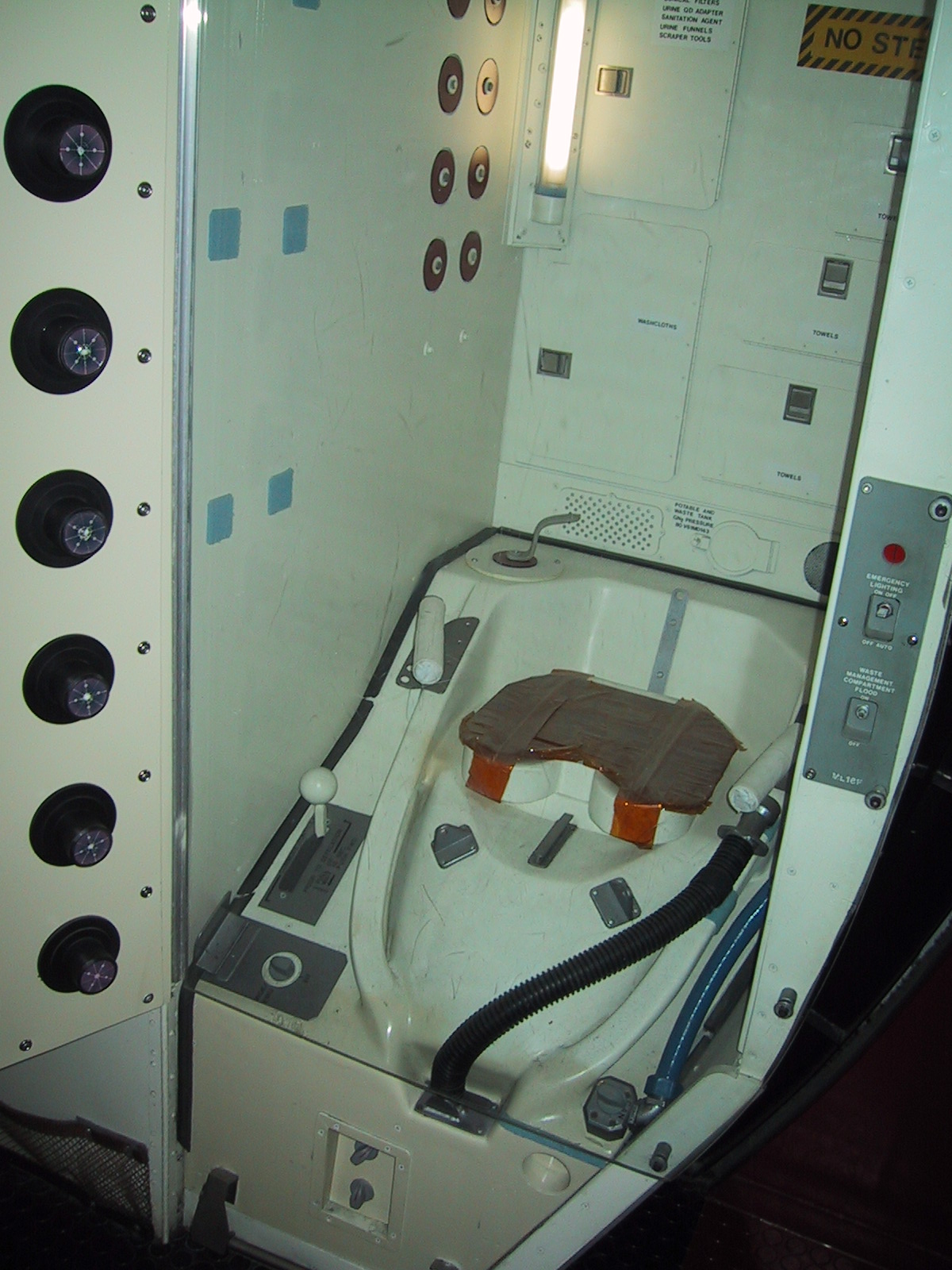
The news is full of reports from the moon-bound Integrity, otherwise known as Artemis II. Mostly, the news is good, but there has been one “Houston, we have a problem…” moment. The space toilet, otherwise known as the Universal Waste Management System or UWMS is making a burning smell while in use. While we would love to be astronauts, we really don’t want to go ten days without using the can, and it made us wonder how, exactly, the astronauts answered the call of nature.
The Old Days
Back in the Apollo-era, going to the bathroom was a messy business. The capsule wasn’t that big, and there were no women on board. So you simply strapped an adhesive-rimmed bag or tube to yourself and answered nature’s call with your two closest coworkers right there.
Space Shuttle facilities (by [Svobodat] CC BY-SA 3.0)To add insult to injury, the “#2 bags” needed some packet mixed in to keep it from going bad in the bag before it could return to Earth for — no kidding — scientific study.
The system was far from perfect. Apollo 8 and Apollo 10 both had to do some housekeeping due to leaky bags.
Astronaut Ken Mattingly reportedly said, “Man, one of the feats of my existence the other day was, in 42 minutes, I strapped on a bag, went out of both ends, and ate lunch…. I used to want to be the first man to Mars. This has convinced me that, if we got to go on Apollo, I ain’t interested.”
Still, it was better than the first Mercury launch, where Alan Shepard famously relieved himself in his spacesuit while sitting on the pad for over eight hours. Later missions used hoses.
Things got slightly better with Skylab, where there was more room. The Shuttle also had a toilet. You got a curtain for privacy, but you couldn’t go #1 and #2 at the same time. Also, apparently, the contraptions were not easily workable for females.
We miss the old Heathkit. You could build equipment that rivaled or even surpassed commercial devices. The cost was usually reasonable and, even if you could get by with less, the satisfaction of using gear you built yourself was worth a lot. Not to mention the knowledge you’d gain and your confidence in troubleshooting should the need arise. So we were jealous of [RCD66] when he found a Heathkit AJ-43C stereo tuner in the recycle bin.
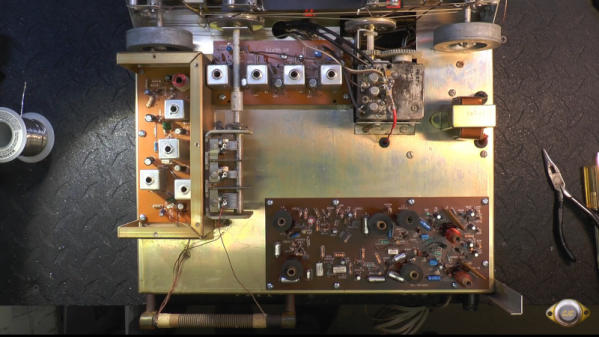
As you can see in the video below, it needed a lot of love to get back to its former self. The device dates from around 1965, when the kit cost $130. In 1965, that was a lot of money. Back then, that would have bought you about four ounces of gold and would have been a great down payment on a $1,500 VW bug.
Things were a bit of a mess, so he removed all the parts and replaced most of them. Unsurprisingly, the electrolytic capacitors all tested bad. The transistors were all germanium, but if they tested good, his plan was to reuse them. There were several PCBs inside, and he made some changes, such as replacing the zener diode power supply with something more modern.
How did it sound? Watch the video and see for yourself. We usually like troubleshooting specific problems on gear like this, but in this case, it was probably smart to just do a total rework.