Historical Hackers: The Hacker Of Cragside, Circa 1870

Imagine visiting a home that was off the grid, using hydroelectric power to run lights, a dishwasher, a vacuum cleaner, and a washing machine. There’s a system for watering the plants and an intercom between rooms. Not really a big deal, right? This is the twenty first century, after all.

Armstrong with a 7 inch gun of his design
Image of Armstrong and his 7-inch gun from an 1887 edition of Illustrated London News

But then imagine you’ve exited your time machine to find this house not in the present day, but in the year 1870. Suddenly things become quite a bit more impressive, and it is all thanks to a British electrical hacker named William Armstrong who built a house known as Cragside. Even if you’ve never been to Northumberland, Cragside might look familiar. It’s appeared in several TV shows, but — perhaps most notably — played the part of Lockwood Manor in the movie Jurassic World: Fallen Kingdom.

Armstrong was a lawyer by training but dabbled in science including hydraulics and electricity — a hot topic in the early 1800s. He finally abandoned his law practice to form W. G. Armstrong and Company, known for producing Armstrong guns, which were breech-loading artillery pieces ranging from 2.5 inch bores up to 7 inches. By 1859, he was knighted and became the principal supplier of armaments to both the Army and the Navy.

Continue reading “Historical Hackers: The Hacker Of Cragside, Circa 1870” →
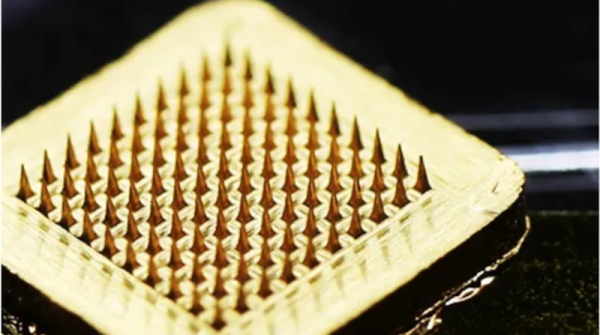
Brain electrodes

Brain Interface Uses Tiny Needles

We often look at news out of the research community and think, “we could build that.” But the latest brain-machine interface from an international team including the Georgia Institute of Technology actually scares us. It uses an array of tiny needles that penetrate the skin but remain too small for your nerves to detect. Right. We assume they need to be sterile but either way, we don’t really want to build a pin grid array to attach to your brain.

It seems the soft device is comfortable and since it is very lightweight it doesn’t suffer from noise if the user blinks or otherwise moves. Looking at the picture of the electrodes, they look awfully pointy, but we assume that’s magnified quite a few times, since the post mentions they are not visible to the naked eye.

Continue reading “Brain Interface Uses Tiny Needles” →

Original Commodore 64 ad

Love Letter To Commodore 64 Ads Takes Us Down Memory Lane

If you shop, you can get a pretty nice laptop for around $595. Maybe not the top of the line, but still pretty nice with multiple cores, a large hard drive, and a big color screen. But in the 1980s, the Commodore 64 bragged that for $595, they’d give you more than anyone else at twice the price. After all, 64K of RAM! Graphics with 16 whole colors! [Lunduke] dug up a bunch of these ads and has some thoughts on them and we really enjoyed the trip down memory lane.

If you look at other contemporary computers, they did cost more although sometimes it wasn’t a fair comparison. The TRS80 III, for example, cost $999 with 16K of RAM but it also had its own monitor — not color, though.

It is amazing to think that we’ve gone from where 16K was a reasonable amount of RAM in a personal computer to where it isn’t even worth having a flash drive with that capacity. We also can’t help but note that while computing power per dollar is through the roof now, computers aren’t actually that much more fun. We enjoyed interfacing a teletype to our 1802 ELF and working out a 300 baud modem for our TRS-80. Sure, we didn’t have Skyrim or HD movies, but we still have fun.

If you want to relive these exciting days, it is easy enough to build your own C64 with varying degrees of fidelity. It is trivial to emulate the thing on any kind of modern hardware, too.

Review: Hands On With The Swarm Satellite Network Eval Kit

If you have devices out in the field, you probably want to connect with them. There was a time when that was hard to do, requiring telephone wires or specialized radio gear. Now cellular data is prevalent, but even cellular isn’t everywhere. If you have the cash, you can pay a number of satellite companies to carry your data, but that’s generally pricey and has its own challenges.

The age of satellite constellations is changing that. Of course everyone by now has heard of Starlink which is offering satellite internet via numerous satellites that are much smaller than traditional telecom satellites. But they’re not the only came in town.

A company called Swarm has put up a constellation of 1/4U cube satellites in low orbits. They offer a ground station that uses an omni antenna and a subscription access program for small amounts of data. They sent us a unit to review, and while I haven’t used the system in a real project yet, the kit was pretty impressive.

About Swarm

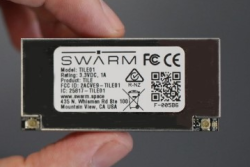
Swarm tile device
The Swarm Tile is made to mount on a PCB

The Swarm “tile” is a tiny radio that can talk bi-directionally with small satellites in low Earth orbit. The little unit is made to mount on a PCB, can control its power consumption, and talks to your system via a standard 3.3V UART connection. It does, however, require a small antenna and maybe even a smaller antenna for its GPS module. Small, in this case, is about a mid-size handy talkie antenna. There is a half-wave antenna that doesn’t need a ground plane and a shorter antenna that does need a ground plane.

Continue reading “Review: Hands On With The Swarm Satellite Network Eval Kit” →

Test For 3D Printer Runaway

A few 3D printers have had a deserved reputation for bursting into flames. Most — but apparently not all — printers these days has firmware that will detect common problems that can lead to a fire hazard. If you program your own firmware, you can check to see if you have the protection on, but what if you have a printer of unknown provenance? [Thomas] shows you how to check for a safe printer. Also check out his video, embedded below.

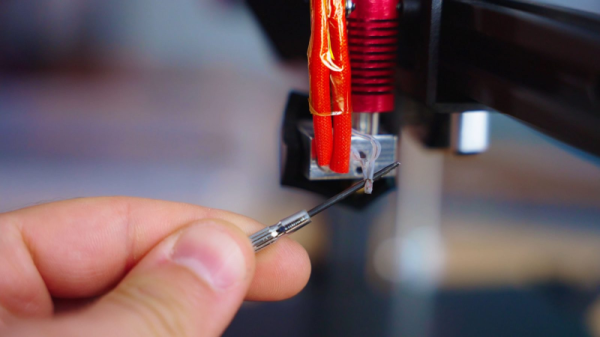
The idea is to fake the kind of failures that will cause a problem. Primarily, you want to have the heaters turned on while the thermistor isn’t reading correctly. If the thermistor is stuck reading low or is reading ambient, then it is possible to just drive the heating element to get hotter and hotter. This won’t always lead to a fire, but it could lead to noxious fumes.

Continue reading “Test For 3D Printer Runaway” →

Linux Fu: User Space File Systems — Now For Windows, Too!

One of the nice things about the Unix philosophy that Linux inherited is that the filesystem is very modular. That’s good, too, because a typical system might want a choice of filesystems like ext4, reiserfs, btrfs, and even network systems like nfs. Besides that, there are fake file systems like /sys and /dev that help Linux make everything look like a file. The downside is that building a filesystem required changing the kernel or, at least, writing a loadable module. That’s not as hard as it sounds, but it is a little more difficult than writing a normal program. Then came FUSE — file system in user space. This is a single file system module that allows you to create new file systems by writing ordinary code.

Continue reading “Linux Fu: User Space File Systems — Now For Windows, Too!” →

Printing Ceramics Made Easier

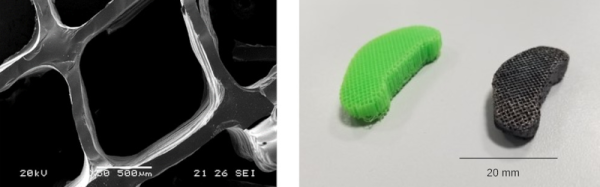
Creating things with ceramics is nothing new — people have done it for centuries. There are ways to 3D print ceramics, too. Well, you typically 3D print the wet ceramic and then fire it in a kiln. However, recent research is proposing a new way to produce 3D printed ceramics. The idea is to print using TPU which is infused with polysilazane, a preceramic polymer. Then the resulting print is fired to create the final ceramic product.

The process relies on a specific type of infill to create small channels inside the print to assist in the update of the polysilazane. The printer was a garden-variety Lulzbot TAZ 6 with ordinary 0.15mm and 0.25mm nozzles.

Continue reading “Printing Ceramics Made Easier” →