Mastering Ball Screws

Most inexpensive 3D printers use a type of lead screw to move some part of the printer in the vertical direction. A motor turns a threaded rod and that causes a nut to go up or down. The printer part rides on the nut. This works well, but it is slower than other drive mechanisms (which is why you don’t often see them on the horizontal parts of a printer). Some cheap printers use common threaded rod, which is convenient, but prone to bad behavior since the rods are not always straight, the threads are subject to backlash, and the tolerances are not always the best.

More sophisticated printers use ACME threaded rod or trapezoidal threaded rods. These are made for this type of service and have thread designs that minimize things like backlash. They typically are made to more exacting standards, too. Making the nut softer than the rod (for example, brass or Delrin) is another common optimization.

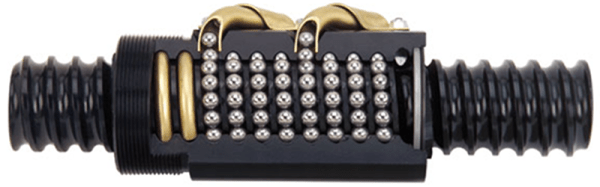
However, when lead screws aren’t good enough, mechanical designers turn to ball screws. In principle, these are very similar to lead screws but instead of a nut, there is a race containing ball bearings that moves up and down the screw. The ball bearings lead to less friction.

Misumi recently posted a few blog articles about ball screws. Some of the information is basic, but it also covers preloading and friction. Plus they are promising future articles to expand on the topic. If you prefer to watch a video, you might enjoy the one below.

Continue reading “Mastering Ball Screws”

Surf’s Up! Virtually

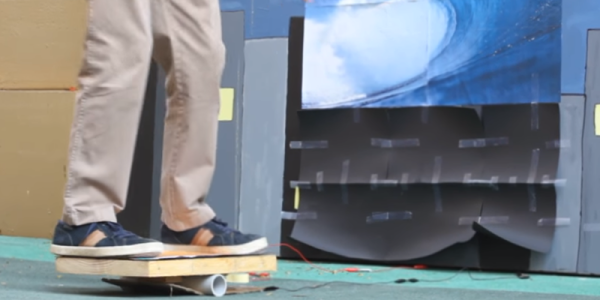
While it may or may not be true that if everybody had an ocean they’d be surfing like California, it is true that with a water pump, some copper tape, and a few scraps you can make a surfing simulator that sprays you if you don’t keep your balance.

You can see the simple device in operation in the video below. We presume [Adi_10] actually surfs, but we can’t comment on the realism of the simulator. There’s no computer. Just a switch made from the base and the balance board.

Continue reading “Surf’s Up! Virtually”

New Lithium Battery Technology Takes Guts

Researchers have built a prototype lithium-sulphur battery that — when perfected — could have up to five times the energy density of current lithium-ion devices. Researchers in the UK and China drew inspiration from intestines to overcome problems in the battery construction.

In your intestine, small hair-like structures called villi increase the surface area that your body uses to absorb nutrients from food. In the new lithium-sulphur battery, researchers used tiny zinc oxide wires to form a layer of material with a villi-like structure. These villi cover one electrode and can trap fragments of the active material when they break off, allowing them to continue participating in the electrochemical reaction that produces electricity.

Lithium-sulphur batteries aren’t new (in fact, they were used in 2008 in a solar-powered plane that broke several records), but this new technique may make them more practical. You can see a video about ordinary lithium-sulphur batteries below along with more on how this research improves the state of the art.

Continue reading “New Lithium Battery Technology Takes Guts”

SSH Enters The Mosh Pit

With so many systems depending on Linux, the secure shell SSH has become a staple for many developers. If you are connected to your Raspberry Pi via a cable or a wireless router a few feet away, SSH can provide you with an encrypted connection straight to the box. However, if you have a system out in a swamp somewhere with intermittent slow network access, SSH can be a real pain. When your IP address can change (for example, roaming on a cellular network), SSH has problems, too.

To combat these and other problems, you might consider an open source program called Mosh (mobile shell). There’s two parts to Mosh. One part works as a server while the other is the client application. Neither of these require root access. You can see a video about Mosh below.

Continue reading “SSH Enters The Mosh Pit”

Handheld Sudoku (Assuming You Have Large Hands)

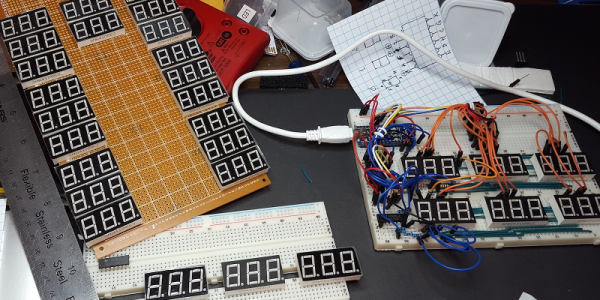
[Hari Waguna] wanted to build a computerized Sudoku game. Ordinarily, that wouldn’t be a big deal. You can buy one, of course, but what fun is that? There’s plenty of apps for phones, but again, not much of a challenge. If you want to preserve your hacker cred, you’d use a CPU board like an Arduino or a Raspberry Pi with an LCD screen, right? But if you want to grow your hacker cred, you’d follow [Hari’s] lead and use 81 seven-segment displays and a membrane keyboard.

Driving that many displays takes some doing (in this case shift registers). [Hari] uses some other tricks, like reading the keyboard using a single pin (and a resistor network). He’s made several videos about the project, including the one below.

Continue reading “Handheld Sudoku (Assuming You Have Large Hands)”

By The Glow Of The CRT

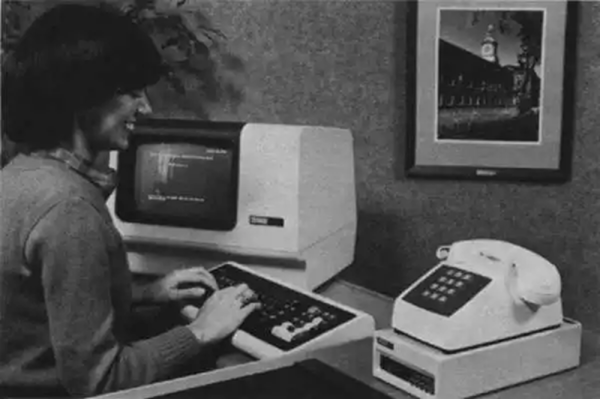
If you are a certain age, you probably remember writing software (or playing Adventure) bathed in an amber or green light from an old CRT terminal. If you are even older, you might have found it way better than punching cards, but that’s another story. [Tobi] wanted to relive those days (well, sounds like he is too young to have lived them to start with) so he hooked up a VT220 terminal to his Linux box.

This isn’t that surprising. Linux’s forefather, Unix, expected these kind of terminals (or a hard copy TeleType) and all the trappings for working with a glass terminal are still in there. You do have to deal with a few configuration items that [Tobi] works through.

In fact, it appears that he wrote his blog post using vi on that very VT220 using a text-based Web browser to research the links. He has a lot of resources for connecting a terminal of any sort (or even a terminal emulator) to a Linux computer.

There’s been a lot of interest in old terminals lately. You see a lot of old VT100s lying around. I personally have an ADDS Regent 100 that occasionally connects to several of my computers. You can see it in the video below.

Continue reading “By The Glow Of The CRT”

Litter Basket Automation

Sometimes the technology part of a project isn’t the hard part. It is having an idea for something both useful and doable. Sure, a robot butler that would do your cleaning and laundry would be useful, but might be out of reach for most of us. On the other hand, there’s only so many use cases for another blinking LED.

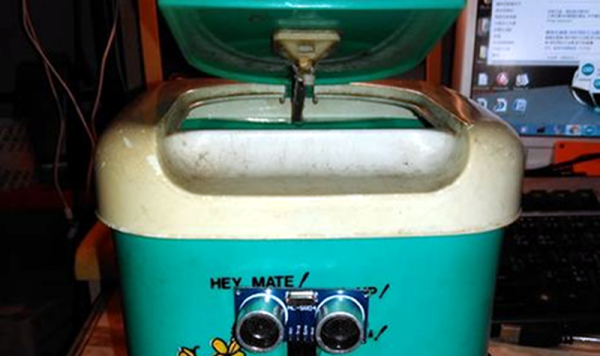
[Martinhui] knows how to use an ultrasonic sensor with an Arduino. Driving a motor isn’t that hard, either. The question is: what do you do with that? [Martin’s] answer: Automate a trash can. You can see a video of the result, below.

Continue reading “Litter Basket Automation”