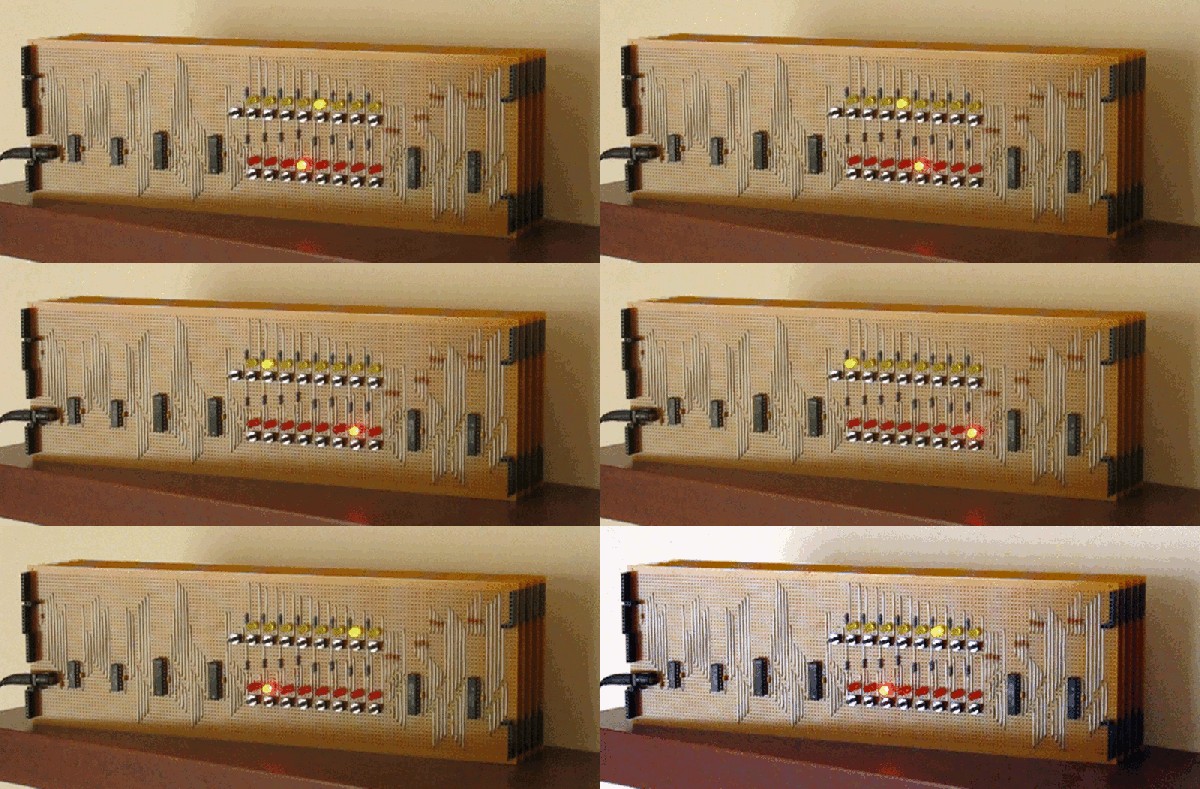
How many instructions does [agp.cooper’s] computer have? Just one. How many strip boards does it use? Apparently, 41 five 41-track boards. While being one shy from the answer to life, it is still a lot of boards for a single instruction. The high board count is due to the use of 1970’s vintage ICs including TTL parts, 2114 RAM chips, and 74S571 PROMs.
There are several different architectures for single instruction computers and [agp’s] uses what is technically at TTA (transfer-triggered architecture). That is, the one instruction is a move and the destination or source of the move determines the operation. For example, the Wierd CPU (that’s the name of it) has a P and Q register. If you load those registers and then the ADD register will contain the sum of the two numbers.
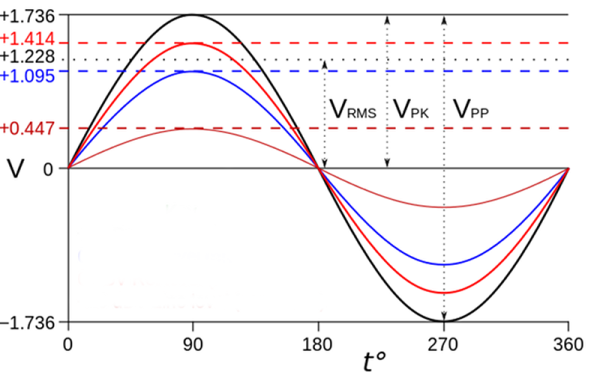
The first time I was in school for electrical engineering (long story), I had a professor who had never worked in the industry. I was in her class and the topic of the day was measuring AC waveforms. We got to see some sine waves centered on zero volts and were taught that the peak voltage was the magnitude of the voltage above zero. The peak to peak was the voltage from–surprise–the top peak to the bottom peak, which was double the peak voltage. Then there was root-mean-square (RMS) voltage. For those nice sine waves, you took the peak voltage and divided by the square root of two, 1.414 or so.
You know that kid in the front of the class? They were in your class, too. Always raising their hand with some question. That kid raised his hand and asked the simple question: why do we care about RMS voltage? I was stunned when I heard the professor answer, “I think it is because it is so easy to divide by the square root of two.”
If you are like us, you’ll read a bit more and smack your forehead. Amazon recently filed a patent. That isn’t really news, per se–they file lots of patents, including ones that cover clicking on a button to order something and taking pictures against white backgrounds (in a very specific way). However, this patent is not only a good idea, but one we were surprised didn’t arise out of the hacker community.
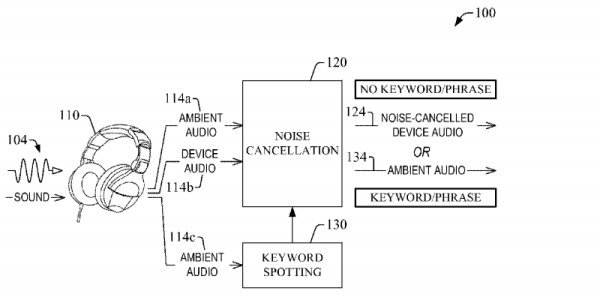
There can’t be an invention without a problem and the problem this one solves is a common one: While wearing noise cancelling headphones, you can’t hear things that you want to hear (like someone coming up behind you). The Amazon solution? Let the headphones monitor for programmable keywords and turn off noise cancellation in response to those words. We wonder if you could have a more sophisticated digital signal processor look for other cues like a car horn, a siren, or a scream.
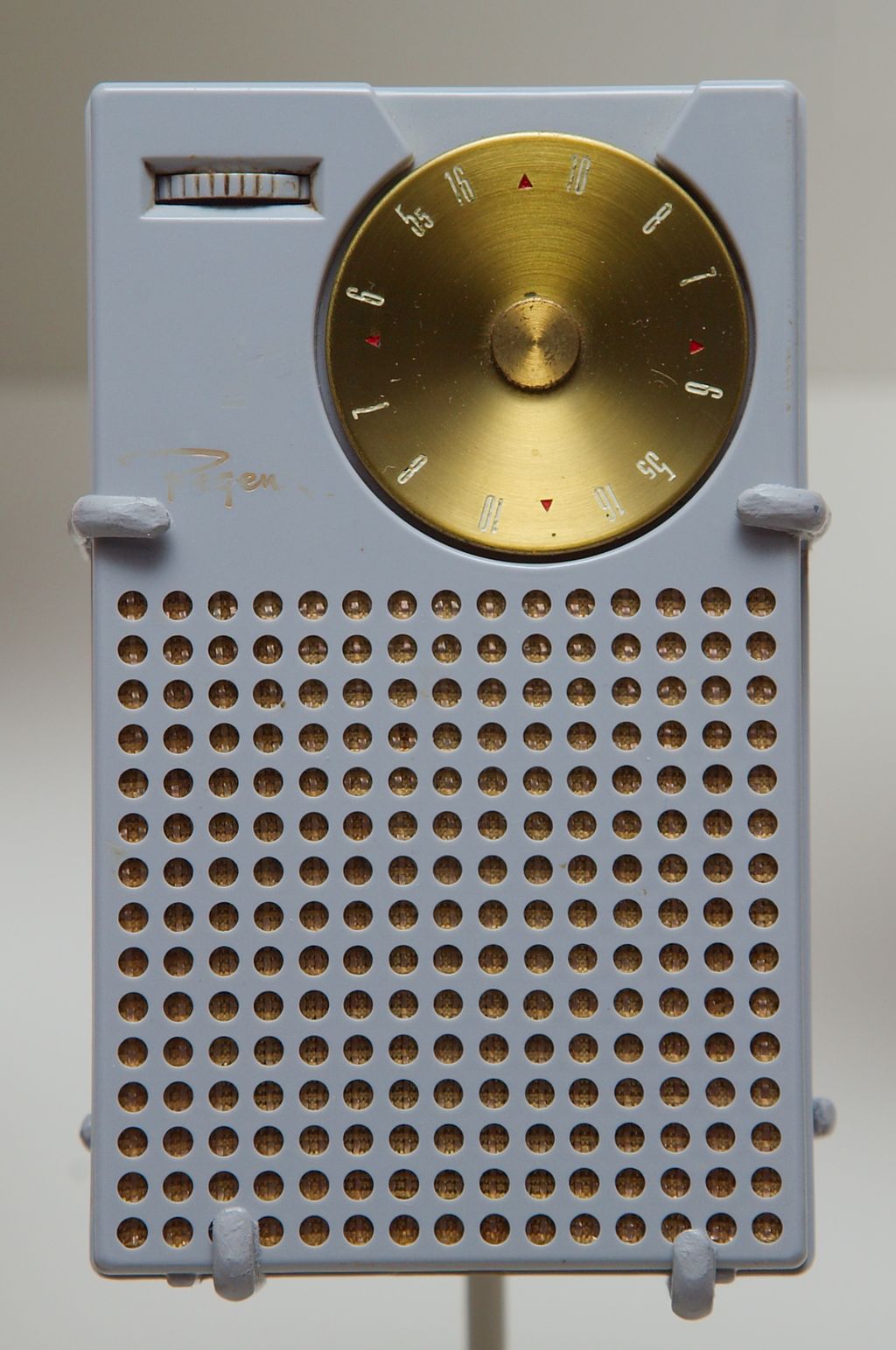
Transistors have come a long way. Like everything else electronic, they’ve become both better and cheaper. According to a recent IEEE article, a transistor cost about $8 in today’s money back in the 1960’s. Consider the Regency TR-1, the first transistor radio from TI and IDEA. In late 1954, the four-transistor device went on sale for $49.95. That doesn’t sound like much until you realize that in 1954, this was equivalent to about $441 (a new car cost about $1,700 and a copy of life magazine cost 20 cents). Even at that price, they sold about 150,000 radios.
Part of the reason the transistors cost so much was that production costs were high. But another reason is that yields were poor. In some cases, 4 out of 5 of the devices were not usable. The transistors were not that good even when they did work. The first transistors were germanium which has high leakage and worse thermal properties than silicon.
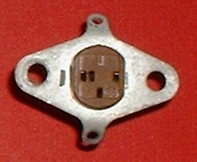
Early transistors were subject to damage from soldering, so it was common to use an alligator clip or a specific heat sink clip to prevent heat from reaching the transistor during construction. Some gear even used sockets which also allowed the quick substitution of devices, just like the tubes they replaced.
When the economics of transistors changed, it made a lot of things practical. For example, a common piece of gear used to be a transistor tester, like the Heathkit IT-121 in the video below. If you pulled an $8 part out of a socket, you’d want to test it before you spent more money on a replacement. Of course, if you had a curve tracer, that was even better because you could measure the device parameters which were probably more subject to change than a modern device.
Of course, germanium to silicon is only one improvement made over the years. The FET is a fundamentally different kind of transistor that has many desirable properties and, of course, integrating hundreds or even thousands of transistors on one integrated circuit revolutionized electronics of all types. Transistors got better. Parameters become less variable and yields increased. Maximum frequency rises and power handling capacity increases. Devices just keep getting better. And cheaper.
A Brief History of Transistors
The path from vacuum tube to the Regency TR-1 was a twisted one. Everyone knew the disadvantages of tubes: fragile, power hungry, and physically large, although smaller and lower-power tubes would start to appear towards the end of their reign. In 1925 a Canadian physicist patented a FET but failed to publicize it. Beyond that, mass production of semiconductor material was unknown at the time. A German inventor patented a similar device in 1934 that didn’t take off, either.
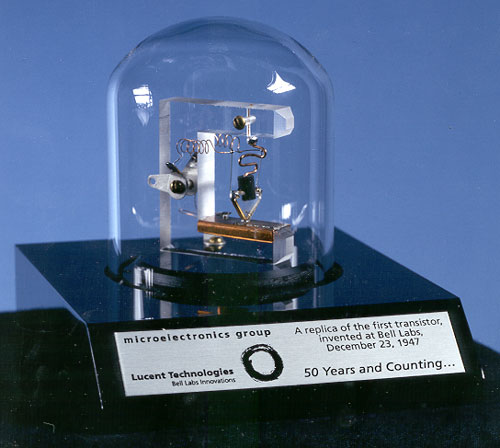
Replica of the First Transistor
Bell labs researchers worked with germanium and actually understood how to make “point contact” transistors and FETs in 1947. However, Bell’s lawyers found the earlier patents and elected to pursue the conventional transistor patent that would lead to the inventors (John Bardeen, Walter Brattain, and William Shockley) winning the Nobel prize in 1956.
Two Germans working for a Westinghouse subsidiary in Paris independently developed a point contact transistor in 1948. It would be 1954 before silicon transistors became practical. The MOSFET didn’t appear until 1959.
Of course, even these major milestones are subject to incremental improvements. The V channel for MOSFETs, for example, opened the door for FETs to be true power devices, able to switch currents required for motors and other high current devices.
If you ever wanted to make an occasion festive with bubbles, [Sandeep_UNO] may have the project for you. As you can see in the video below (and, yes, it should have the phone rotated and it doesn’t), his Arduino uses a servo motor to dip a bubble wand into soap solution and then pulls it in front of a fan. The entire operation repeats over and over again.
There’s not a lot of detail and no code that we could find, but honestly, if you know how to drive a servo motor from an Arduino, the rest is pretty easy to figure out. Look closely at the motion of the robot. What is often accomplished with a spinning wheel of bubble wands and a constant fan becomes much more interesting when applied intermittently. The lazy cadence is what you expect to see from human operation and that adds something to the effect.
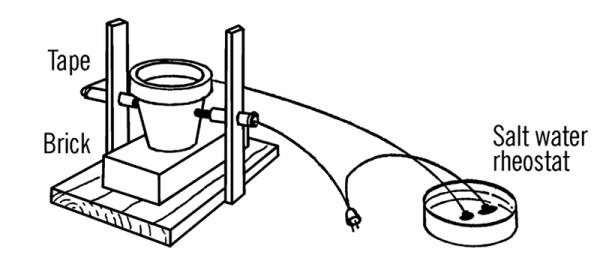
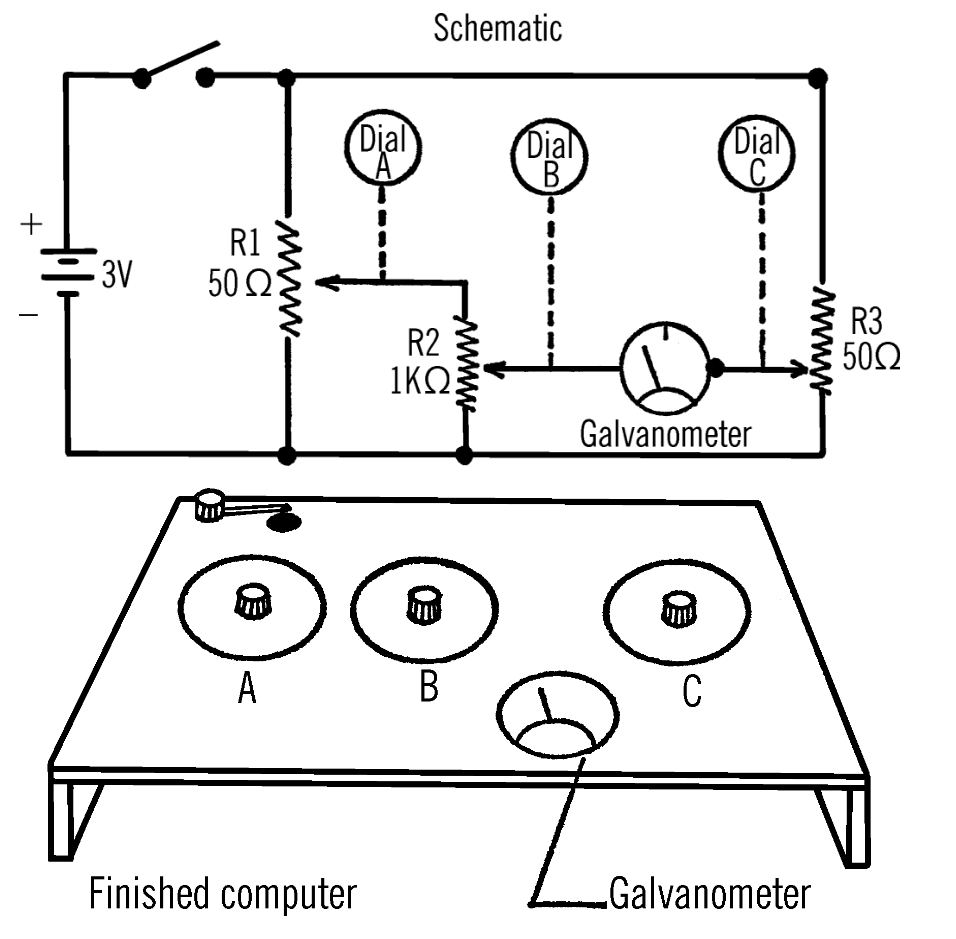
Like a lot of engineers, I spent a lot of time in libraries when I was a kid. There were certain books you’d check out over and over again. One of those was [Raymond Barrett’s] Build-It-Yourself Science Laboratory. That book really captured my imagination with plans for things as simple as a funnel to as complex as an arc furnace (I actually built that one; see diagram above), a cloud chamber, and an analog computer (see below). That book was from 1963 and that did present a few unique challenges when I read it in the 1970’s. It presents even more difficulty if you try to reproduce some of the projects in it today.
The world of 1963 was not as safe as our world today. Kids rode bicycles with no protective gear. Dentists gave kids mercury to play with. You could eat a little paint or have asbestos in your ceiling, and no one really worried about it.
That means some of the gear and experiments Barrett covers are difficult to recreate today or are just plain dangerous. For example, he suggests getting sulphuric acid at the drugstore. I don’t suggest you call your local Walgreens and ask them for it. The arc furnace — which could melt a nail, as I found out first hand — used a salt water rheostat which was basically an AC power cord with one conductor cut and passed through and open glass jar containing salt water! Fishing sinkers kept the wire from moving about (you hoped) and I suppose the chlorine gas probably emitted didn’t do me any permanent harm.
I was delighted to see that [Windell Oskay] has revised and rebuilt this great old book into a new edition. As much of the original as possible is still present, but with notes about how to work around material you can’t get any more or notes about safety.
Cutting foam is difficult with traditional methods. The best way is with a hot wire. If you read Hackaday, it is a good bet you can figure out how to use electricity to make a wire hot without any help. However, there’s something clever about [MrGear’s] minimal build.
As you can see in the video below, he uses a 9V battery, a clip, some popsicle sticks, and the wire from a ballpoint pen. He also used a switch, but we couldn’t help but think that was unnecessary since you could just unclip the battery to turn the device on and off. Since he used hot glue to attach the switch to the battery, replacing the battery would be a pain.