Universities Envision Flying Beetle Swarms; But Crawl Before You Fly

Researchers at Nanyang Technical University and the University of California at Berkley wanted to answer the question: how do you make a small drone that can fly all day? The problem is that a drone needs a battery or other energy source, but a big battery needs a big drone.

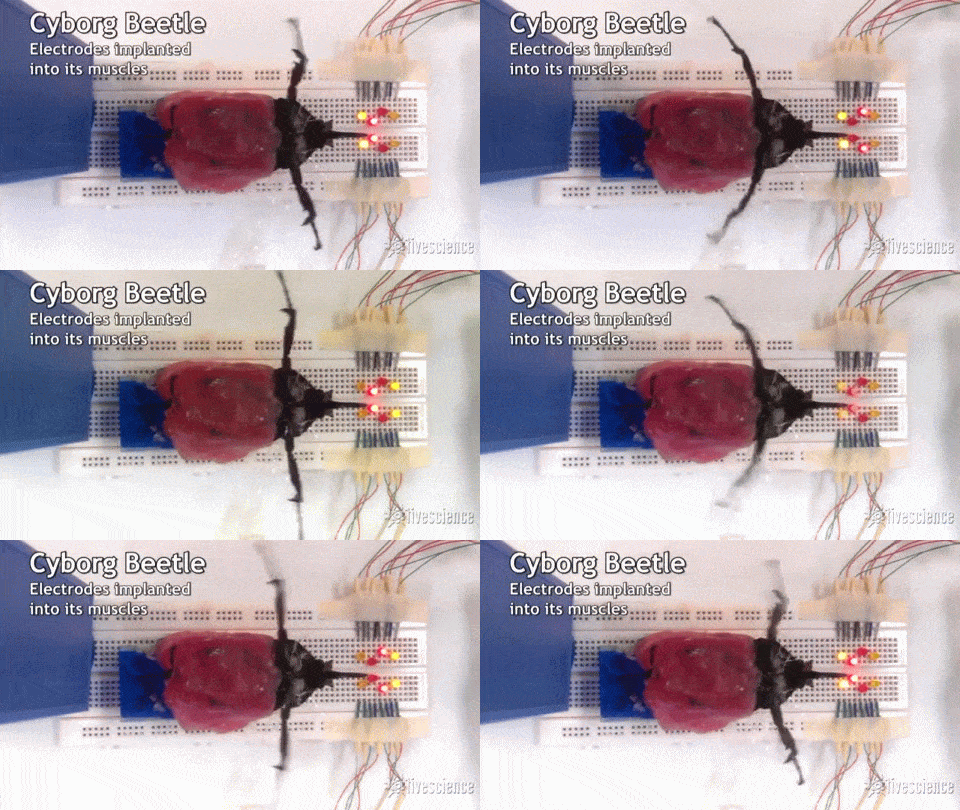
Their answer? Take a giant beetle and strap enough electronics onboard to deliver tiny shocks to direct the insect’s flight. The tiny shocks don’t take much power and once the beetle is on course, no further shock is necessary unless the human pilot needs to correct the direction. Recent work allows a similar controller to control each leg of the beetle, turning it into a more versatile flying or walking cyborg.

Continue reading “Universities Envision Flying Beetle Swarms; But Crawl Before You Fly”

A $1000 Tiny Personal Satellite

If you ever read any old magazines, you might be surprised at how inexpensive things used to be. A U.S. postage stamp was six cents, a gallon of gas was $0.34, and the same amount of milk was $1.07. Everything is relative, though. The average household income back then was under $8,000 a year (compared to over $53,000 a year in 2014). So as a percentage of income, that milk actually cost about seven bucks.

The same is true of getting into orbit. Typical costs today just to get something into orbit has gone from–no pun intended–astronomical, to pretty reasonable. Lifting a pound of mass on the Space Shuttle cost about $10,000. On an Atlas V, it costs about $6,000. A Falcon Heavy (when it launches) will drop the cost to around $1,000 or so. Of course, that’s just the launch costs. You still have to pay for whatever you want to put up there. Developing a satellite can be expensive. Very expensive.

Continue reading “A $1000 Tiny Personal Satellite”

Apple Aftermath: Senate Entertains A New Encryption Bill

If you recall, there was a recent standoff between Apple and the U. S. Government regarding unlocking an iPhone. Senators Richard Burr and Dianne Feinstein have a “discussion draft” of a bill that appears to require companies to allow the government to court order decryption.

Here at Hackaday, we aren’t lawyers, so maybe we aren’t the best source of legislative commentary. However, on the face of it, this seems a bit overreaching. The first part of the proposed bill is simple enough: any “covered entity” that receives a court order for information must provide it in intelligible form or provide the technical assistance necessary to get the information in intelligible form. The problem, of course, is what if you can’t? A covered entity, by the way, is anyone from a manufacturer, to a software developer, a communications service, or a provider of remote computing or storage.

There are dozens of services (backup comes to mind) where only you have the decryption keys and there is nothing reasonable the provider can do to get your data if you lose your keys. That’s actually a selling point for their service. You might not be anxious to backup your hard drive if you knew the vendor could browse your data when they wanted to do so.

The proposed bill has some other issues, too. One section states that nothing in the document is meant to require or prohibit a specific design or operating system. However, another clause requires that covered entities provide products and services that are capable of complying with the rule.

A broad reading of this is troubling. If this were law, entire systems that don’t allow the provider or vendor to decrypt your data could be illegal in the U. S. Whole classes of cybersecurity techniques could become illegal, too. For example, many cryptography systems use the property of forward secrecy by generating unrecorded session keys. For example, consider an SSH session. If someone learns your SSH key, they can listen in or interfere with your SSH sessions. However, they can’t take recordings of your previous sessions and decode them. The mechanism is a little different between SSHv1 (which you shouldn’t be using) and SSHv2. If you are interested in the gory details for SSHv2, have a look at section 9.3.7 of RFC 4251.

In all fairness, this isn’t a bill yet. It is a draft and given some of the definitions in section 4, perhaps they plan to expand it so that it makes more sense, or – at least – is more practical. If not, then it seems to be an indication that we need legislators that understand our increasingly technical world and have some understanding of how the new economy works. After all, we’ve seen this before, right? Many countries are all too happy to enact and enforce tight banking privacy laws to encourage deposits from people who want to hide their money. What makes you think that if the U. S. weakens the ability of domestic companies to make data private, that the business of concealing data won’t just move offshore, too?

If you were living under a rock and missed the whole Apple and FBI controversy, [Elliot] can catch you up. Or, you can see what [Brian] thought about Apple’s response to the FBI’s demand.

Small And Inexpensive MEMS Gravimeter

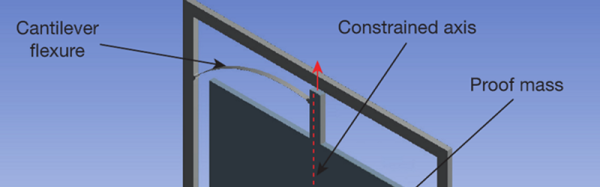
A gravimeter, as the name suggests, measures gravity. These specialized accelerometers can find underground resources and measure volcanic activity. Unfortunately, traditional instruments are relatively large and expensive (nearly 20 pounds and $100,000). Of course, MEMS accelerometers are old hat, but none of them have been stable enough to be called gravimeters. Until now.

In a recent edition of Nature (pdf), researchers at the University of Glasgow have built a MEMS device that has the stability to work as a gravimeter. To demonstrate this, they used it to measure the tides over six days.

The device functions as a relative gravimeter. Essentially a tiny weight hangs from a tiny spring, and the device measures the pull of gravity on the spring. The design of the Glasgow device has a low resonate frequency (2.3 Hz).

Small and inexpensive devices could monitor volcanoes or fly on drones to find tunnels or buried oil and gas (a job currently done by low altitude aircraft). We’ve covered MEMS accelerometers before, although not at this stability level.  We’ve even seen an explanation from the Engineer Guy.

Meet Cartesio, Robot Artist

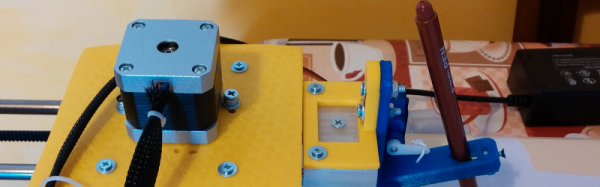
[Robottini] released plans for his robot, Cartesio, that is essentially an Arduino-controlled plotter made to create artwork. The good part about Cartesio is the low cost. [Robottini] claims it cost about $60 to produce.

The robot has an A3-size drawing bed and is practically the XY part of a 3D printer. In fact, most of the parts are 3D printed and the mechanical parts including M8 smooth rod. LM8UU bearings, and GT2 belts and pulleys. If you’ve built a 3D printer, those parts (or similar ones) should sound familiar.

The Arduino uses GRBL to drive the motors from GCODE. [Robottini] has three different workflows to produce drawings from applications like Inkscape. You can see some of the resulting images below.

We’ve covered GRBL before, and it is the heart of many motion control projects. If you’d rather draw on something less permanent, you might try this project.

Continue reading “Meet Cartesio, Robot Artist”

Oh No! It’s The Claw!

What’s more seductive than a claw machine? After all, how hard can it be to snag that $2 teddy bear that is practically poking out of the pile of merchandise? But after 20 quarters, you realize you’ve spent $5, and you still don’t have anything to show for it.

[CreativeGuy88] decided to build his own claw machine (that way, he gets to keep the quarters). This sizable build is as much woodworking project as anything. However, the motors and control joysticks require electrical wiring and [CreativeGuy88] used Lego bricks to make much of the carriage.

Continue reading “Oh No! It’s The Claw!”

Tiny BLE UART Makes Bluetooth Low Energy Simple

Last time I talked about the internals of how Bluetooth Low Energy (BLE) handles data. I mentioned that the way it is set up is meant to conserve power and also to support common BLE devices like heart rate monitors. On the other hand, I also mentioned that you often didn’t need to deal with that because you’d use an abstraction layer.

This time, I want to show you how I used the Hackaday special edition Tiny BLE (from Seeed Studios) and its mbed library to do a quick simple BLE project. If you didn’t read the first part, don’t worry. The abstraction is so good, you probably won’t have to unless you want to circle back around later and get a more detailed understanding of what’s happening under the covers.

I wanted something simple for an example so you could build on it without having to remove much code. For that reason, I decided to allow my phone to control the state of a three-color LED via BLE. To do that, I’m going to use a virtual UART and some off-the-shelf phone software. The whole thing won’t take much code, but that’s the point: the abstraction makes BLE relatively simple.

Continue reading “Tiny BLE UART Makes Bluetooth Low Energy Simple”