DIY Hakko Soldering Station

[Julez] wanted another soldering station, so he decided to build one himself using a Hakko 907 soldering iron (or a clone). Of course, he could have bought a station, but anyone who reads Hackaday doesn’t require an explanation for why you would build something you could buy.

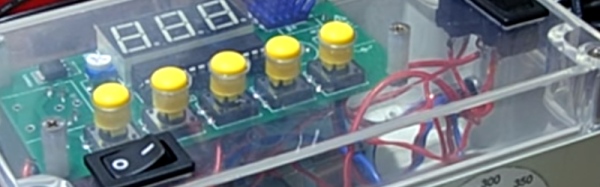
The station has two switchable outputs so you can use two different irons (perhaps with different tips) although you can only use one at a time. [Julez] bought a case with a transparent top from eBay and also got a digital temperature controller from eBay, which is the heart of the project. As for the actual iron, you can find clone versions of the 907 handpiece for well under $10.

Because the station uses a module, the actual wiring isn’t terribly difficult. There’s a pot to control the temperature and the controller directly connects to the iron’s heating element and temperature probe. There’s also a standby switch that reduces the temperature using a fixed resistor in series with the control pot.
Continue reading “DIY Hakko Soldering Station” →

Raspberry Pi + Wolfram Data Drop

When you think of Mathematica and Wolfram, you probably think high-power number crunching. You might not think embedded systems. Wolfram runs on the Raspberry Pi, however, and there is a recent video (below) showing a Raspberry Pi, controlling I/O devices, and interacting with the Web using Wolfram data drop.

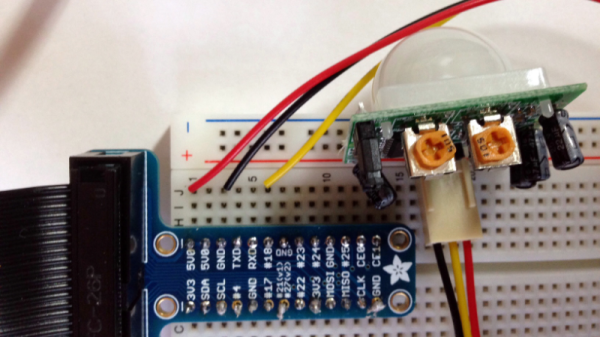
The second video, below, shows some older example projects including a simple home alarm with a PIR sensor. Not the kind of thing that Wolfram is known for, but fine as a “hello world” project. There is even a project that uses an Arduino for more I/O. Between the two videos, you can get a good idea of the sort of things you can accomplish using a Pi with the language.

Continue reading “Raspberry Pi + Wolfram Data Drop” →

LiteBSD Brings 4.4BSD To PIC32

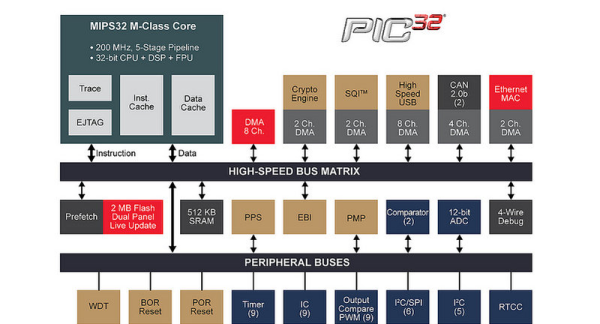
A few years ago [Serge Vakulenko] started the RetroBSD project–a 16-bit port of the old 2.11BSD operating system to the Microchip PIC32 microcontroller. This was impressive, but version 2 of BSD is, to most people, old news and somewhat difficult to use compared to modern BSD and Linux operating systems.

[Serge] has been at it again, however, and now has a port of 4.4BSD–LiteBSD–running on the PIC32MZ. According to [Alexandru Voica] there is about 200K of user space memory in the basic build, and by removing some OS features, you could double or triple that figure.

Continue reading “LiteBSD Brings 4.4BSD To PIC32” →

BGA Hand Soldering Video

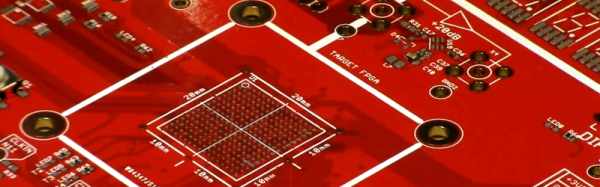
By 2016, most people have got the hang of doing SMD soldering in the garage–at least for standard packaging. Ball Grid Array or BGA, however, remains one of the more difficult packages to work with [Colin O’Flynn] has an excellent video (almost 30-minutes, including some parts that are sped up) that shows exactly how he does a board with BGA.

Continue reading “BGA Hand Soldering Video” →

FPGA To Ethernet Direct

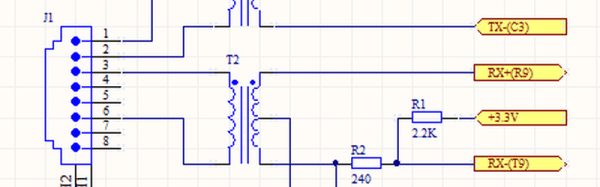
When [iliasam] needed an Ethernet connection, he decided to see how much of the network interface he could put in the FPGA logic. Turns out that for 10 Base-T, he managed to get quite a bit inside the FPGA. His original post is in Russian, but automatic translation makes a passable attempt at converting to English.

This is a classic trade off all FPGA designers face: how much external logic do you use for a particular design. For example, do you add memory to the PCB, or use FPGA resources as memory? Each has its advantages and disadvantages (that’s why it is a trade off). However, if you are trying to keep things cheap, slashing external circuitry is often the way to go.

Continue reading “FPGA To Ethernet Direct” →

Messages From Hell: Human Signal Processing

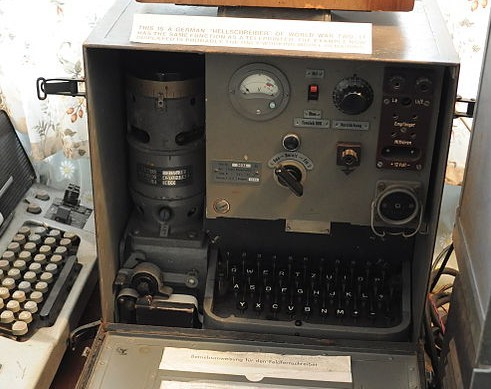
Despite the title, there’s no religious content in this post. The Hell in question is the German inventor [Rudolph Hell]. Although he had an impressive career, what most people remember him for is the Hellschreiber–a device I often mention when I’m trying to illustrate engineering elegance. What’s a Hellschreiber? And why is it elegant?

The first question is easy to answer: the Hellschreiber is almost like a teletype machine. It sends printed messages over the radio, but it works differently than conventional teletype. That’s where the elegance comes into play. To understand how, though, you need a little background.

Continue reading “Messages From Hell: Human Signal Processing” →

Pewter Casting With PLA

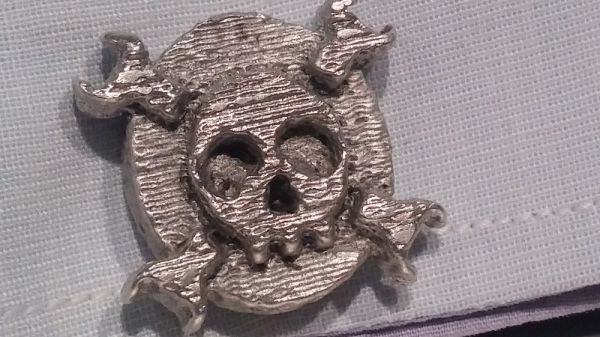
Over on Hackaday.io, [bms.had] is showing his technique for 3D printing molds that he uses to cast (lead-free) pewter objects. The process looks simple enough, and if you have a 3D printer, you only need some lead-free pewter, a cheap toaster oven, and PLA filament. He’s made two videos (below) that do an excellent job of showing the steps required.

Even though the pewter is hot enough to melt the PLA, it doesn’t appear to be a major problem if you quench the piece fast enough. According to [bms.had], a slower quench will melt some PLA although that creates a smoother surface. You can see the 0.31 mm layer lines in the cast, though, although you can use any layer height you like to control that. Creating the mold is simple (the videos use Tinkercad, although anything suitable for creating 3D models would work). You essentially attach a funnel to your part and make the entire part a hole inside an enveloping shape.

Continue reading “Pewter Casting With PLA” →