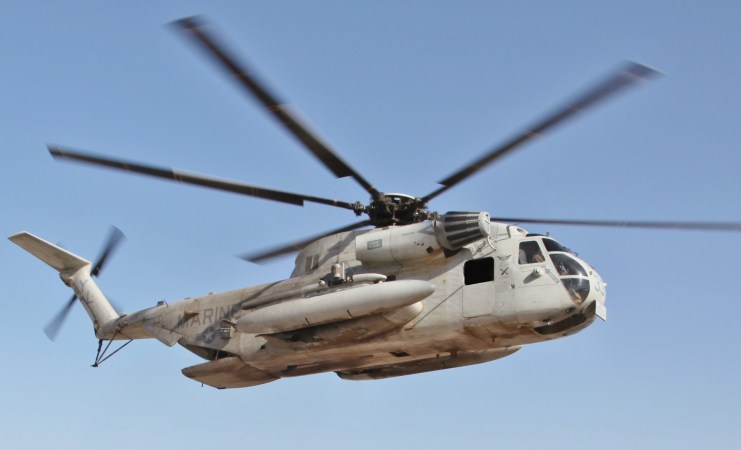
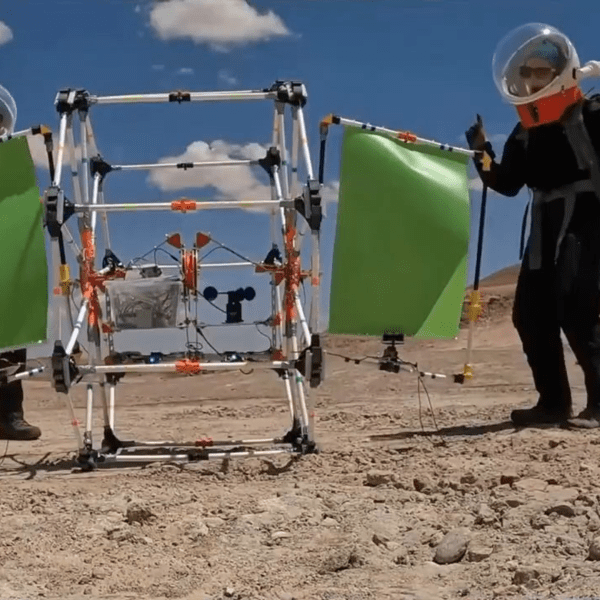
Sometimes you find gold in unexpected places. In this case, it’s from a video about the CH-53 helicopter. The CH-53 Sea Stallion first entered service in 1966. It’s a huge helicopter, capable of lifting immense amounts of weight. All that weight hangs from 6 (or 7 on some models) rotor blades. The problem was detecting problems with the blades before they grew into a catastrophic failure.
How To Talk To A Machine Without Anthropomorphising It
LLMs remain a divisive topic in these times. Perhaps we all know someone who’s become over-infatuated with their new robotic friend, or who believes it has made them a genius. [Emily M. Bender] and [Nanna Inie] have written about how people anthropomorphise the LLMs they interact with, and suggested some language tips to avoid that. It’s a couple of months old, but we think Hackaday readers will find it interesting.
Their analysis is interesting, because it looks at the way people talk about LLMs and highlights the unconscious anthropomorphism. The LLM is a piece of software not a person, so why does it “recognise” when it does “speech recognition”, for example. They suggest “automatic transcription” instead. Even “hallucination” implies cognisance that evidently isn’t there. They admit that their suggestion of “undesirable output” isn’t entirely appropriate. They’re on safer ground with “input” and “output” instead of “prompt” and “response”.
Whatever your views on them, it’s evident that LLM usage will be a feature of the world for the forseeable future. The language surrounding them is however capable of evolving, and maybe some of the suggestions here are worth taking note of.
Grappling with our new electronic overlords? Have a look at our AI for Skeptics series.

The First Spacecraft Launched To Orbit From Europe
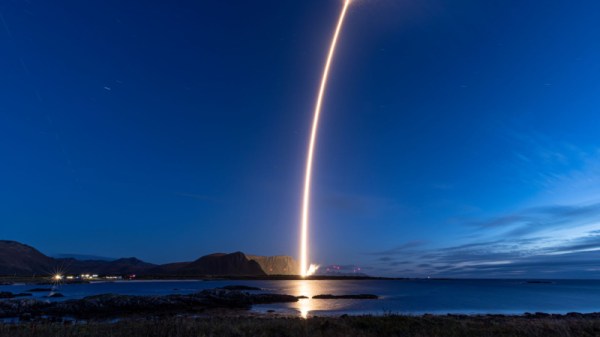
The history of European space exploration is a long and distinguished one, with many decades and whole families of launch vehicles. It might therefore come as a surprise that despite all this, it’s taken until 2026 for a European rocket to be launched into orbit from European soil rather than from somewhere close to the Equator. The German company Isar Aerospace launched one of their Spectrum rockets from Andøya Space in Norway and deployed its CubeSat payloads to orbit.
The five satellites were a selection of projects from the German space agency’s Microlauncher Competition, which offers the chance of a launch to start-ups and educational institutions. The press release doesn’t name them, but Wikipedia has the following list: TriSat-S (University of Maribor and SkyLabs); FramSat-1 (NTNU SpaceTeam); Sat1 (TU Wien Space Team); CyBEEsat (TU Berlin); Platform 6 (EnduroSat) and Let It Go (experiment, Dcubed).[46].
Interestingly, the company is also working on a space launch facility in Nova Scotia, Canada, to gain access to lower inclination orbits and to provide Canadians with their own launch capability. More is evidently yet to come.
We’ve mentioned Isar before, when we reported on the building of the spaceport.
Comparing PETG And PCTG Filaments
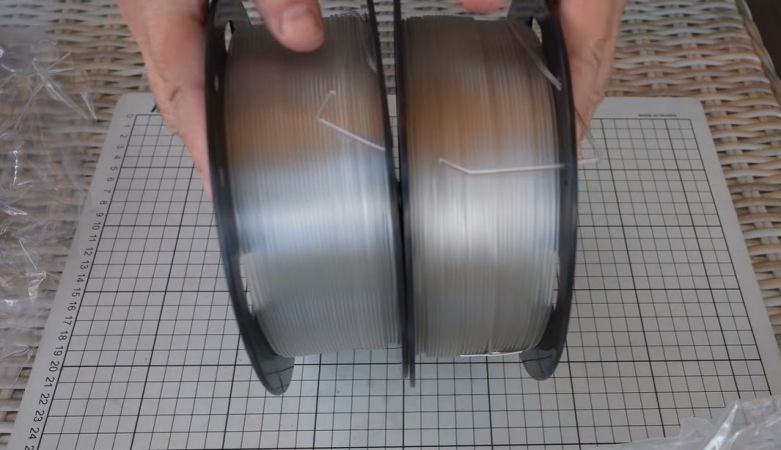
The average 3D printer owner knows a few types of filaments – PLA, ABS, somewhere in the middle, PETG. PCTG is another option that can be confusingly similar to PETG. Recently, [Igor Gaspar] of [My Tech Fun] took a poke at both types. He obtained both PETG and PCTG transparent filaments from the same manufacturer to compare them directly.
As we recently detailed in an article on PET polyesters, PETG is glycol-modified PET, meaning that some of the glycol monomers are replaced by CHDM monomers to create a more flexible and robust material. PCTG is very similar to PETG, except that more than half of the glycol monomers are replaced rather than less than half. This creates a PET-type material that has distinct physical properties from PETG, which might be desirable for some applications.
NES Radar Tracks Flights At 9600 Baud
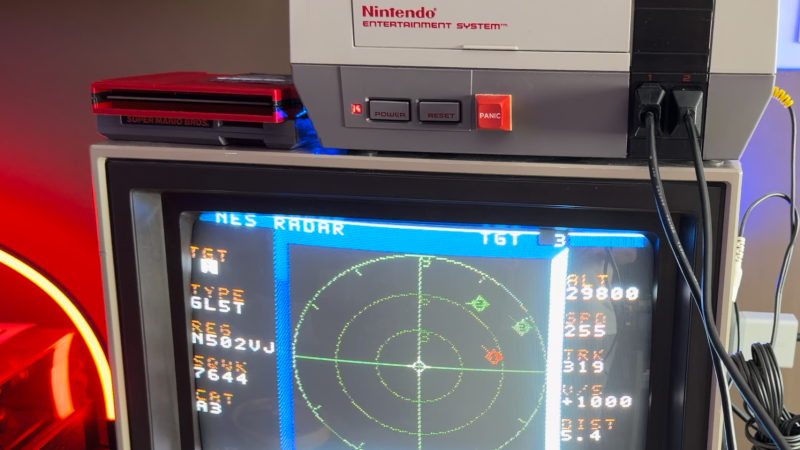
Air traffic visualizers seem to be having a bit of a moment right now, and now that moment has come to the venerable NES thanks to [k6lcm]’s NES Radar project, which is open-source under the GPL on GitHub. In spite of the name, there’s no Radio Direction or Range-Finding involved in this project– no radio at all, in fact, which makes this a bit interesting. It’s just an NES cartridge and a carefully constructed cable.
How Charged Water Drops Induce Corrosion
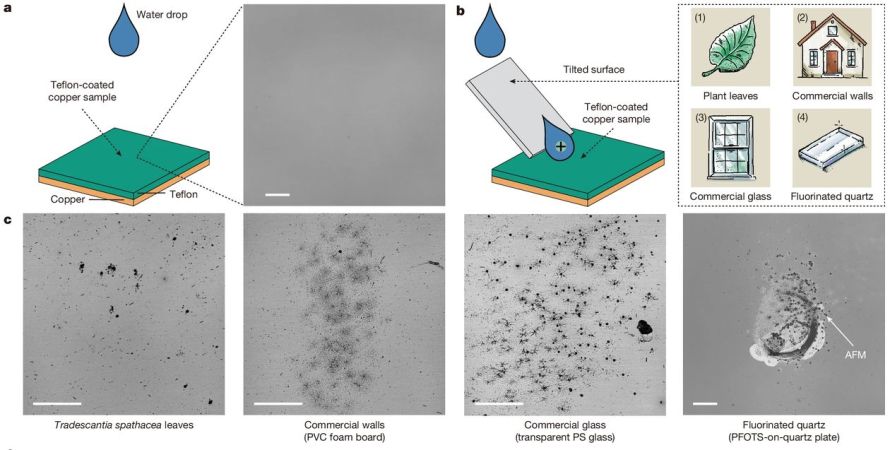
Generally, we do not look at the gentle patter of raindrops on a surface with much concern, but according to a study by [Zhongyuan Ni] et al. in Nature, we should probably regard these droplets with a little scrutiny for their corrosion potential. What they found is that these drops can gather a significant electric potential as they gently slide down a surface, with over 1 kV measured. By first having droplets charge up on an insulating surface before hitting a target metal surface, they were able to induce significant corrosion.
Hackaday Links: September 6, 2026
Yesterday, Isar Aerospace secured its place in the history books when the upper stage of their Spectrum rocket put a payload of CubeSats into low Earth orbit (LEO). Not only does this make them the first European company to achieve such a feat, but it also marks the first time a booster departing from continental Europe has reached orbit. Not bad for a second attempt.
Standing 28 meters (92 feet) tall, the two-stage Spectrum rocket is just shy of half the size of the SpaceX Falcon 9 and designed to put a maximum of 1,000 kilograms (2,200 pounds) into LEO and 700 kg (1,500 lb) into the Sun-synchronous orbits used by Earth observation satellites. That puts its performance considerably ahead of other commercial launchers such as Rocket Lab’s Electron. Although the booster is not reusable, Isar Aerospace has stated they’re targeting a respectable launch cost of €10,000 ($11,700) per kilogram. The German company notes there are several more Spectrum vehicles currently in production, and when their new factory is operational, they’ll have the capacity to produce up to 40 of them each year.
In other European space news, BepiColombo has now entered what the European Space Agency (ESA) is calling the “arrival phase” of its nearly decade-long journey to Mercury. On Thursday, the spacecraft jettisoned its ion propulsion module as it had achieved the necessary trajectory and velocity to be captured by the planet’s gravitational field when it swoops by in November.