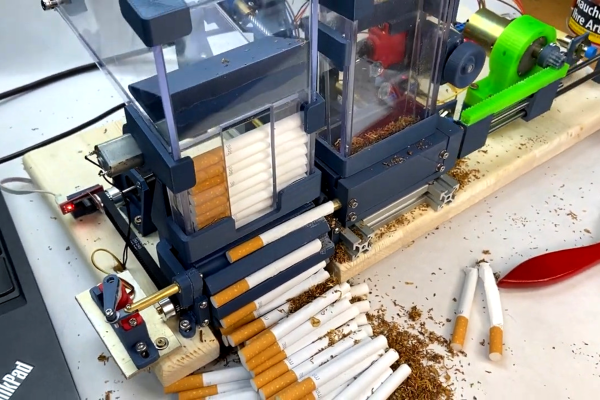
[Fraens] has been designing a number of fantastic 3D printed machines and making great videos that demonstrate how they work. The last installment was an automatic cigarette stuffing machine, and it’s got a number of pretty complex motions, and somehow manages to get the job done.
While [Fraens] usually uploads STL files for all of his machines, this one is forbidden! Selling automatic cigarette loaders is illegal in Europe, and it’s not clear how close to the legal edge posting them up on Thingiverse is. So until the legal dust settles, you’re going to have to be content with the fantastic video, also embedded below.
But honestly, the devil’s sticks aren’t good for your health anyway, and you’re probably just in it for the mechanicals. Think for a moment about the problem – you’ve got a hopper of tobacco fibers that all like to stick together, and you need to pack them into an easily squished lightweight paper tube. These tubes aren’t easy to handle either. The solution to both of these calls for solenoid-powered tappers that agitate both into place.
There’s also a 3D printed rack and pinion to do the pushing, and a cool stepper-driven revolver mechanism to put the empty papers into just the right place. The machine leans heavily on 3D printing, but also on simple hardware-store parts like aluminum and brass tubes. [Fraens]’s builds are always simple but simultaneously very slick, and you’ll learn a lot from watching it all go together.
And when you’re done, check out some others from [Fraens]. We’ve been impressed by his sewing machine, braiding machine, and even a power loom.
Continue reading “See The Forbidden Cigarette Machine In Action”
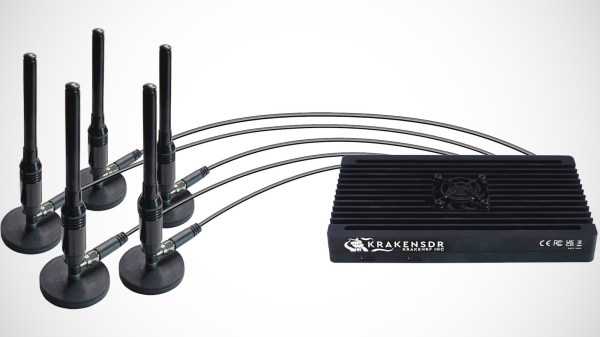
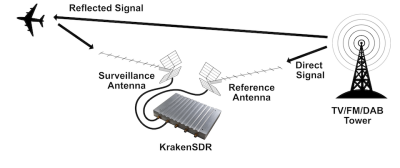 There’s RF emissions floating around you in the air, unless you’re at sea or in the desert. Whether it’s airplane transponders, cell towers, or a crappy switch-mode PSU, the radiowaves emitted interact with objects all around you. If you have multiple receivers with directional antennas, you can catch waves being reflected from some object, compare the wave reflected wave to the wave received from the initial source, and determine the object’s properties like location and speed. If you’d like to know more, IEEE Spectrum has