Linux Fu: Heads Or Tails For VPN

If you’ve done much networking, you surely know the frustration of trying to connect to something, say a Raspberry Pi, that lives behind your consumer router. There are a number of solutions for this, ranging from opening ports on your router along with dynamic DNS. Or, you can operate a VPN server on your network. Modern Linux has a facility called Wireguard that lets you create secure network tunnels very easily, but it is a little difficult to set up. But there are tools like Tailscale that can do most of the work for you. There’s only one problem: Tailscale is sorta-kinda free, but not really. But it turns out, you can build your own Tailscale network, and it is easier than you might imagine.

In all fairness, Tailscale’s free tier is good and recently got even more generous, allowing unlimited nodes and up to six users. That’s plenty for most hackers. However, as we’ve seen before, what they can give they can also take away. Besides, there are some extra services you still have to pay for if you want them, but overall, the free tier is more than enough for most people.

On the other hand, no matter how great the free tier may be, some people don’t want to run things on other people’s hardware. Or you need that 7th user. Or you need paywalled features. No worries. Headscale is a self-hosted service that can do nearly everything the cloud portion of Tailscale does, and if you have a place to host it, you can be your own Tailscale server.

For the client side? That’s the best part. Headscale works seamlessly with the existing Tailscale clients. You simply have to point them to your server instead of the defaults.

Continue reading “Linux Fu: Heads Or Tails For VPN”

Functional Jumping Pokéball From An Ancient Pokémon World

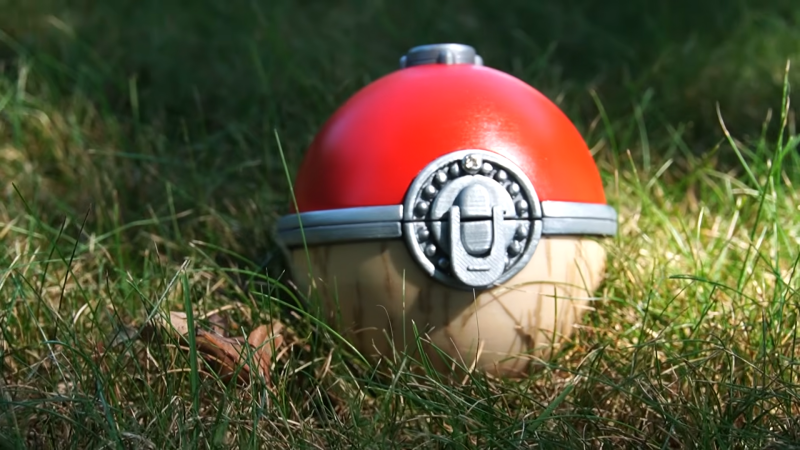
When playing a game about Pocket Monsters, there’s one thing you can’t avoid using no matter what you do, and that’s a pokeball. Whether it’s a new or old game, you can’t avoid it. Many from different generations or spin-off games have their own fun spin, and that’s what [Kiara] wanted to explore with her custom made replication of an older style of ball.

Continue reading “Functional Jumping Pokéball From An Ancient Pokémon World”

The Physics Of Keeping Thermal Power Stations Cool

Recently thermal power stations have been in the news quite a bit, mostly in the context of them being throttled back or shut down due to the river water used to cool them either getting too warm or said river having dropped to a level where it can no longer provide cooling water. Obviously this is a problem, but it helps to understand how we got to this point and what can be done to fix it.

Thermal power stations – also called power plants – come in a wide variety of shapes and sizes, ranging from old-school coal- and gas-fueled power stations to modern nuclear power plants. Something like a concentrated solar power (CSP) station is also a thermal power station, as all of them have a heat source that’s used to generate electricity from, whether that’s a boiler, nuclear reactor core or a big vat of sodium heated up by the Sun via massive mirrors or oil-filled tubes in parabolic throughs.

Except for open-cycle gas turbines (OCGTs) – which are basically jet engines connected to a generator – this thermal energy is then used to generate steam that drives a steam turbine. Once most energy in the steam has been depleted, it has to be condensed back into e.g. water, so that it can be led back to the steam generator. How this condensing step is performed is the question here, with a number of methods available.

Continue reading “The Physics Of Keeping Thermal Power Stations Cool”

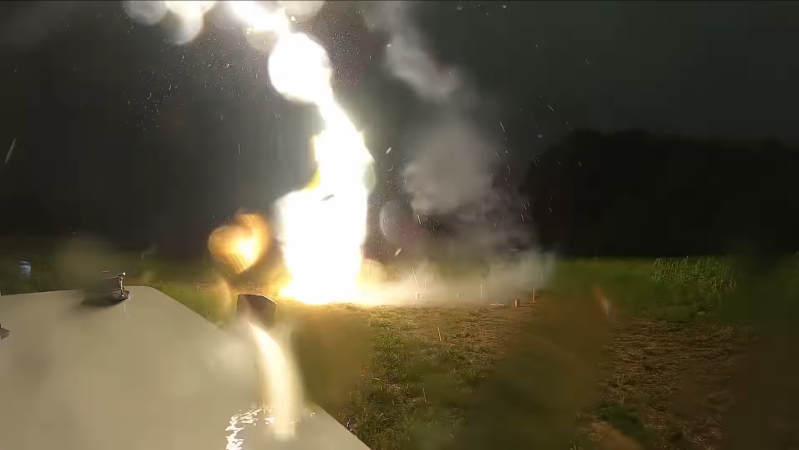
A lightning strike is shown striking the ground at close range (fewer than thirty feet away).

Triggering Lightning With A Rocket

Lightning, despite being a common and readily-detected phenomenon, is nevertheless difficult to study. One reason is the difficulty of predicting when and where lightning will strike; tall structures do attract more lightning strikes, but it’s hard to move them into a storm’s path. Instead, researchers often use small rockets carrying a fine wire to trigger strikes, an approach [Electron Impressions] recently replicated (more details).

The science of this is less than straightforward: even in calm weather, there’s a surprisingly strong atmospheric electric field, about 100 volts per meter off the ground. During a thunderstorm, though, this can build up to kilovolts per meter, and may reverse polarity. When an updraft carries supercooled water, ice crystals, and graupel (ice particles formed by supercooled water freezing on a snowflake) upwards, the heavier graupel falls relative to the other components. As it collides with ice crystals, it builds up a negative charge and the crystals accumulate a positive charge; across a storm, this leads to positive charge building up near the top of clouds and negative charge near the bottom. Lightning equalizes this imbalance. In the relatively few cloud-to-ground strikes, a dielectric breakdown begins from both sides of the stroke, with leaders rising from the ground and descending from the cloud. The wire trailed by a rocket creates an artificial leader, ideally triggering a controlled strike.

To consistently get a strike, the rocket needs to be launched under a strongly-negatively-charged region of the cloud. An electric field mill measures the local field strength; these are usually quite expensive, but [Electron Impressions] managed to build his own. The rocket itself was 3D printed and designed to fly well under stormy conditions. It carried a strand of thin copper wire wound onto a plastic spool meant to minimize friction and prevent broken wires. The rocket’s igniter was waterproofed for storm conditions and remotely triggered using a walkie-talkie for safety.

After many attempts, [Electron Impressions] finally managed to trigger a strike and video the results. The first stroke created a plasma channel, along which several more strokes followed. This indicated that the cloud had probably been negatively charged, which was in agreement with the field mill’s measurements. The wind blew the plasma channel slightly to the side, where it caused a second rocket to explode on the ground. Both ignition systems were destroyed, and the remains of the rocket were never found. Sadly, the strike doesn’t seem to have formed a fulgurite, but it did fracture the ground as water flash-boiled.

For a more reusable solution, some researchers have also experimented with using drones to trigger lightning. There’s good reason for more study; the theory of lightning formation still has some major open questions.

Even On The Red Planet, Hexagons Are The Bestagons

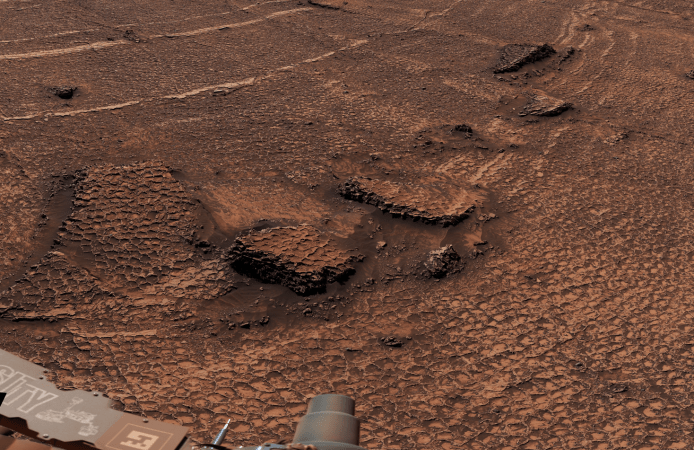
Though their pure Platonic Forms may only exist in the world of ideas, certain regular shapes can’t help but keep falling out of natural processes– case in point, the six-sided solid we call a hexagon, which is indisputably the bestagon. Don’t take it up with us– start an argument with the God of War, because its his planet that’s showing off six sided features, dubbed “polygonal fractures” which NASA’s Curiosity rover is currently crushing under tread in Valle Grande. Now, you might look at the photos and say– well, that’s clearly a dried mudflat. Evidence of water! No brainier, let’s all get Nobel Prizes. Not so fast.

Nothing in nature is ever single-sourced or that simple; if you live somewhere you get dried mud, you may have seen such hexagonal features, but ask anyone from the land of the ice and snow and they’ll tell you that freeze-thaw or frost heave can bring a field of rigolith’s inner Catan board out as well. Sure, we usually call it “dirt” here on Earth, but it’s rigolith by any other name. So NASA isn’t jumping the gun, and their announcement conservatively says that they aren’t sure how the polygonal features formed. Which is both fair enough and very interesting, as figuring it out is going to give some clues into what was going on in this part of Mars in the geologically recent past, especially since this vast field of grid tiles stretches as far as the camera can see. The consensus is that Mars was once “warm and wet” but that’s a relative term– how warm, and how wet, are very much up for debate.

Speaking of crushing hexagons under Curiosity’s wheels– did anyone think said wheels would last this long? They were already tweaking the traction control to extend their life nine years ago. Between it’s plutonium power and ongoing software updates, its a fair bet that Curiosity will outlast the late, lamented Opportunity who currently holds the endurance record at 15 Earth-years.

Creating A Supersonic Trebuchet

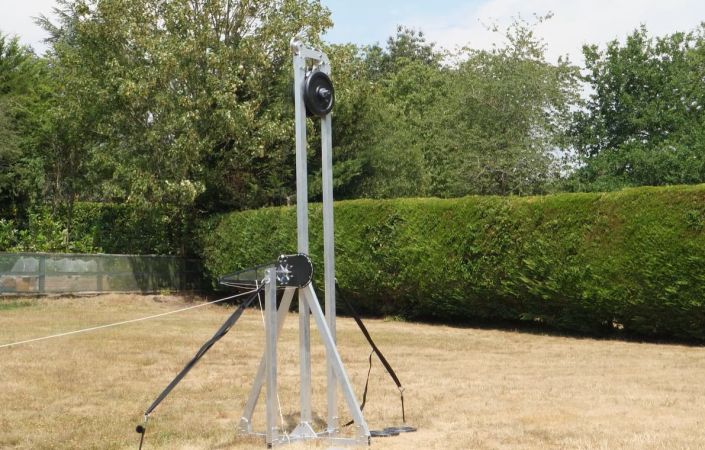
As awesome as trebuchets are, the fact that medieval engineers didn’t create versions capable of launching supersonic projectiles is a bit of a bummer. Fortunately it’s possible to correct this oversight with modern insights and technologies, as [Tom Stanton] demonstrates in a recent video.

While a traditional trebuchet is fairly straightforward, using a heavy weight moving an arm around a pivot that has the projectile attached to the other side, a few tweaks can make it much more lethal. One change is to have the projectile’s rope wound around the arm, forcing an additional pass around the arm to gain velocity. The other is to use a gearing system which uses the dropping weight’s energy more efficiently.

One complication here is that the arm now takes a few rotations to come up to speed, meaning that the release of the payload has to be controlled exactly, with only about an 0.0025 second release window. The solution was both low-tech and effective: since the arm is attached to a drum that the rope is wound onto, the moment enough rope is unwound from the dropping weight, a latch inside the drum is released to launch the projectile.

In a first test with a 10 kg weight, the projectile reached a velocity of around 528 km/h, which definitely was a good start, but also showed just how not aerodynamic the arm was. Some redesigns later of the entire trebuchet, the entire system was tested again with 10 kg and achieved a projectile velocity of 634 km/h. From there it was time to ramp up the weight to the full 40 kg, which theoretically should hit supersonic speeds.

Unfortunately the first attempt hit a mere 1,152 km/h (716 mph), which is just shy of the sound barrier at 1,235 km/h at 39% system efficiency and some components clearly breaking apart. Some more redesigns later and with a lighter projectile at 4 grams, a 40 kg weight achieved an arm speed of 2,342 rpm. The projectile now left the sling with 346.4 m/s, or 1,249 km/h, with an audible snap as the sound barrier got broken.

Even if the era of trebuchets in warfare is well and truly past, they remain fascinating physics demonstrations, with this case in point.

Continue reading “Creating A Supersonic Trebuchet”

Retrotechtacular: A View Of The Moon From 1964

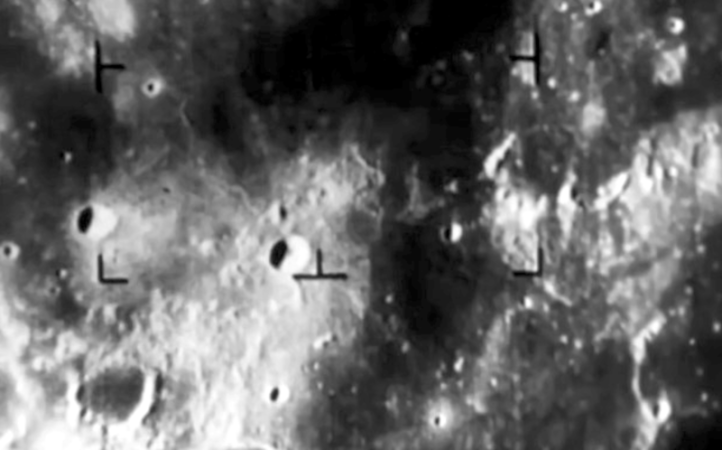
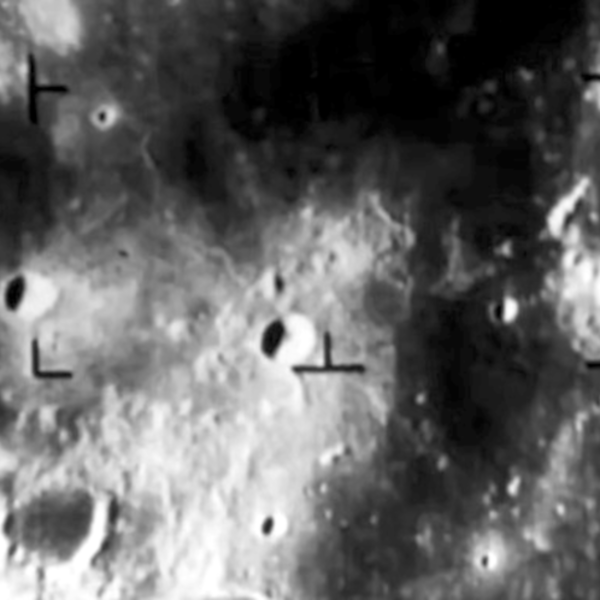
If you didn’t live through it, it is hard to understand how excited the general public was about the race for the moon. You can capture some of it by watching “Lunar Bridgehead,” a film about JPL monitoring the Ranger spacecraft as it hit, rather hard, on the lunar surface.

The Ranger program had been plagued with problems. The first five didn’t make it to the moon. Ranger 6 hit the moon, but failed to start its cameras. Ranger 7 was the first successful mission. There would be two more successful missions before the end of the program.

Continue reading “Retrotechtacular: A View Of The Moon From 1964”